How to Make the Most of your College Years

I was once a college student and have been a university professor for almost 4 decades (yikes!). Here are my top suggestions on how to cultivate a healthy balance between studies, social life, and spiritual growth while in college.
1. Treat Your Studies Like a Job
Treat your classes and study time like someone in a 40 hour a week job. For example, establish “study office hours” and tell others that you are “unavailable” every weekday from 9:00 AM to 12:00 PM and 2:00 PM to 5:00 PM. Inform friends when you have a hard deadline for studying. Instead of a vague “I have to study tonight,” say, “I’m studying until 8 PM tonight; can we meet at the dining hall then?” This sets a clear expectation.
2. Set Realistic Expectations
Unless you are built like my college roommate J.T., you probably won’t be able to study 5 hours every day, you will probably procrastinate, and you most likely won’t understand everything you read instantly. Instead, set more realistic expectations. A manageable study schedule per class is probably closer to one hour a day. And be open to seeking help from your professor during office hours, or via tutoring, or in studying with a group.
3. Get to Know Your Professors (and Your Academic Advisor)
We work here because we enjoy interacting with college students. If you run into snags later in the semester, it really helps if you have already established a relationship. They can also help you with scheduling conflicts, deciding majors, graduating on time, etc.
4. Take a Class Outside of Your Comfort or Interest Zone
I was challenged in my senior year to do just this, and my advisor “made” me take a beginning piano class. Talk about a stretch for me! I didn’t even know what a piano was, let alone how to play it. But it opened so many doors for me, like a new appreciation for music, a better understanding for those who love it, and new friends.
5. Remember: Your Identity Is Not Your GPA
Work hard in all areas as listed above, but do it as worship, not for worth.
6. Prioritize Sleep
It is not optional for learning, growth, or healthy relationships. Most college students need 8 hours of sleep every night.
7. Give Yourself Grace
A good goal is to be as disciplined as possible. But all of us have limits and fall short while trying our hardest to stay disciplined. Grace doesn’t mean lowering your standards in order to be righteous—it means you receive power and help to meet those high standards without being crippled by shame or feelings of unworthiness.
8. Invest in Friendships
Relationships take work, effort, and time. We make friends and keep them when we invest in them, as friendships best form through repeated exposure. If people see you often in the same place, you become familiar—and familiarity creates comfort.
College friendships don’t happen overnight. They form through consistent, low-pressure contact over weeks or months. Look for people—the people who sit near you, or someone you study with, or the club member you talk to sometimes, or the roommate of someone you know. Friendships grow slowly, then suddenly. And they grow faster when you’re doing something together, not just sitting and talking.
Try walking to class together, grabbing coffee after a club meeting, going to a campus event, working out together, or reviewing for an exam.
My Favorite Tips to Be a Better Friend
Be interested, not interesting. Asking good questions is key, like these:
-
“Hey, I’m ___, what’s your major?”
-
“How’s this class going for you so far?”
-
“Have you met many people here yet?”
-
“Mind if I sit with you?”
-
“Are you from around here?”
Be less self-conscious (look up the “spotlight effect” and then take it off of you).
Be quick to listen, slow to speak… (James 1:19)
9. Schedule Specific Blocks for Social Activities
This needs to be a priority after your academic work is complete. And show up where people gather, because you can’t make friends from your room. Go to:
-
Clubs and student organizations
-
Campus ministry events and small groups
-
Study groups for classes
-
Residence hall events
-
Intramural sports
-
Volunteering
-
The gym, library, or cafeteria at regular times
10. Cultivate Social Intelligence
We call this perspective taking. It is the best way to build empathy, attunement, awareness, and influence with others. Some good questions to ask yourself:
-
Do I understand what motivates other people, even those from different backgrounds?
Am I sensitive to others’ needs? (This builds empathy) -
Do I listen attentively and think about how others feel?
Am I attuned to others’ moods? (This builds attunement) -
Do I appreciate the culture and values of my relationships or team?
Do I understand social networks and their unspoken norms? (This builds awareness) -
Do I persuade others by engaging them in discussion and appealing to their self-interests?
Do I get support from key people? (This builds influence)
11. You Own Your Phone—Not the Other Way Around
Whether studying or hanging out with friends, place your phone in another room, in your backpack, or face down and out of sight. Turn on “Do Not Disturb” (DND) mode and silence notifications on specific social media apps. Use website or app blockers to block access to social media, streaming services, or time-wasting websites during scheduled study blocks.
12. Invest in Your Spiritual Growth
Be aware of God’s presence. Find the sacred places where you can meet with Him.
“You are the God who sees me” (Gen 16:13).
Remember, you will be known by who you hang around with. So find those who provide mutual encouragement to grow closer to God. Scripture calls mutual encouragement “iron sharpening iron” (Proverbs 27:17).
So look for people who:
-
challenge you to grow
-
pray with you
-
celebrate your wins
-
tell you the truth gently
And then be that same kind of friend for others.
Authors

Chris Grace
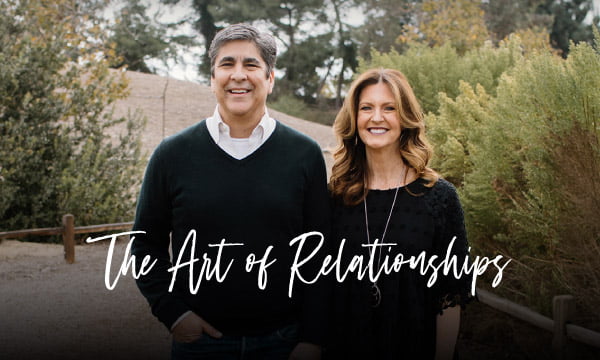
Chris Grace, Ph.D., is a professor of psychology at Rosemead School of Psychology and Director of the Biola University Center for Marriage and Relationships. With degrees in psychology from the University of Northern Colorado (B.A.) and Colorado State University (M.S. and Ph.D. in Experimental Social Psychology), he has taught and written extensively on relationships, marriage, and the integration of faith and psychology. Honored with awards for both teaching and scholarship, Chris is passionate about making research and biblical wisdom practical and accessible. Together with his wife, Alisa, he speaks nationally to couples, singles, and churches, and co-hosts The Art of Relationships podcast, equipping thousands with tools to build stronger, Christ-centered relationships.
.png)