The Psychology of Grit in the Face of Trauma and Pain
All of us will experience trauma and pain at some point in our lives. This is because we are relational creatures, and relationship conflict is as inevitable as death and taxes. I have never met a couple who have had no disagreements or misunderstandings. Those who claim to be conflict-free are either hiding from it or deceiving themselves.
But how sweet is the knowledge that it is through conflict that we actually grow more intimate and, in turn, become more Christ-like.
Our first marital conflict was not trauma-inducing, but it was still a doozy. I was coming home increasingly stressed from working on my dissertation and doing overnight shift work on weekends, and my new wife, Alisa, felt like I was pulling away from her. She interpreted my distance as stemming from a misgiving I must have been feeling about marrying her. I could tell she was upset, but we had so little experience sharing our deep hurts and fears that we went a whole month without ever getting to the bottom of the real issue: she was hurt by my growing distance but felt she could not express it to me without hurting my feelings. It is a painful memory we can now tell with humor, but only because we worked through the hurt and pain and discovered the deeper issues at play.
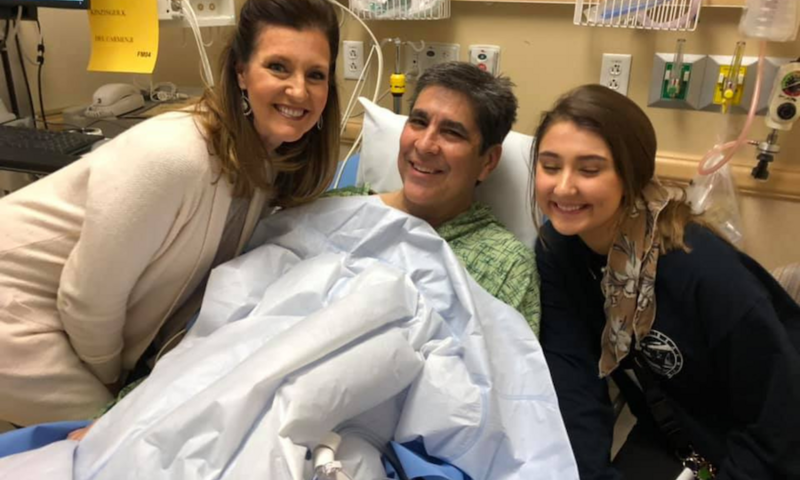
Our first real moments of trauma came many years later when, in 2020, I was diagnosed with stage III colorectal cancer and given a 50% chance of surviving five years. Thankfully, I am still cancer-free today. But the physical and emotional toll of treatments — chemotherapy, radiation, and two surgeries — has been immense. Alisa was thrown into the unrelenting role of caregiver while she herself was battling melanoma and caring for our high school-aged daughter, who was experiencing debilitating back pain and eventually underwent surgery for a bulging disc.
Through these experiences, I began to wrestle with permanent neuropathy, daily nausea, PTSD, and other unmentionables associated with losing my rectum. As a believer and follower of Christ, I have access to God's Word, a community of believers, and a God-fearing, Jesus-loving, Spirit-filled wife. As a social psychologist, I have also been privileged to learn from some of the best researchers and thinkers in my field, as well as in fields like positive psychology, where they study concepts such as grit and resilience. Here is some of what I am learning about resilience and the faithfulness of God.
Resilience is not erasing my pain and suffering. It is carrying wounds without letting them consume my story. I am not the triumphant warrior. My victory is found in leaving behind the old and calling to mind the new. "We are hard pressed on every side, but not crushed; perplexed, but not in despair; persecuted, but not abandoned; struck down, but not destroyed." — 2 Corinthians 4:8–9
Grit is not about becoming tougher. It is permission to grieve. I want to cry for what was lost and not be ashamed. "You keep track of all my sorrows. You have collected all my tears in your bottle. You have recorded each one in your book." — Psalm 56:8 (And some of us have some rather large bottles.)
Grit is allowing myself to feel anger as well as gratitude. I want to yell at the devil and praise God with the same lips. "Let the high praises of God be in their mouth, and a two-edged sword in their hand." — Psalm 149:6
Resilience is not ignoring my struggles. It is the gradual regaining of my physical and emotional footing. I want to feel good again while still processing a redefinition of "good." "I waited patiently for the Lord to help me, and he turned to me and heard my cry. He lifted me out of the slimy pit, out of the mud and mire; he set my feet on a rock and gave me a firm place to stand. He gave me a new song to sing, a hymn of praise to our God." — Psalm 40:1–3
Resilience is not the absence of distress. It is integrating difficult experiences into my life story. I want to swim in the sea of sorrow without drowning, confident in Jesus, the Lifeguard. "When you pass through the waters, I will be with you; and through the rivers, they shall not overwhelm you; when you walk through fire you shall not be burned, and the flame shall not consume you." — Isaiah 43:2
Resilience is meaning-making. It is taking all of my experiences and letting God transform them. I want to use my pain and trauma to form a new and improved version of myself — incorporating the good with the bad and coming out more Christ-like. "Therefore, if anyone is in Christ, he is a new creation. The old has passed away; behold, the new has come." — 2 Corinthians 5:17
Resilience is not living in the painful uncertainty of tomorrow. It is a rebranding of the future. I have hope for what comes next. I trust in His faithfulness. I seek to reframe my pain and bring God glory through all my experiences. "And we know that in all things God works for the good of those who love him, who have been called according to his purpose." — Romans 8:28
Authors

Chris Grace
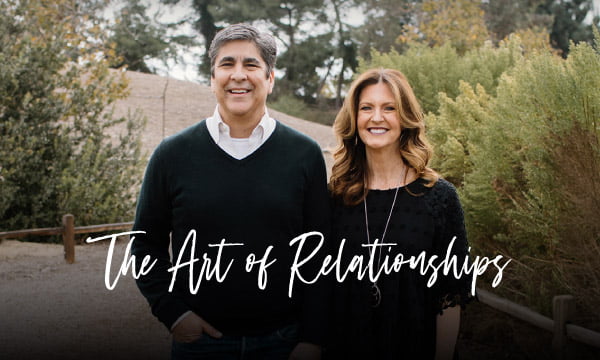
Chris Grace, Ph.D., is a professor of psychology at Rosemead School of Psychology and Director of the Biola University Center for Marriage and Relationships. With degrees in psychology from the University of Northern Colorado (B.A.) and Colorado State University (M.S. and Ph.D. in Experimental Social Psychology), he has taught and written extensively on relationships, marriage, and the integration of faith and psychology. Honored with awards for both teaching and scholarship, Chris is passionate about making research and biblical wisdom practical and accessible. Together with his wife, Alisa, he speaks nationally to couples, singles, and churches, and co-hosts The Art of Relationships podcast, equipping thousands with tools to build stronger, Christ-centered relationships.