Navigating Financial Stress as a Couple

Imagine you are standing in the middle of a showroom floor looking at a major purchase. It might be the paperwork for a first home, a reliable family car, or a hefty tuition bill. One of you looks at the price tag and feels an immediate rush of excitement, dreaming of the future. The other looks at the exact same numbers and feels a cold knot of anxiety tightening in their stomach. Within minutes, a dream turns into a battlefield.
Does this sound familiar? If so, you are completely normal. Finances consistently rank as one of the top causes of relationship conflict, but it is rarely the math that trips us up. It is the heart.
Money operates metaphorically in our lives. It represents values and emotions such as dependence, security, freedom, opportunity, and trust. Our unique personalities, backgrounds, and families of origin shape our views of money. Becoming aware of these shaping influences is key to making healthy financial decisions and building a stronger relationship.
To navigate financial conflict, use these three essential lenses to get on the same page before you swipe your card.
1. Are You a Team?
Couples with strong relationships approach financial decisions together in a spirit of unity. They experience what researchers often describe as synchrony or flow. One national research project found that the happiest couples frequently laugh together, confide in each other, work well on projects, and calmly discuss difficult issues.
True financial intimacy begins when you stop protecting individual interests and start pursuing shared values and long term goals as collaborative partners.
2. Your Money Personality: The Spender vs. the Saver
We all view money through the lens of our childhood and past experiences. For some, money means safety and security. For others, it represents freedom and enjoyment. Some of us view a bank account as a passport to adventure, while others see it as protection against financial uncertainty.
When a large purchase triggers anxiety or a sense of chaos, we rarely sit down and have calm conversations. Instead, one person freezes like a statue while the other reacts like a cornered raccoon.
Arguments about oversaving or overspending are rarely just about money. They are fueled by hidden emotions such as feeling unloved, controlled, dismissed, or unsupported. Rather than arguing over who is "wasteful" or who is a "miser," look beneath the surface to identify the deeper emotional issue.
Psalm 139:23 says:
"Search me, O God, and know my heart; test me and know my anxious thoughts."
Notice that the verse does not say, "Search them." Healthy financial conversations begin with self awareness. When you understand your own anxious triggers and extend empathy toward your partner's fears, financial friction becomes an opportunity for deeper connection.
3. How Do You Handle Money Stress?
Whether you are paying off credit card debt or buying a new home, financial decisions often stir deep emotions. Every money conflict has an emotional subtext rooted in our past. If you grew up in a home where money was scarce or where saving was treated as an unbreakable rule, those early experiences continue to shape your reactions today.
When financial stress rises, surface arguments about numbers often conceal deeper feelings of insecurity, disrespect, fear, or vulnerability. We can quickly interpret critical comments as, "I am not respected," or, "I am not valued." Those emotional buttons are easily pushed during financial planning.
To handle financial conflict in a healthy way, practice these two skills:
- Practice empathy. Listen without judgment to understand why a purchase creates excitement or anxiety for your partner.
- Take responsibility. Own your emotional reactions instead of falling into the blame game.
The Bottom Line
Big financial choices will always test your relationship, but they do not have to divide it.
By prioritizing togetherness, understanding your unique money personalities, and choosing empathy over blame, you can transform financial stress into an opportunity for spiritual growth and teamwork.
Before you make your next big purchase, pause for a moment. Instead of checking only the bank balance, check in with each other's hearts.
Take the Next Step Together: A Date Night Check In
If you want to move from financial friction to true alignment, you do not just need a better spreadsheet. You need deeper insight into your relationship dynamics.
Grab your favorite beverage, find a quiet space, and use these conversation starters to check in with each other's hearts. Remember, the goal is to listen with curiosity, not to win an argument.
Round 1: Unpacking the Past
- What did money represent in your household growing up? Was it a source of peace, status, stress, or secrecy?
- Share a memory of a time your family experienced financial stress. How did your parents respond, and how do those experiences influence your reactions today?
Round 2: Naming the Triggers
- On a scale of 1 (Absolute Statue) to 10 (Cornered Raccoon), how do you typically respond when an unexpected expense appears?
- When I say, "We need to talk about our budget," what is the very first emotion that comes to mind?
Round 3: Looking Ahead
- Think about your next major purchase together. What are two nonnegotiable personal values you want honored in this decision, such as security, freedom, quality, or adventure?
- How can I better support your heart and reduce your anxiety the next time we have a difficult financial conversation?
Authors

Chris Grace
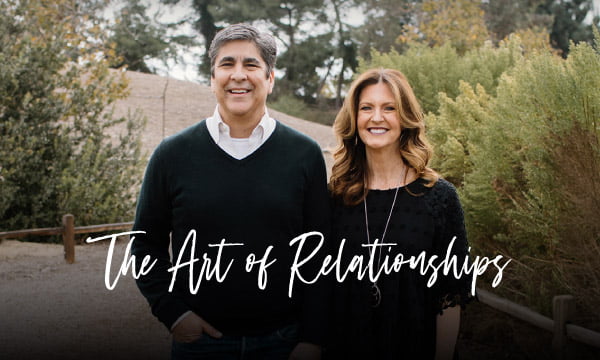
Chris Grace, Ph.D., is a professor of psychology at Rosemead School of Psychology and Director of the Biola University Center for Marriage and Relationships. With degrees in psychology from the University of Northern Colorado (B.A.) and Colorado State University (M.S. and Ph.D. in Experimental Social Psychology), he has taught and written extensively on relationships, marriage, and the integration of faith and psychology. Honored with awards for both teaching and scholarship, Chris is passionate about making research and biblical wisdom practical and accessible. Together with his wife, Alisa, he speaks nationally to couples, singles, and churches, and co-hosts The Art of Relationships podcast, equipping thousands with tools to build stronger, Christ-centered relationships.