Can You Be a Faithful Christian and Still Struggle with Depression?
In this episode, Chris and Alisa Grace welcome author and speaker Dr. Clarence Shuler for an honest conversation about depression, loneliness, anxiety, and the Christian faith. Drawing from his personal battle with depression and his book Finding Hope in a Dark Place, Clarence shares how God met him during one of the darkest seasons of his life and why seeking professional help doesn't mean you lack faith.
Together, they discuss the stigma surrounding mental health in Christian communities, how depression can affect marriages and other close relationships, and the importance of vulnerability, counseling, and supportive relationships. Clarence also shares practical insights on recognizing depression, supporting a loved one who is struggling, and finding hope even when life feels overwhelming.
Whether you're personally battling depression, supporting a spouse or family member, or walking alongside a friend through a difficult season, this episode offers biblical encouragement and practical wisdom to help you navigate life's challenges with faith, grace, and compassion.
Resources Mentioned:
- Finding Hope in a Dark Place: Facing Loneliness, Depression, and Anxiety with the Power of Grace by Dr. Clarence Shuler – Drawing from his personal experience with depression, Clarence explores how God's grace, biblical wisdom, and professional counseling can help individuals navigate mental health struggles and find hope in difficult seasons.
- Life-Changing Cross-Cultural Friendships by Gary Chapman and Clarence Shuler – A book exploring the power of meaningful friendships across racial and cultural differences and how these relationships can foster understanding and connection.
- Single and Free to Be Me by Clarence Shuler and Myrna Gutierrez – A resource encouraging singles to embrace their God-given identity, recognize their worth, and cultivate healthy relationships.
Connect with Us:
- Website: cmr.biola.edu
- Facebook: facebook.com/biolacmr
- Instagram: instagram.com/biolacmr
- YouTube: youtube.com/@biola-cmr
Join the Conversation:
- Subscribe to The Art of Relationships Podcast to never miss an episode.
- Leave a review on Apple Podcasts or Spotify to help others discover the show.
- Share this episode with someone who could benefit from encouragement and practical insights on faith and mental health.
- Sign up for weekly updates and resources from the Center for Marriage and Relationships! http://eepurl.com/bgsuQv
About the Hosts:
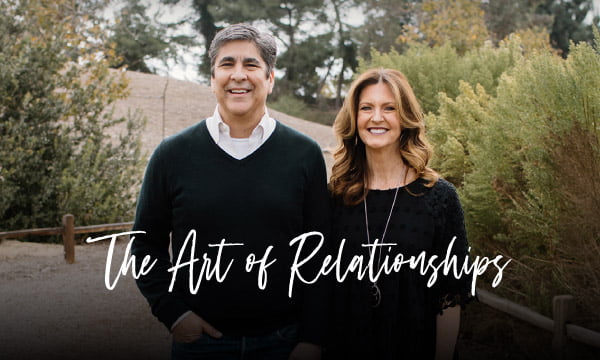
Chris Grace, Ph.D., and Alisa Grace are passionate about helping people build and sustain healthy relationships. As leaders of the Biola University Center for Marriage and Relationships, they combine the wisdom of Scripture with scholarly research to offer practical advice and insights. Learn more about their work at cmr.biola.edu.
—————
Mandy: 00:02
Welcome to another Art of Relationships podcast. We are grateful for listeners like you. Let's get right into it.
Chris: 00:21
Well, Lisa, it's uh really fun to start uh looking at different podcasts that we've done over the years, and and uh one of my favorites has always been um whenever we bring a guest on, it's just so fun to be able to hear from different life experiences, and today is no exception that uh Yeah, we have a really special guest with us today.
Speaker: 00:42
And uh Chris, do you want to talk you wanna talk about him?
Chris: 00:44
Yeah, sure. Um, you know, there's um a thing called weekend to remember and family life, and Elise and I get to speak on uh with them uh along with Tim and Naureen um Mulehoff of everybody knows from the podcast. And uh and I think Lisa, as we've been doing that over the years, um uh it we're we're actually more rookies at it. It's only been a few years. There are some that have been there for a long time. In fact, one that was uh given the outstanding teacher of weekend to remember, which is a really big deal, and that was uh Clarence and Brenda Shuler. And this recently um we uh uh talked and got in in contact with Clarence and asked him if he would join us for a podcast. And so we've been so impressed by listening and following a lot of the different people that um have been influential in in many people's lives. And Clarence, you you're one of those people who have uh just published a number of very important books. Uh, and some of your work with your wife Brenda, you guys do so much different uh uh things related to relationships, and and it's Alisa and I's goal is to do and follow what you and Brenda have been able to do for many, many years.
Speaker: 01:55
We want to grow up and be you guys. That's right.
Clarence: 01:58
Well, like one of my spiritual sons, don't be like me, be better than me.
Speaker 4: 02:02
Be like me.
Chris: 02:04
Well, we really do appreciate all of your work that you've been able to do. Uh uh you have written a number of different things, including one that's going to be coming out soon, uh, called Hope in a Dark Place about facing loneliness, depression, and anxiety. Uh, I think maybe, though we're not going to spend it on that one, uh maybe a little bit of pre-kind of let us know. Uh, you've been writing that and working on it, and it's just now coming out. Tell me a little bit about it.
Clarence: 02:30
Oh man. Well, you know, I'm uh of all the books I've written, one of my mentors, uh a Dr. William Pennell, who wrote a classic book called A Coming Race Wars back in '92 that predicted all that's happening today. And it was just re-released last year with Jamar Tiz, who doing the introduction. He said, Your books on race and stuff like that are really good, and I like your marriage stuff. He said, but the book on depression, he said, that's really your best work. And um, you know, it's it's really telling a story of my own personal battle with depression and just how God has graciously helped me with the help of a Christian counselor, uh, begin to navigate that where I can manage it more effectively. And so it and so when I share the story, a lot of people are depressed, uh, but sometimes they don't know it. And then as you talk to secular psychologists and psychiatrists, they often say that men in particular, there's an epidemic among men with depression. But um I was in this Ukrainian church uh about three weeks ago and shared the pastor interviewed me because he was so intrigued by the thing on depression. And after it was over it, his daughter came up and said, Thanks so much, because you know, the parents say she had battled with depression, and so do a lot of singles because sometimes they feel they're not married and a lot of stuff. So so it's a real issue. Um what I'm excited about the book is that I had no idea that the Bible actually talked about depression, and so that there's David, uh Jeremiah has a mild vow with depression, but also in Isaiah, God speaks more to that than anything else. I think in Isaiah 45, 3, he he talks about um, he says there are riches and hidden treasures in the dark place, and that's really the foundation for the book. And and and and what that really means is that if you're in a dark place, because we're Christ's followers, one God is with us. But if we're in a dark place, because there are hidden treasures and riches there, God's gonna teach us things. We don't have to rush out of that dark place. We don't have to fake being fine. And I think that's really great for the Christian community to understand that.
Chris: 04:44
Uh, Clarence, that that um I I so agree with uh your friend's analysis of the need for books like this and and topics like this. You're you're you've studied both in anthropology and Christian education, uh, but when you deal with something on a personal level, and so many of us have family members that are so that are close to us andor ourselves that have dealt with this. I mean, depression, when we look at it, is one of the most common psychological disorders out there, right? I mean, that anxiety, you know, probably upwards of one in four people at some point in their life are going to experience this. So when did you know this was going to be a book you wrote or needed to write? And what's your journey with it?
Clarence: 05:28
Well, uh, you know, the first time I did it, I was at the Fatherhood Commission. I'm on the board there with guys like Stephen Kendrick, uh Jeff Kemp, a guy named Mitch Temple, and some other guys. And uh, and so they asked me to do devotion. And so I, what God typically does is when I'm coming through something and I get an opportunity to speak, he has me speak on what he's teaching me about. And so I wasn't crazy about it, but I began to share this story, and people just went crazy. They were taking pictures of all the slides, and uh Stephen Kendra's kind of crazy. He yelled while I'm while I'm speaking, he yells, Clarence, this is really good. I'm gonna start taking notes. So uh, but it just freed a lot of people up. And then um, as I preached in several churches, the response really blew me away. And so I told my book agent about it, and he says, Well, okay, you need to write a book about it. And I said, I just got a sermon, I don't have a book. And so I sort of blew them off for about a year, but over the quarter period of a year, um, I sort of subconsciously prayed about it and talked about it, then God just began to reveal things to me. And I began to go back and examine my journey when I think I first began to battle with depression and uh stuff like that. So so it's it's it's been something I probably started dealing with uh probably in 1995. Wow. And um, and then there were other times I dealt with it and didn't know I was depressed until I got with my friends and they sort of got me out of it. So uh it's it's it's an ongoing battle. I just think I have a better control of it now. And so I've dealt with anxiety, I've dealt with loneliness and all those things. But um but but also in some ways, having been depressed and know that and having time to work through it with the Lord, uh has really been a lot better. I I think I'm a little bit nicer, uh I think I'm a little more patient, and and I think I think I have a little more wisdom and understanding for people um who are different. Yeah.
Chris: 07:30
You know, it's funny that you say that because I think a lot of people uh that struggle with depression or or assume they know what it is feel like people that are depressed would be kind of quieter, maybe more reserved, uh, maybe more because of the depression, more patient. But there's a lot of connection with with anger and frustration. And so they don't realize that someone that is depressed and dealing with that can actually be kind of hard to live with. And that person themselves, who's struggling oftentimes, doesn't realize that a lot of what you think would be, oh, just a passiveness in all areas, actually isn't that all the time. It's a quietness, but there's also an edge to the person, isn't there?
Clarence: 08:12
Well, people respond to depression and and or bad news in a lot of different ways. You know, some people you know go pursue pornography, some people get drunk, some people sleep. Um and so there are a lot of different ways you can do that, but but a lot of people who are depressed, and I imagine most people who are depressed are are functional depressed people. And if they haven't had that wound healed, uh one, they may not know they're depressed, and so they become very defensive, protecting themselves so they don't get hurt again. So they can often hurt the people closest to them uh because they don't really understand themselves. And and sometimes you feel people around you don't really understand you, or a lot of times maybe the biggest thing is you don't really feel heard. Yeah, and and people tend to have short patience when uh we look normal, but we're not really normal. And and one of my friends founded a ministry called um invisible disabilities.
Speaker 4: 09:14
Yeah.
Clarence: 09:14
And so people don't understand, like one of my friends, unfortunately, was sexually molested by his mom and dad and the priest where he went to church. So for him, being hurt is a real big deal, but also getting other people to listen to him, to let him share his voice, uh, is difficult too because people want to rush in and interrupt and cut him off. So it's people do respond a lot of different ways to to depression.
Speaker: 09:41
You know, you you make a great point there, Clarence, when you when you talk about that being an invisible disability that oftentimes people look great on the outside, but what's going on in the inside is completely different and couldn't be more opposite than what they're showing on the outside. So when you when you were dealing with your depression, maybe initially, what was it at what point did you did you get to where you said, mmm, I think there's something more than just being a little off going on with me. What was it that that that keyed you into maybe this is more serious and I might need to get some help? What was it for you?
Clarence: 10:26
Well, I think the first thing that happened to me was uh some things didn't go well. I'm kind of performance-oriented, and I was probably depressed for about nine months, and I went back home to uh do the baby dedication for my grandniece, and I was with some of my buddies, and they got me laughing and joking, and all of a sudden I realized I was depressed. I hadn't really laughed or joked in a long time, and I said, wow, man, I must have been depressed all this time. And God just kind of, through the power of the Holy Spirit, kind of revealed that to me. Um but then in October 17th, uh in October of 2017, something really occurred that really disappointed me. And I went really deep into depression, deepest and dark as I've ever gone. And I just really felt the Lord said, you know, um, you know, you need you need help and you need counseling. And so being a spiritual giant like I am, I said, Well, why don't you counsel me? And he didn't repeat that. And so uh in my newsletter, I kind of wrote between the lines I was struggling. And so this girl, young lady who is uh clinical psychologist, or and um she called me and said, Are you okay? You want to talk about it? And of course I said no because I don't have issues. And then when God would not talk back to me, then I called her back and said, Hey, look, uh, if you still want to help me, I need help, but I'm pretty raw. So I'm not gonna use him profanity or anything, but um I don't want to deal with all the Christian cliches, you know, all stuff like that. So I'm I'm gonna, you know, I said if you want to deal with me, you can. And God, and so she sort of walked around eggshells for a while, but she began to say things to me uh like when you're in a dark place, you know, it can be a holy place if you're trying to follow God in the dark place. So that was really profound to me. And I thought I was by myself and stuff. So so that was the beginning of my help, and and and and she just really was really pretty phenomenal. And and she actually helped write uh the book. You know, she helped explain to people why I'm so crazy.
Chris: 12:32
Yeah, well, aren't we all? You know, but but still to have to to be able to know um that that that was going on, you know, I I love that because even in in in you know psalm and even in za in Isaiah, he talks about at night and in the in the dark, and it and then he visits us, right? In the watches of the night, he says in the psalm. And and there there's something about the deep dark place that is is, as you said, could be a very holy place to be. It's just a hard and holy place to be. And so a lot of us are in that dark um without knowing it. And then, of course, Paul, I love that how he talks about in Colossians how he rescues us from the domain of darkness and transfers us to the kingdom of light. You know, Clarence, one thing you did say about, and and you're alluding to this a little bit is even within Christian circles, this has a a very negative stigma. We we, you know, I'm we're at a Christian university here, and the the students, the moment I start talking about loneliness or depression or anxiety perk up. But the next question is always, well, what do I do? I I can't go talk to a therapist. That that doesn't let God into this, or I will not take medication because that's not the way God would do this. Well, how would you respond to that?
Speaker: 13:50
Or I just need enough faith. That just means I don't have enough faith. Yeah.
Clarence: 13:54
Well, well, the trap is, you know, we we we tend to self-medicate, and and our self-medication is that is uh, I hope this makes sense, is our perception of our faith. And and sometimes we really need help. And, you know, counseling is just now coming around to where it's somewhat viewed as normal or or acceptable. And and that's because a lot of famous people uh are starting to say, I I I've struggled with depression. And so uh Olympians, uh pro-athletes, and that's sort of making it more normal. Uh, but when people when when when I become vulnerable, vulnerable and share my story, and people say how you get help, I say, Well, I got this this young lady's a counselor, and then they start freaking out. And I say, Well, you know, just like in marriage, when people come to me for counseling, sometimes what they really need to hear is a third voice or a different voice. And I say that counselor for you can actually be that different voice. And what we did in the book, we actually gave some really good guidelines for finding a Christian, you know, biblical counselor, which you should look for. And and uh and so I think that helps people see that. But the reality of it is the way God made us uh is that we need help. I mean, that's the whole nature uh understanding of spiritual gifts as a real interdependency. And their interdependence means that you and uh you two have spiritual gifts I don't have, and I need what you have, but your spiritual gift is not for you, and mine is for me, for you guys. And so as we develop this interdependency, we create a unity, and that's what really builds and strengthens the body. And so I had to deal with my pride and uh my Superman complex uh and uh say, hey, okay, I need help. And um, I think it was really significant that God had a woman help me uh because sometimes we can mistreat them or see them as second-class citizens as as well as equal uh in ministry and what they can do. So it was just really it's really been a godsend. I mean, she's a godsend, and so um so I that's why I would tell them I say, if you really want to help them get better, then I go where I can find to get get help. And um, you know, if if you don't want help, then you you know you can stay where you are and you have to ask yourself, how is that working for you?
Chris: 16:10
Yeah, boy, isn't that right? It and and many times it takes a little bit of experience, you know, with those dark places, you know, those those moments of either it's a crisis of faith, you know, that that's happening spiritually, but most likely it's accompanied by this emotional uh deadness and and this uh deep sadness. And Clarence, I'm just so grateful that you've taken this on. And and that book comes out, it sounds like a November of 22. Um and so uh tell us one more time the title and and who should go buy that thing.
Clarence: 16:44
Well, actually, I think anybody should go buy it just because if you're not depressed, hopefully you aren't, but you may have a friend who is. And it it really gives you some information as to how to walk with them. If you're personally depressed, we very gently walk with you and try and just get you to see where you have some choices and help you take baby steps. But the name of the book is um is finding hope in a dark place, uh facing loneliness, depression, and anxiety with the power of grace. And and power of grace is really, you know, God is what we're talking about. So it's it's um it's very transparent, it's the most transparent book I've ever written. Uh, everyone who's endorsed it, like Gary Chapman, Stephen Kendricks, and all these other folks, uh, you guys know Jackie Bledsoe. Um they've just really had profound uh response to the book. So uh so we're really excited, and and people can actually uh pre-order it now. Uh it'll be officially out um I think December 14th.
Speaker: 17:43
So Clarence, you one of the words that you have in the title there, I'd love to hear your thoughts a little bit more on the relationship between loneliness and depression. Like um just this last week, I came across a statistic here at Biola University of all things that at some point during the school year, 72% of our students report feeling lonely. That's significant. I had no idea that it would be, you know, that high. But talk a little bit uh, Force, about the relationship between loneliness and anxiety and loneliness and depression.
Clarence: 18:23
Well, you might have to come back with some of the questions because I'm on Medicare, so I can't remember all of that. But uh but uh you know, I think, especially at not just by all, but in college and even at near the end of high school, our transition from elementary to middle school, those transitions uh take us to a place we haven't been before. Um and we can be really lonely if we don't know what to do or have a friend who's gone before us to help us walk through that. Uh we can question our uh our adequacy uh academically, intellectually. Uh, we look at ourselves, are we not really good looking enough or athletic enough or have enough money? All those things can make us be, you know, challenge us. You know, I think at a school like Boola, um, where it's academically challenging, and it might take everything the student has to be the very best, whereas in high school, he or she didn't have to work as hard. That can be challenged, that could create self-doubt. Um, and typically what I tell singles, you know, you need to like you, and and you need to understand the difference between self-worth and self-worship. And and and I say self-worth means you have value and you have purpose, you have a destiny. And so if you understand that and see yourself the way God sees you, that makes a tremendous difference. But if we have a poor self-image and I need somebody else to make me feel good, then that loneliness uh can become an idol or a plague, and we're always searching for someone else to feel it, and we typically don't go to God to feel that. We want someone we can physically see. And so I think that can really make us depressed. Uh when I was at Moody, I was the first African-American to play basketball there, and there were like 1,100, 1200 students. There may have been 11 or 12 African-American or people of color, not just African Americans, probably about nine African-Americans. And it was a time when people, it was a culture design without people of color in mind. And so it was very lonely. In fact, people didn't even speak to me until basketball season started. And then I went from the outhouse to the penthouse. And so you have to figure out ways how do you navigate that. And if you're not a leader, then I think it's even more pronounced. So those are things I think are important. Then anxiety comes to is typical in expectation of like for extuders taking an exam, never gonna pass it or whatever, and so you're afraid of what's of what's next. You're not sure what to have how to deal with what's next.
Chris: 20:53
Yeah. So Clarence, um, one of the things that uh you're known for and you've written about um is is race relations and cross-cultural perspectives. Does this uh particular issue of depression show up differently, let's say, in an African-American community than in an Asian community or a white community? And and and what what have you found about that when you go around speaking? Does it just seem different? Is com does community come around differently in different places? Because we we have certainly found that here, that some uh cultures talk about this and and allow it, and others, man, they run from it and hide. And what's your fine, what, what's your kind of insight on that?
Clarence: 21:36
Well, it's really a great question. In fact, Bill Pinnell, uh, who read this book, he said, um he said your treatment for the black male in this book doing depression is huge. He said you're gonna help a lot of black men. Often I've been the first black American to work for a Christian organization. And, you know, when your first one in a house, it's really, really difficult because they're not really designed to. Help you be a part of that. Sometimes they're threatened by that. And so you sometimes you get a constant rejection. Or in some Christian circles, conservative circles, the black male is the is the root or cause of all social ills in America. And it's communicated very subtly, but you but you become the issue is you. And so it's really hard to deal with in the context of Christian folks because you're like the enemy. And so and so you try and navigate that. Then some people try and prove that they're worthy to meet a certain standard. And it can become really difficult. And I've talked to Asians who are the acceptable minority in America, but also struggle with that. And uh, and also Latinos as well. And but typically say the biggest rub is between you know whites and blacks and how that makes a difference. So it's a really big deal in the Christian community of how people of color, how women are treated in Christian organizations, Christian uh institutions of a higher learning. It is it is huge. And if you don't have someone to talk about it, um it can make you crazy. And then there's a difference between those who depress who are leaders and visionaries versus those who were who tend to be followers.
Chris: 23:16
Yeah, that's exactly right. Because there's it's even your very last point, it it's much easier um to hide if you haven't made yourself a target out there. That is, if you're not speaking a lot and and you're just doing your job, doing your ministry and uh, you know, and and and serving God in a way, um, you know, depression's gonna hurt and and be hard. But for some people like yourself and others that have you know been put in leadership positions, that target seems to be strongly on top of you. And the ability to, you know, fight off or admit to be dealing with some issue that is like you said, Superman, superhumans, and those in the penthouse, man, they don't need that. And they're they're not dealing with that. But in reality, Clarence, it feels as if there's a target. And even our enemy can attack some of us in that way. What do you think about that as a leader, a CEO of an organization, as someone nationally known? It feels as if uh our enemy Satan can can actually go at you much harder in this area.
Clarence: 24:23
Well, you know, you're asking really great questions and making great statements. You know, what's sad is that a lot of times in a Christian organization or church, uh Satan can use other believers who aren't necessarily walk with him at the time, who aren't necessarily out super antagonistic, but they can be instruments of insensitivity. And so when you get that, it really becomes hard as an individual, and you have to have a support group around. Well, you don't have to, but I think it's important to have a support group around you who you can talk about anything. And even though a support group may not agree with everything you say, they allow you to be heard. And there's tremendous therapy in just being heard. And you might want to come back later to that person a couple hours later and say, hey, you know, Chris, you shared this, or at least you shared this. Um, can I share it, give you a response? And then that's okay because you've been heard, but you really need that. A lot of times, though, when you're the first one in the house, you don't have that support group. That's right. You know, and and and honestly, you actually need, if you're a person of color, you need a person who is white, who's a part of majority culture who's sensitive enough to understand it to help you navigate all that. Um, and if you don't, it tends to be us against them, and they wonder how come you aren't performing. And so there's so many nuances to all that, to how we process information, to how we respond to uh conflict, uh, which I wrote about in my other books. Um, so those are things that a good CEO has in some sense be like a pastor and visionary and try and minister to everybody and understand I gotta get the whole body working together well for us to be productive and effective and profitable um in this ministry. In the church, you want to do the very same thing, so it becomes a safe place for people, no matter what their uh their culture or race is, that they can come to your church. And so, uh, but that takes work, it takes a lot of cultivation, takes a lot of really biblical discipleship in growing people in their faith and teaching them how to really help make disciples, and then you kind of get a real vision for that.
Chris: 26:27
Uh, you know, uh just following up too with your life story, um, I I would bet uh that there's a a lot of insight and wisdom and experience that you can share too. When you mentioned the idea of being an athlete, um going from the outhouse to the penthouse when people recognized who you were, and then as your career comes to a close or as your playing days end, it would almost feel uh like there's an amazing change again back. And I would imagine for a lot of young athletes, a lot of people that you know feel accepted in in, let's say, a sports environment, let's say an African American excels in an area and is seen as a leader, and then all of a sudden those playing days come, you know, and Clarence, is that an issue? I was it an issue or was it hard for you to, as an African American, to also navigate, wow, here I am, people recognize me and see me, but now I'm done playing.
Speaker: 27:23
Kind of like a crisis of identity here.
Chris: 27:26
Like you're no longer this athlete that, you know, can have a platform that you know, and you built so you know, you looked into that and and invested in that.
Clarence: 27:35
Well, y'all not gonna charge me for this counseling session, are you? I'm telling you all my stuff. Um, yeah, you know, I I got to play basketball at very high level. Someone at Moody saw me play, and then I got to play these teams that played around the globe sharing basket, playing basketball and sharing a gospel, a gospel against national and Olympic teams. And then my coach at Moody even uh was gonna work out a deal for me to get uh a tryout for the Boston Celtics. And um, so I was used to playing high level, play against uh Brazil's Olympic team and and loved it. But yeah, when it comes to an end, uh what I really did, I sort of cheated when my basketball days sort of ended like that, because the bigger the crowd was, the better you played. And it was just a really great feeling. Uh but then I cheated and I and I went to uh play tennis, and so I became really good at tennis through my mid-30s and 40s. Uh but eventually when that when that goes away, um you have to figure out um how to pray. That's another transition where you become lonely, you can become depressed because I'm now not getting the recognition of the crowd. And but then I also, through the grace of God, began to see that that was also sometimes for me, not everybody, it could be forms of idolatry and that you need to recognize me because of what I used to do. Or are you going to room thinking, if you knew how good a ball player I was, you would really want to talk to me or whatever. And that and that's really a a negative thing. And so the good thing about not playing now at that level, uh, it's just uh I've learned that I've learned to like me more and I've learned to get to know me more. And it's not what I can do for folks, it's just being me. And I've come to this thing where you know, if people like me, that's great. But if they don't like me, I'm I'm okay with that. And uh, and and and not in a you know sour grapes thing. So I think we have to really get our identity. And let me just share this one thing I think is really, really important for whether you're single or married or ex-athlete, whatever. You know, in Genesis 1:26 through 28, you know, God asked the trend about making humans, and he's omniscient, so omniscient, so he knows if he makes us, we're gonna make mistakes. And so I think what's significant about that is that God wants us. And then because he gives us his DNA, talks about he, he three times in two verses, he mentions the word image. I call it DNA. So it means because we have his DNA, that we're valuable, uh, we have purpose, we have a godly destiny. And then the last one, verse 28, some Hebrew scholars say that word can be translated wow. So that means that every time God looks at you and me, he goes, Wow. And so I think it's really cool because the God of all creation calls you and me, uh, he says, Wow, or in Psalm 139, I think verse 14, he in some translations it says wonderful or marvelous. And so if we understand that's how God views us, then that puts a whole different perspective on us trying to perform or have a reputation and just learn to be accepted for who we are. And it's really as who we are, it's what really brings blessing to those who don't know Christ, to those who do know him. And so I think learning to know yourself and really liking yourself is a real big thing I talk to singles about because if you're not content being single, you'll never be content in a friendship, dating relationship, or a marriage. You'll always put that other person on a performance track.
Chris: 31:03
Man, that's so good. And and by the way, if you have if any listener hasn't haven't read Single and Free to Be Me from Clarence and I think it's uh Myrna Guterres, uh, go check that out. You know, I it's it's a great book as well. And you know, I I love that Clarence, those verses about our DNA. I every time I get in trouble with the Lisa, I'm like, Lisa, I am God's job. I have his DNA. You know, who are you to put down on God's DNA?
Speaker: 31:29
I'm looking at you going, who's your daddy? Because I need to have a talk with him.
Chris: 31:33
And I keep saying, I'm in his image. And why are you telling me to go clean the toilets and the kitchen? You think that's and and she points to somebody named a servant Jesus, and then it gets all messed up. So please maybe we can reverse this and you can help us with the Chris.
Clarence: 31:51
I I'm off duty. Y'all not paying me for this session. Uh this is an A and B conversation. My name starts with C, so I'm gonna see my way out of that.
Speaker: 32:01
Gosh, you know what, though, that's a that does springboard me to another question I wanted to ask you, Clarence. Um is that your wife, Brenda, how long have you guys been married?
Clarence: 32:13
Uh 37 years. Uh, she said that um she would have traded me in, but she waited too late for my warranty to expire. She can't admit it. So three, so she's stuck with me. So 37 years.
Speaker: 32:24
All right. You know, I wanted to ask you, uh, because in in marriage, when you have someone in your family that's struggling with depression, especially in a marriage relationship, that can be so key to how this plays out in your ability as the one who's struggling and dealing with the depression. Your spouse's support can be like one of those elements that makes or breaks your healing process. And so how did you and Brenda even have that initial conversation? And and then how did she come alongside you? What are some specific ways she came alongside you and supported you? And, you know, in in thinking that people that are listening to this podcast today, there are many out there who are married to somebody or have a family member that is struggling with this, but specifically marriage, how did she come, how did you initiate that conversation or or how did she? And then how did she come alongside you? What did she do that was really helpful for you on the support network?
Clarence: 33:29
Well, I think she was surprised because uh my persona is one of of strength, you know, uh being raised to say there's nothing I can't do if I don't want it bad enough. And um and so getting a scholarship to play basketball, uh getting to play all doing all these things, uh even through God's grace, writing books. Uh I have and having been a pastor, uh you know, there's a very strong persona. So she was uh she was really surprised when I began sharing about my depression and the causes of it. And so I think the biggest thing she did was listen. I I think it's important if you can that you don't make your spouse or significant other your caretaker in in regards to I mean if they want to do that, that's fine, but I I I wouldn't necessarily put that on that or expect them to do that. It's above most people's pay grade, isn't it? It really is. And they're not really trained in that, so they can listen to that. Um so I think so there was probably more affection. Um, you know, when uh Isaac lost his mother and they brought Rebecca to him, uh there are implications that when he loved her, it was wasn't just the emotional level, it was also a physical love. And so even in that, uh said that even the sexual intimacy a lot of times can be a gift from one spouse to the other to soothe them, to calm them down, to help them feel better. And just and also the intimacy, that closeness, that touching, uh, can be really, really important. And so um, so I think those are really important things. And then I I think for Brenda, she had to understand that um she would at first she would say, Well, you're you're doing this and that, so you know how kind of how depressed are you? And so and so that's hard for her because she's if you're still functioning, because we had three girls you had to take care of and different stuff. Sometimes people say, Well, if you're still functioning, you're not in a room, you're not in a ball in the in a room somewhere, then you you're not really depressed. So it was kind of an education piece for her in that. Yeah, and um, and just because I speak so much and do so much counseling stuff that I've sort of become I instead of the life of the party like I used to be, I've sort of become a recluse. And and then and she who was very shy is now the party animal. And so uh so she's always dragging me somewhere. But um I think I think just that communication, yeah, and you know, because uh one of my phrases is that communication is to marriage, what location is to real estate. You gotta communicate, communicate, communicate, assume nothing and talk about everything. And so when she began to see something different, so we also emphasize one of my things we've been doing for 20, 35 years is telling people you need to be a student of your spouse. And so when she can see something's different, uh, you know, then she could ask, and then I would tell. So so that's sort of how that came about. It's like, hey, you're you're a little bit different, kind of what's going on. And that began began the conversation.
Speaker: 36:36
So what I hear is really there were two parts to that, wasn't there? That that she had to be curious and ask, but then you also had to be honest and share.
Clarence: 36:49
Yeah, that's not my strong suit, but uh yeah, I had to be, yeah. One thing in our marriage, we've tried to be brutally honest with each other. That works for us, it doesn't work for other couples. And so when we answer a question, well or you ask a question, then you then you answer the question.
Chris: 37:03
Oh, that's really good. Gosh, there's so much to talk about, and and we are not going to keep you any longer, um, uh Clarence. But you're you're just uh uh so much there. We we barely even mentioned that you have a book that just came out as well on life-changing cross-cultural.
Speaker: 37:19
Which is what we were supposed to be interviewing you about.
Chris: 37:21
Here we are talking about you've got so many books out there with you know, singleness and cross-cultural friendships. And but but that you know, that book, uh The Life-Ching Cross-Cultural Friendships, just came out. And I'm going to encourage listeners uh to uh go out and and find that book. It's written with Gary Chapman, the author of the Five Love Languages, um and somebody that again that we love and respect as well. And and Clarence, I would love to have you back on and just to talk about what is that the the changing, the life-changing part of this. Your story with Gary is amazing. Walking into a gym with I'd love to hear about Russell as well, man. Your buddy that's never happened to Russell. Yeah, we want to know more about Russell because that boy sounds like someone who is like, I'm just gonna go in there. I'm the most beautiful looking thing in the world, and everybody's gonna love me. And you're like, I'm gonna follow you and take care of you, even though you are one inch taller than him. I love that story. Um anyway, Clarence, we need to have you back on and and and and talk about that for listeners. Uh, you can find the book we've been talking about just now uh uh called Facing, well, it's Finding Hope in a Dark Place, right? Facing loneliness, depression, anxiety.
Clarence: 38:31
Finding hope in a dark place, yes.
Chris: 38:33
And that's coming out in late 2022. Uh and then the one that came out this summer, Life Changing Cross-Cultural Friendships, um uh that one came out already at this summer. And uh Clarence, you I apparently you write a book every couple of months, and so it we'll just have you on here because maybe podcast interview every six months.
Speaker: 38:53
That's right.
Chris: 38:54
Clarence, what's the latest book you got out there? So thank you. What concluding thoughts, thoughts about, you know, and uh, you know, just you've been such an encouragement to no doubt the listeners who are struggling in areas and want to know um, what would be your final challenge to someone who's struggling in this area?
Clarence: 39:11
Well, I I would say if you know you're struggling, admit it to yourself that you're struggling, and then someone you really can trust, I would say, I need help. Yeah, you know, can you help me? Good. And then if you're a Christian, I would ask God to provide that person you need for help. That's great. And if you're not a Christ follower, then I would really research a person, a psychiatrist, psychologist who could possibly help me, who has a good reputation uh in in their field with clients. So that's what I do. So the biggest thing is admitting you have a problem and then seeking help for that problem.
Speaker: 39:46
Beautiful, beautiful. Clarence, thank you. Thank you so much for joining us today. This has been a fabulous conversation. We hope you'll come back. We'll we'll definitely be hanging up and scheduling our next podcast with you. We'll be calling Brenda to get on on your schedule. But we really do want to thank you. We hope uh that we get the chance to speak with you and Brenda one day uh at weekend to remember. So so we're gonna call and put in our special request for that.
Clarence: 40:15
Y'all do that. Y'all do that. I love that. That'd be so much fun. And thank you to one for your relationship with each other, your relationship with Christ. And then uh I I thank you for the gift of your friendship. I really have been blessed by that. So I'm looking forward to hugging your neck in January. That sounds awesome. Yeah, we'll see you there at the conference. That's right.
Speaker: 40:34
Yeah. And we just want to tell everyone thank you so much for uh tuning in to the Art of Relationships podcast. Uh, it's produced by the Biola University Center for Marriage and Relationships. If you want to find out more information about the center, go to our website, cmr.biola.edu. Uh be sure to subscribe, give us five stars, and share this podcast with a friend, a family member that you already know needs to hear about it. And we'll look forward to uh our next episode with you.
Mandy: 41:06
See y'all next time. Thanks for listening to the Art of Relationships. This podcast is only made possible through generous donations from listeners just like you. If you like it and want to help keep the podcast going, visit our website at cmr.biola.edu and make a donation today.
Authors

Chris Grace
Chris Grace, Ph.D., is a professor of psychology at Rosemead School of Psychology and Director of the Biola University Center for Marriage and Relationships. With degrees in psychology from the University of Northern Colorado (B.A.) and Colorado State University (M.S. and Ph.D. in Experimental Social Psychology), he has taught and written extensively on relationships, marriage, and the integration of faith and psychology. Honored with awards for both teaching and scholarship, Chris is passionate about making research and biblical wisdom practical and accessible. Together with his wife, Alisa, he speaks nationally to couples, singles, and churches, and co-hosts The Art of Relationships podcast, equipping thousands with tools to build stronger, Christ-centered relationships.

Alisa Grace
Alisa Grace ('92) serves as the co-director of the Biola University Center for Marriage and Relationships where she also co-teaches a class called "Christian Perspectives on Marriage and Relationships." While she speaks and blogs regularly on topics such as dating relationships, marriage, and love, she also loves mentoring younger women and newly married couples, speaking at retreats and providing premarital counseling. Alisa and her husband, Chris, have been married over 30 years and have three wonderful children: Drew and his wife Julia, Natalie and her husband Neil, and their youngest blessing, Caroline.