Ask the Expert: What Can I Do When My Spouse Dismisses My Feelings?
Question: What step does a couple take next when you try to communicate well how you’re feeling, and the other says, “Well, check your feelings because they’re not factual”? It makes me totally shut down because I don’t feel safe to speak!
That is such a great question, and such a tricky situation! What makes it so tricky and difficult is that there is only so much that you can do and are responsible for. Your partner also has a job and responsibility here, and unfortunately, you can’t make them do it. That is under their control and responsibility.
However, there is some good news! When you take up your responsibility and begin to interact differently with your spouse, there is a ripple effect. There are no guarantees, but your actions do have an influence on your partner and on how they respond to and interact with you. As my graduate professor used to say, “If you change the steps of the dance and your partner wants to continue dancing, they will begin to change their steps in response.”
When someone says, “Well, check your feelings because they’re not factual,” that would be very invalidating and hurtful! It makes total sense that you would not feel safe and would shut down to protect yourself. The problem is that, even though that shutting down response is normal, reasonable, and understandable, it is also not very helpful. The relationship is not going to grow or be healthy as a result. You will want to begin to respond differently and more healthily to your spouse when they say things like that, even if it is just because you want to be healthy. Let’s look at some ways that you can assume your responsibility and begin to act differently within your relationship, even if it is just you who is working to change.
1. Give your spouse the benefit of the doubt
The first thing that you will want to do is give your spouse the benefit of the doubt. Assume that there must be at least a partly understandable reason for their response to you. Perhaps they had a hard day, were upset, and so were speaking out of their tiredness or frustration. Maybe when you were trying to talk about your feelings, they felt attacked or blamed, and so gave their response as a self-protective measure. Maybe they felt a little guilty or convicted by what you were sharing, and so again, they responded that way to protect themselves from having to actually look at themselves and their behavior. Maybe that kind of reaction was what was modeled to them growing up, and so they don’t have a template for a better kind of response. Giving the benefit of the doubt doesn’t make their response to you okay or mean that you just have to accept it. It just means that you can have more understanding and empathy when talking with them about it.
2. Describe your experience
The second thing you can do is work on learning how to stand up for yourself without putting your partner down. The way to do that is by being descriptive. Instead of saying what your partner is or isn’t doing, attacking, blaming, or criticizing them, you describe what is happening for you in a non-defensive way. Components of your experience are how you think about the situation, how you feel about the situation, what you would like in the situation, and what you wish for in the situation. You can clarify that you understand they may have a different experience of the situation than you do, and you want to understand their experience. And you also would like them to understand your experience of the situation as well. Drs. John and Julie Gottman describe that for every situation, there are two different, equally valid experiences of it. A very helpful template to use to describe your experience is to say, “When ______ happens, I feel ________. It would be helpful if ________.” Using this template is a very simple way to stand up for yourself without putting your partner down.
3. Share what you want assertively
The third thing you can do is work on learning how to be assertive with sharing what you want and are looking for. Using the above-mentioned template does double duty; it also serves you well here, too. It helps you be assertive in sharing what you would like and want in a kind way. It is important to remember that assertiveness is a necessary, healthy quality to develop. Some people avoid being assertive for fear of being aggressive. But being aggressive is demanding what you want without any consideration of the other. If you fear being aggressive, the fact that you worry about it shows that you almost certainly won’t be. You do care for your partner’s feelings and considerations. You are just looking for mutual consideration and understanding. And it is not only okay, but it is also healthy and loving to ask for it.
4. Actively listen to your partner
The fourth thing you can do is actively listen to your partner. Model for them how you would like to be treated and listened to. They will feel considered and important to you. Now, there are no guarantees, but the odds do go up that, as a result, they will do the same for you. And actively listening does not mean that you must agree or go along with what they are saying. It simply means that you care about them and want to understand them better. A side benefit is that you may learn something that helps you empathize with them more.
5. Don’t slip into resentful compliance
The fifth thing that you can do is make sure that you don’t slip into resentful compliance, just giving up and going along with what your partner is saying or with how they are treating you in order to avoid any tension or confrontation. It is easy to do that if your partner doesn’t respond well to your efforts to talk with them, and odds are that they initially won’t respond well when you do talk with them. But resentful compliance has a short shelf life; it is not sustainable. And it is not helpful for anyone. Resentment will build and will eat away at your connection with your partner. It is important that you don’t hold a grudge, and that you continue to be descriptive and kindly assertive with what you are thinking, feeling, wanting, and wishing for. To be assertive actually is a very kind, loving thing to do, because you are looking to grow the relationship in a healthy way. The relationship and your partner matter to you, so you are willing to do the work of being descriptive and assertive.
This situation is a tough one, for sure. And there is no easy fix. But by doing what you can and what you are responsible for, you increase the odds that your partner will respond positively to you and that your relationship will deepen and grow. Let them know what you think, feel, want, and wish for. And then be curious with them about what they think, feel, want, and wish for. Be responsible for yourself and what you can do. And pray for your partner, that they will be open to this change in how you treat each other in your relationship. Then pray for yourself, your partner, and your relationship, and trust the Lord with your relationship. Leave it in His hands. He will strengthen, guide, and provide peace and direction.
Authors

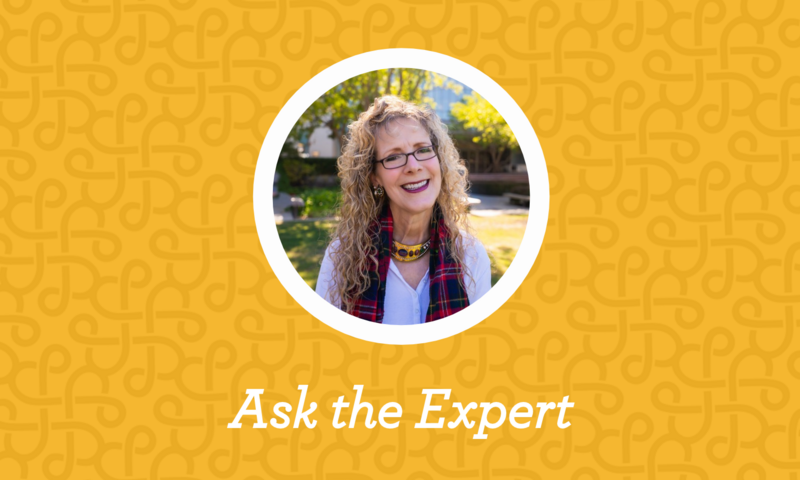
Willa Williams
Willa Williams is a former missionary and current Licensed Marriage and Family Therapist who has been married for almost 40 years and has two amazing sons and two lovely daughters-in-love. She works at the Biola Counseling Center as a therapist and is the Consulting Therapist at the Biola Center for Marriage and Relationships where she also co-teaches a class on Christian perspectives on marriage and relationships.
Willa has a Master of Arts in Religion from Trinity Evangelical Divinity School (Deerfield, IL) and a Master of Arts in Counseling in Psychology from Trinity International University (Deerfield, IL). She is Level 3 Trained in the Gottman Method of Couples Therapy, a Certified Prepare/Enrich Facilitator, and graduate of the Couples Institute, Level 1 and 2. Before coming to Biola, she served overseas at the Spanish Bible Institute in Barcelona, Spain, where she taught a class on counseling skills for pastors and served as the staff therapist for the students. She has a passion for healthy relationships and enjoys working with couples as well as individuals. She appreciates the immense impact that healthy marriages and relationships have on couples as well as future generations.