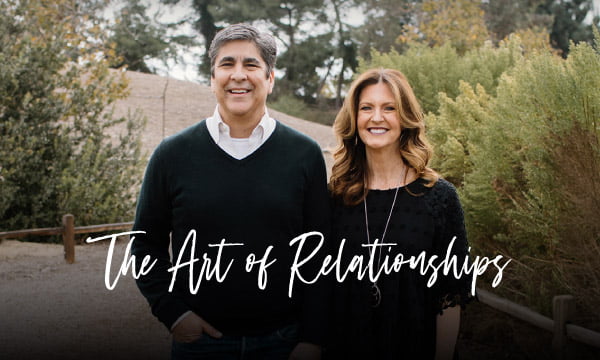
When You Don’t Match: Is Something Wrong With Us?
In this episode, Chris and Alisa Grace explore what it means when you and your spouse do not always see the world the same way. They discuss why compatibility does not mean sameness, how differences can trigger deeper insecurities, and why conflict often feels threatening when the stakes seem high. Through practical examples involving money, parenting, social preferences, and faith, Chris and Alisa explain how humility, grace, and honest communication can help couples stop trying to change each other and begin appreciating what each person brings to the relationship. Whether you are dating, engaged, newly married, or have been together for decades, this episode will help you navigate differences, challenge the stories you may be telling yourself, and create a relationship where both people feel known, accepted, and emotionally safe.
Resources Mentioned:
- Weekend to Remember in Bellingham – Join Chris and Alisa at FamilyLife’s Weekend to Remember marriage getaway at Semiahmoo Resort Golf & Spa in Blaine, Washington, October 23–25, 2026. https://cmr.biola.edu/events/2026/familylife-weekend-to-remember-marriage-getaway-bellingham-wa
Connect with Us:
- Website: cmr.biola.edu
- Facebook: facebook.com/biolacmr
- Instagram: instagram.com/biolacmr
- YouTube: youtube.com/@biola-cmr
Join the Conversation:
- Subscribe to The Art of Relationships Podcast so you never miss an episode.
- Leave a review on Apple Podcasts or Spotify to help others discover the show.
- Share this episode with someone who could benefit from these relationship insights.
- Sign up for weekly updates and resources from the Center for Marriage and Relationships. http://eepurl.com/bgsuQv
About the Hosts:
Chris Grace, Ph.D., and Alisa Grace are passionate about helping people build and sustain healthy relationships. As directors of the Biola University Center for Marriage and Relationships, they combine the wisdom of Scripture with scholarly research to offer practical advice and insights. Learn more about their work at cmr.biola.edu.
—————
Mandy 0:00
Well, you love each other, you chose each other, and sometimes you can't believe how differently you see the world. One of you's a saver, one's a spender, one wants to talk about everything and talk it all the way through, and the other needs space. One loves a packed social calendar, and like me, oh, you would rather stay home.
Alisa 0:18
Right. And when those differences show up, it's so easy to start wondering: are we too different? Or did I marry the wrong person? Or shouldn't a healthy couple be way more compatible than this?
Chris 0:32
Yeah, in this first episode of When You Don't Match series, we'll explore why compatibility doesn't mean sameness and how couples can learn to understand, appreciate, and navigate their differences, even enjoy them without constantly trying to change each other.
Mandy 0:49
Welcome to the Art of Relationships. This podcast is produced by the Biola University Center for Marriage and Relationships. Let's get right into it.
Chris 1:00
Well, welcome back to another Art of Relationships podcast. So thankful that you guys join us, whether you're joining us on Spotify and listening or whether you're watching this on YouTube, wherever you're at. Uh, I'm Chris, and this is Elisa. Uh, we love being able to talk, uh, at least on this podcast about all things relationship and in this case a new series, uh, looking at the idea of compatibility and sameness and what does that mean if you not if you're not. Uh-huh.
Alisa 1:27
Yeah, that can be really scary for some people, but it's a really important topic that we want to peel back the layers today and help people get a grounding and understanding of what do you do when you're not always compatible.
Chris 1:41
And one of the things that's not the same is our podcast room. Check it out. Well, yeah, we've upgraded it thanks to Recrash. Yeah, our marketing communication expert, Tatum Unives, and then Rachel Pistana, her sidekick helper, who I believe does all the nailing, I'm not quite sure, and all of the framing, but I think Tatum is the brains behind. Well, anyway, welcome to our new podcast room. It's it's the same room, it just looks way better. A little different. Yeah, and sometimes, Lisa, sameness, you gotta make some changes going on there, right? And that's what we found out. But in relationships, when it comes to marriages, here's the thing that you and I, and here's what I'd love to have you think about and address, Lisa. It's this. Um, I'm compatible, uh, and you and I have noticed that right away. First of all, we have similar senses of humor. Yes. And you know, and we've talked about all these things that you know you want in a marriage and in a relationship, right? Kindness and you know, uh outgoingness, but we start to differ and knew we knew that at going in. I knew you were an extrovert. Yes, I knew you loved people, and you knew that I was a little bit more comfortable in a guarded calendar where we're at home a little bit more.
Alisa 3:00
Yeah, I think while we knew that there were those differences, I don't think we really anticipated the depth of impact that it would have on us, on our relationship, just in daily living that out.
Chris 3:14
Yeah, so all marriages have differences, right? We're created, says the psalmist beautifully in 139, all about I made you informed you in the womb. I he gave you this kind of unique setup. Uh, I went like that. And but he gave you this unique uh personality and your loves and your likes and your desires, and it's what attracted me to you in the same, I would imagine, you to me, was the differences, right? What very what did you know that was going to be different about us that you're like, all right, this is gonna be awesome.
Alisa 3:48
Gosh, I th you know what? I if I'm gonna be really honest, Chris, I think I saw our similarities way more than I paid attention to any differences when we were dating and when we were engaged. I don't think it I really don't think it hit me or that I really saw it until we actually were living together and doing life day to day. Yeah. And so, you know, that's one of the cautionary tells too, if you're dating and that you're engaged, to are you really seeing in reality, yeah, we have a lot in common. There's a lot of things. If we didn't, we probably wouldn't have found each other as attractive as we did. Yeah. But um, I'm not sure I really took into account how different we were, and that that caused a little bit of problems, those I wouldn't say the first year or two, but after a year two or three, I think once that uh that initial, you know, the that newlywed honeymoon phase kind of starts to wear off and you get more into the day-to-day living. I think that's where it became more of a problem. And you and I had more issues going on that we had to learn to address.
Chris 5:08
Yeah, I I could think early on those differences for me uh were kind of fun and exciting because I felt like it stretched me a lot more, right? We didn't have any money, and so at the time I didn't realize you were such a spender. Yeah. Uh and you know, I'm like, wow, all right, as soon as we had money, we didn't. You know, it was weird.
Alisa 5:29
We didn't have it for long.
Chris 5:31
And so, but it was one of the first things we had to figure out was wait a minute, what does money mean to you? And what does it mean to me? Because being, you know, similar doesn't mean that I view money the way you did, and you saw it very differently, right? And just because of your background, your history.
Alisa 5:50
Right. And even at that very beginning, those differences can come across as cute. Yeah. And oh, that's really cool that he's this way. You know, I love the way he really is responsible and manages our, you know, his money really well. And I love the way he just is content to be, to be at home. Doesn't take a lot to make him happy. And and those things were adorable. They were cute. I love those.
Chris 6:19
I I think they still are. And uh one of the things that you did uh that you said that you kind of couldn't believe is uh early on, uh even while we were maybe gosh, even engaged. I don't know, I said, Lisa, one of the cool things I like is to be able to provide you with some, you know, and and money.
Alisa 6:38
Give you money. You actually said those words. I like to give you money. I think we're engaged and we're planning our wedding.
Chris 6:46
Yeah, and it's because, you know, I had worked, you know, my whole life, you know, and and did all these side jobs while going to school and have been able to save some. And uh knowing that one of the things that I really wasn't much of a splurger spender, but it saw That's why you had money. Yeah, and I saw the joy it brought you when we finally did come into money. And I still believe that. I wished I never had said those words, but deep down in my heart, I'm really grateful that um it's still a joy for you, you know, to save, save, save, and then prepare and plan for something. But Lisa, when it comes to that difference, all right, you know, the idea of being extroverted or introverted or wanting to stay home, there were areas where we're different, but I needed to change. I mean, I, you know, I could enjoy time always at home, uh, being just with you. And it really was something that I was forced to confront a little bit when we first got married was the importance of being and connecting with other people, other couples. And that's when I started to realize not all differences are healthy and good from uh on both sides. Right. I mean, I guess on the counter, you had to learn to kind of learn to sit quiet and be together, even had been two weekends in a row or we weren't seeing people.
Alisa 8:10
And did that mean that we weren't compatible? Well, not necessarily. Just because you're different doesn't mean that you're incompatible. And compatible doesn't mean that you're the same. And for to for us to have a happy marriage, a successful marriage, a relationship, doesn't mean that we have to view every single thing the same way. And that if we don't, that we're in trouble. That you one of us is wrong, and one of us is right, and I'm pretty sure I'm the right one, and you need to come and start doing things the way I think they need to be done, or else you're wrong.
Chris 8:48
Yeah, and see, that's the problem. You got issues. Uh that's wrong. I did have issues. Well, we all do. We all do, because Lisa, what you said is this, and I think this is really important for couples uh to hear. Uh, compatibility doesn't mean sameness, it doesn't mean right and wrongness. And in fact, to twist that on and put it backwards goes like this. What if God is actually using these differences in the way we view things to make me more like him? What if the strength of my marriage, the strength of my relationship and with God and my relationship with you? What if it's by the virtue of being different that God uses that to create somebody better, stronger, healthier?
Alisa 9:38
Kind of rub off our rough edges.
Chris 9:40
And what if God is saying, this is the way I'm gonna rough up the things that need to be less sharp, the things that need the edges that need fixing. And I think when that happens, I now view the fact that we have differences as a real strength rather than as something to go, oh dear Lord, one of us is wrong and one of us needs to get this right and to change. And what a great way to see that God is in the process and in the game of sharpening each one of us. And the best way he does that is through differences that I have with you that are fixable and reveal some things about each of our hearts that may need to be opened up and peeked at a little bit for couples.
Alisa 10:30
So, Chris, if that can be such a positive process, why do you think that couples or individuals even can feel really threatened when some of those incompatibilities show up, those differences show up. Why does that rock somebody in their world like, wow, I don't know if we're meant to be together, if we're this different?
Chris 10:55
Well, yeah, yeah. To come to the conclusion that you shouldn't be together because of differences had better be something that you do while you're seriously dating, maybe even before you get engaged. I mean, if you're asking the question, wow, this, you know, we shouldn't be together because of this difference is so powerful. I think that needs to be explored in premarital counseling. But let's suppose you're already now in marriage and there's just that one thing, and maybe the conclusion isn't, oh no, we shouldn't be together. Maybe the conclusion is this is going to be 60 years of pain because we're just that different. I think what it is is learning as a couple that again, you go back to the fact of, well, we're different, their perspective is important. How can I understand this person? How can I understand and learn from where they come from? And what can I do to better appreciate why they see the world this way and I don't? Versus, all right, this is a battle between you and me. Let's see who wins in the disciplining your children routine or the way we approach the philosophy of parenting. Well, sometimes maybe my idea of parenting is what I believe will create a good child, and you feel the same in yours, and that's why it could be so hard, Lisa. That's why this area could be so difficult. Is I believe the outcome of a child's entire life depends upon how we discipline them between the ages of two and ten, for example.
Alisa 12:32
So you're saying that you your perception is that, hey, the stakes are high here.
Chris 12:37
Yeah.
Alisa 12:38
And we better get this right because it impacts not just you and me, but it impacts our children and their ability to grow to be successful, healthy, emotionally healthy adults. Yeah.
Chris 12:50
Spiritually healthy adults. Yeah, in that one case it with parenting, but it impacts maybe our spiritual life where we might worship differently together. And you're, you know, you feel God in a different way than I do. You find him and listen to him and hear him and feel close to him in a completely different environment than I do. Well, all of a sudden, that difference could and has a huge impact on not just my or your spiritual growth, but our growth as a family, or it could be on money, whatever it is.
Mandy 13:21
Yeah.
Chris 13:21
And I think, Lisa, the reason that is therefore a difference that elevates to, oh no, this is an emergency, this is not good, is because we feel like the stakes are so high.
Alisa 13:32
Yeah, I I agree. I think another reason that uh we can find it threatening to us is that those different perspectives, those different ideas, those different expectations can lead to conflict, obviously, right? And too many people I think see conflict as a problem that needs to be solved, a problem that needs to be fixed instead of flipping that script and seeing it as an opportunity. This is an opportunity for okay, let's start here first. Before I try to change you, let's start here. Why is this so important to me? Why am I getting so upset that he doesn't see this like I see it? What does that mean to me? Uh, like if we spend money differently, um, for me, money doesn't just mean uh responsibility and financial security. To me, money means um freedom and power. And when you try to make me see money the way you see it, I feel unseen, I feel controlled and I feel powerless. And that's a scary place to be. Instead of being able to flip that script like you're talking about, and I love that phrase. That you there's a therapist out there that I see a lot on Instagram and YouTube. Um, and he he uses this phrase. He uses a phrase, what story am I telling myself when we have these differences? And I think one of the reasons it's so threatening is that when I sense that we see this differently and you don't like what you see in me, that that means that something's wrong with me. It means I don't measure up, it means you don't approve of me, you don't think I'm competent, you don't think I'm doing a good job. Maybe you think you made a mistake and marrying, but it's that overall sense of I don't measure up. And there's something wrong. And that's deeply painful when you've experienced that sense of I don't measure up in the eyes of the most important human relationship that I have.
Chris 15:55
And it goes like this what story am I telling myself? Another way to say that is what lies am I believing? What what what direction in my thoughts do I end up at just because Chris thinks I don't discipline the children well? Just because Chris has a different way of dealing with money ultimately means something about me that he and him. And it's a lie, I think, that we tell ourselves, but we believe that lie. And it's like, oh no, he not only doesn't approve of this side of me, he doesn't even like me. In fact, he thinks this is bad, and you now take that lie to its extreme.
Alisa 16:36
Right, that I don't measure up. I'm not a good mom, I'm not a good wife, I'm not a good friend. There's something wrong with me. And that those lies can often come to us in our family of origin, the way we grew up, um, whether it was intended or unintended, you know, by our most significant caregivers, usually our parents, could be someone else, or it could be experiences that we had growing up. You know, if you felt like at school that you were invisible, that nobody, you know, wanted to be your friend, or you weren't good enough to be a cheerleader or be a student council officer, and you you kept failing in those areas, and that just reinforces that message, that lie that I am not good enough, I'm not valuable, I'm not worthy of love. Even though you may not think those things like um, you know, consciously, you're not sitting there telling yourself that message, but that's that deep insecurity, that lie that's getting reinforced and the button that's getting pushed whenever we're in conflict.
Chris 17:45
And I think um, oh man, that's so true. Hey everybody, we want you to be able to join us at an amazing conference coming up in Bellingham, Washington. Lisa, it's with a group that we get to speak with that we think so highly of. It's their Weekend to Remembers, Weekend to Remember Marriage Conferences by an organization called Family Life.
Alisa 18:08
Yeah, they are so fun. We want to invite you to join us. We are going to be speaking on Friday, October 23rd through Sunday, October 25th, and we are going to be in Washington, Bellingham, Washington, at the Semi Yahoo Resort Golf and Spa.
Chris 18:26
Yeah, it's not Semi Yahoos, it's Semi Yahoo, which is awesome. But we'll love, love, love, love to see all you Yahoos there.
Alisa 18:35
Yeah, it's a it's a wonderful weekend because boy, if you've ever tried to just make time for what matters, like your marriage, whether you're newlyweds or you've been together for decades, this three-day getaway weekend is designed to help you reconnect, to help you grow deeper and build a stronger foundation. And we use biblical truth, practical tools, and a lot of really fun examples. Some of what we've done well, some of what we've not done so well. Yep. But uh it's a great weekend. We highly recommend it. So we hope you'll join us.
Chris 19:07
Yeah, join us. You'll see us there speaking, and we would love for you to come up and say hi uh when you're there.
Alisa 19:13
That's all right. That's a weekend to remember in Bellingham, Washington, October 23rd through the 25th. Come and join us.
Chris 19:24
One of the things that happens, and especially for men, maybe for husbands, it's this we see a difference that our spouse brings to us, something that they don't like or something that they don't see. And I think for a lot of husbands, it's that feeling of not necessarily not feeling appreciated, not not feeling acknowledged or not feeling like I am doing what a husband should be doing, even when your comment is simply about Chris, what happened when you went and talked to our son who did this and you disciplined him this way, it didn't seem very effective. All of a sudden, I'm like, okay, well, what about all the other times it was effective? Or what are you saying about me? And so my lies, I think husbands' lies, come in oftentimes in misunderstanding the depth to which uh uh their wives are unable to express what they feel is necessary for them to thrive and grow, which for me is I value you, I appreciate you, and I really do want to uh uh commend you and thank you for this. When instead, all I hear is you're no good, you don't do this well, um, you can't measure up to me.
Alisa 20:47
So that's the story you hear, that's the story you tell yourself.
Chris 20:50
That's the story, and that's the lie. And so, Lisa, you and I did this at various times throughout our relationship. And I think one of the best ways we overcame this almost um to the point where it it doesn't happen nearly uh uh uh at all, but when it does, it's real quick for us to go and go, okay, hold on here. What am I doing that I'm letting your words be so twisted that I take that as negative and so negative and assume the worst, yeah, and so this idea of assuming the best, and so when you might say something like, That's what you did on for that thing, that's what you said, that's how you handled it. Tell me more about that. Instead of taking that as an attack or I did bad and I didn't do any good, or you criticize the one small thing that I did wrong and ignored all the other ones, I could take that to the extreme and it could really bother me. Instead, I think what we've learned is oh, how do I assume the best? Assume the best of you. That wasn't your intent. And let me listen to see maybe what is going on in my heart that I saw it that way. And what can I learn from this? But the best thing of all, I think, in that situation, at least one where you feel different than the other person, you're not compatible, there's not a sameness, and it makes you feel belittled or attacked or uh you start believing a lie, is to call that out. One, and ask God, search me and know me, try my heart. And then two, this ability for me to approach you and say, Lise, could we just talk about something? When you mentioned this about my not spending money, or you mentioned this about not wanting to go, you just seem so disappointed in me. You seem like you, you were just so um like almost disgusted with me. And even as I say those words, I'm make assuming you're disgusted with me, but it's what I felt. And I think what we've learned, and what men and women have to learn in marriages is to go, I don't believe she feels disgusted with me, but at least why did this come up for me? What was going on when when you said it that way, it's like you were angry or whatever, and you're like, Oh, let's talk about that, because I think you're looking through a filter and interpreting my behavior a little bit more negative than you than I intended.
Alisa 23:30
So it could really be an indication that when you get that feeling in your gut, like you're talking about of I didn't measure up, she doesn't like me, I didn't do well, she doesn't think I did well. Oftentimes that can point to an area in our soul, in our heart, that we need to receive grace, grace from the Lord. It could indicate a place of hurt, a place of damage, a place of brokenness, that maybe the Lord is using this situation as an opportunity to say, Lise, look at what's going on in your heart. You feel like you don't measure up, you're not worthy, you're not valuable. And I and I'm getting the message from him that that's a lie. And so, Lord, why do I feel that? Where is that coming from? And what's the truth that you want to speak in to that lie? How do you actually see me? What is the truth about who I am and what I'm like in your eyes? And then to be able to sit in that and to be quiet and be still and listen to what he has to say about that. That's the at least the the truth is you're my daughter. You are fearfully and wonderfully made. I exult over you, Zephaniah 13, right? You are the apple of my eye. And if you were the last and the only person on this earth, I still would have come and I still would have died for you because you are my beloved. That's where the healing starts to take place. I can begin to identify where those wounds came from, and the Lord can bring insight and understanding. Sometimes that's through working with a professional, maybe it's through a spiritual mentor, um, that maybe like a spiritual director or just another friend that is spiritually mature, your pastor, um, someone that can bring some objective third-party aspect to that and perspective, and say, Elisa, have you considered this? It sounds like maybe you're bringing from this in your past that you're attributing it to Chris. Could that be what's happening? Wow, never really thought of that. Let me sit with that a little while and unpack that a little bit. And boy, there becomes an understanding of why did I interpret his comment about something that I spent money on? Why did I immediately go to that negative? Oh, why the here's the lie that I know I've unpacked with the Lord that I don't measure up, but I know the truth is I really do. And maybe there's something that I do need to investigate or ask Chris about in his perspective.
Chris 26:27
Yeah. You know, I also think what you said uh holds relevance for both husbands and wives. The exact same thing, it might get filtered differently for guys, but for many times uh a guy has what you call these gut feelings, just like men and women do. We we have that. And and those gut feelings are very interesting because they're oftentimes um, they're oftentimes wrong, and they're oftentimes biased, and they're oftentimes set up by some trauma in the past. And how do we get over how do we overcome them? How do we overcome when our gut level feeling tells us something that is, oh, he done like me, he's just critical. Uh, that was a snippy remark, what have you. And I do believe what ends up happening is we have to be very careful. Gut feelings are great. Sometimes I believe this may be the way God speaks to us, right? In that quiet, still moment, but it also calls to mind what you just did is purposely bringing them out into the open and saying, What is going on? Am I just falling into this confirmation bias where I have this feeling now? I'm going to go find the things that she does and she says that confirms that she thinks this about me. And I believe that's where we have to kind of begin to go, hold on, Lord, what can I do in a way that will bring clarity to these ugly feelings? And Lisa, what you said, open the door to grace. I think the key to everything we're talking about when it comes to differences, when it comes to compatibility, is it be that issue? If we say, Lord, use this and open the door to grace so that I can see your favor of me, and I can see my spouse in the best light possible, and I can evaluate my own my own behavior on the foundation of the fact that you love me as a child, you care for me, and let's use this difference right now to see if I can grow to become better, closer to you. Yeah. And that's the beautiful thing about marriage. It's iron sharpening iron, right?
Alisa 28:58
Yeah. And then when you have iron hitting against iron, oftentimes there's gonna be sparks.
Chris 29:02
Yeah.
Alisa 29:03
Right? And that doesn't mean that it's bad necessarily.
Chris 29:06
So there's gonna be sparks and there's gonna be sometimes jail sentences, and that's what we don't want, right? You don't want all kinds of like, all right, bro, you're firing too many bullets, get out of here. I don't I don't mean to be crude about it or or belittle something, but what it means is those sparks are like serious in nature if we don't listen to them.
Alisa 29:25
Yeah. I think one of the things that we also have to keep in mind when when we feel this conflict from our uh incompatibility areas is I think it's a great opportunity for the Lord to cultivate a sense of humility in us to be able to stop and say, okay, hey, maybe I am wrong about this. You know what? It it's possible that his perspective is actually a little bit more right than mine is, or maybe it's a little bit more healthy than mine is, or it's a little bit more helpful than mine is. Maybe it's not right or wrong, but it's just what's more helpful to this particular situation, and to be able to say, stop and say, hey, you know what? Maybe I'm the one getting this wrong. And if so, then I need to be willing to hear you out, hear your perspective, give you the benefit of the doubt, and then to have the humility to say, you know what, let's try it your way this time. Let's just let's do it. I think you could be right, and that's not always easy.
Chris 30:33
You know what's not easy, Lisa, in that regard is to do this. What if the beginning of growth, the beginning of becoming closer to Jesus? What if the journey that transforms not just our marriage, but it transforms our walk with Jesus? What if it all started with that very quick recognition that I may be wrong? I may not be right. And in fact, it takes humility to finally get to that point where you say, you know, I see this differently than you do. And for my whole life, I've had invested into this way of looking at things. And what if, what if I'm wrong? Or what if I need to change? And it's that beginning of humility which acknowledges that I may be wrong, which ultimately is going to get us closer to the truth, closer to our savior, and closer to a healthy marriage together.
Alisa 31:37
Yeah. Gosh, I think you nailed it. That's exactly right. And well, let me ask you this, Chris. What are um, what are ways that our incompatibility or our differences? How do how are what are some ways that they actually can work for us? How do we turn it around from being a a point of contention to actually seeing that this is can be a benefit if we approach this the right way?
Chris 32:03
Yeah, if we approach all of our differences, uh, all of our, let's say, incompatibilities, if we start with humility, we start with opening the door to grace, we start with saying, I may be wrong, and therefore, God, I want you to teach me. Man, I don't know if there's many more benefits that we need in that than that, but here are some that help me. I believe it keeps me, one of the benefits is it always keeps me closer to God because it keeps me more dependent on Him, because I realize in our differences that I'm not always right and I don't always see things clearly. And the only way that I can do it is not through my own actions and my own kind of bear down and become more of this or more of that. It's fully realizing that I'm dependent upon God to not just go before me, but to be able to speak and me for to be able to listen. And when I find that I'm listening to God more in humility, it it's he's so caring for me, he's so gentle with us. And then when he says to me, Chris, I think your way of disciplining your children is a little loose. I'm gonna be honest. You kind of do not really hold the line very well, and you're gonna have kids that are gonna be running wild on the street who have no sense of boundaries or no sense of, but it takes me recognizing it that God's voice and hearing that, starting with that humility, letting grace in, and then letting my heart be uh open to change uh that He has probably going to use you to change me.
Alisa 33:57
Um Yeah, that I think that's a great point because I think what you're saying is that our marriage can actually become stronger through these differences because one of the things that it does, the effects, is that it balances out our extremes or our different perspectives. And you mentioned parenting. And so we know in our our marriage, in our family, uh, like you said, yeah, okay, we I would be law, he would be grace, right? I'm the law, I'm the one that with the kids, I'm like, these are the rules, this is the schedule, we need to stick to it because if not, we are just gonna be chaos on wheels in this household. So everybody, you need to do this, this is the way you do it, and this is a consequence that if you don't do it, and da-da-da-da-da-da-da-da-da. And taken to the extreme, that can become harsh, yeah, right? A little overbearing, and nobody wants to live with that, right? And then for you, as you were saying, you're a little bit more of grace to the extreme sometimes of being a little soft and can be a little bit of a pushover, right? The kids are getting away with murder because that's lease, don't worry about it. Let's just let us like. And so for me, you soften my edges. When we're together as parents, we're actually stronger because you soften my edges. You make me not so harsh. You help me see a different perspective. And for you, I think I help firm up your edges a little bit that are a little wiggly, a little squishy. Yeah, a little squishy, and you're a little bit more firm. And so actually, you bring our different parenting styles together in a respectful manner, and we're better parents because of our differences.
Chris 35:46
And I think the courts agree. Our daughter's gonna get out of prison soon. Uh for for We're not saying which one. Yeah, no, I'm joking, of course. But here's the the cool thing, Lisa, I think that happens is what you said is together is a key word in all of this when it comes to sameness, when it comes to compatibility. Probably one of the best words that you've used, I believe, and that you can take home as a married couple, um, or even a couple that's dating, is recognizing that these differences can actually not only draw you closer together, but that together in these differences, you actually become stronger and better, both as a couple, as individuals, and in your walk with God, that it's these differences that actually can lead people to feeling more connected, more together, more in tune with the stuff going on. And then together we can do way better at learning to hang out with friends, make connections, spend money and parent uh, you know, all the things, interact with our family and our parents. And together we do this so much better than if we only went off my ideas, my plans, or if we only listen to your ways and your strengths and your way of doing things, but that together we actually do these better. And we find grace, healing, and power in that word of togetherness and being better together.
Alisa 37:19
Yeah. I think another aspect of that humility that you're talking about that it cultivates in us, or maybe it's part of it, not even completely separate, but it's part of it, is that aspect of when we start to look at those differences and we start to figure out why is that pushing my button? What is it in me perhaps that God wants to do some growing and bring some healing, or maybe develop some humility, is that in the process, when I learn what pushes your buttons and dig down deeper and see why, then I can be that conduit of God's grace to bring healing, to bring um restoration and reconciliation for your own heart and yours for mine. That's great. And part of I think the result of that is that we actually become a more safe, emotionally safe place for each other, because we not only see each other's differences, but we're more accepting of them because we understand those scarred places, those places of trauma or crisis that they've come from. Understand why, you know, maybe if it was a moment of anger that that you lashed out, instead of attributing it immediately to, oh, that's because you're a jerk and you're just a bad person. Instead, it's like, wow, you know what? I know his backstory. I know the background where that came from, that place of hurt. And this is actually an opportunity for me to grant him some grace or for him to grant me grace. That's great. And to and to feel that acceptance, which leads to an emotionally safe relationship, a relationship where we both feel accepted, known, loved, and that's an ultimate secure, healthy, strong relationship.
Chris 39:07
Well, I think that's a great place to end because this is what it takes. Um, differences, uh, sameness, compatibility all need to end at this point. Where is it that I can make my spouse feel safe, secure, understood, even in the midst of differences? How can I learn to give them the benefit of the doubt? How can I learn to go to those places where I have some rough edges? How can I let the door open to grace in our marriage and relationship and to growth? And what can I be doing now in the midst of these big differences that I may perceive? Well, all of it really does start with recognizing that the end outcome of this is a deeper place of togetherness, connectedness, of safety and understanding, which at the law in the end of kind of the the best thing we can say about your marriage oftentimes is it's a place where you can feel vulnerable, you can feel safe, you can feel God's grace exist, and you can grow together to be closer to Him, right?
Alisa 40:12
Amen. Wow. I've got I've got nothing else to add to that. That's great.
Chris 40:17
Well, let's do this. Um, thank you guys for joining us on this. There's a lot of information you can find at cmr.biola.edu. So many resources on differences and sameness and compatibility and trust and love and grace. We have other podcasts, we have other videos, we have uh lots of events coming up. Um, and so we look forward to seeing you. Uh, hopefully join us online, hopefully, you know, write in questions that you might have, ideas for topics, anything you want, and uh check out the rest of this series coming up, which is write love before you lead.
Alisa 40:52
Uh yeah, and then looking at what if we're different?
Chris 40:55
Yep.
Alisa 40:56
Yeah, what do we do if we're different? And viva la difference, right?
Chris 41:00
Viva la difference.
Alisa 41:01
A lot more interesting, that's for sure. A lot more fun. So thanks for joining us, and we'll see you next time on the Art of Relationships.
Mandy 41:09
We're very glad you joined us for today's podcast. For more resources on marriage and healthy relationships, please visit our website at cmr.biola.edu. We'll see you next time on the art of relationships.
Authors

Chris Grace
Chris Grace, Ph.D., is a professor of psychology at Rosemead School of Psychology and Director of the Biola University Center for Marriage and Relationships. With degrees in psychology from the University of Northern Colorado (B.A.) and Colorado State University (M.S. and Ph.D. in Experimental Social Psychology), he has taught and written extensively on relationships, marriage, and the integration of faith and psychology. Honored with awards for both teaching and scholarship, Chris is passionate about making research and biblical wisdom practical and accessible. Together with his wife, Alisa, he speaks nationally to couples, singles, and churches, and co-hosts The Art of Relationships podcast, equipping thousands with tools to build stronger, Christ-centered relationships.
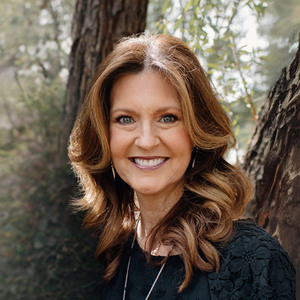
Alisa Grace
Alisa Grace ('92) serves as the co-director of the Biola University Center for Marriage and Relationships where she also co-teaches a class called "Christian Perspectives on Marriage and Relationships." While she speaks and blogs regularly on topics such as dating relationships, marriage, and love, she also loves mentoring younger women and newly married couples, speaking at retreats and providing premarital counseling. Alisa and her husband, Chris, have been married over 30 years and have three wonderful children: Drew and his wife Julia, Natalie and her husband Neil, and their youngest blessing, Caroline.