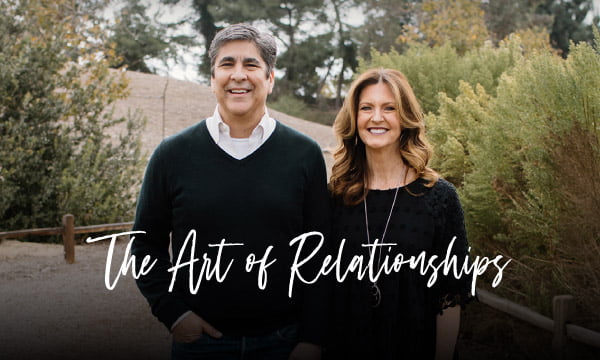
When You Don’t Match: Personality
In this episode, Chris and Alisa Grace explore why personality differences don’t have to mean incompatibility. From planning versus spontaneity to different preferences for socializing, spending, and keeping things tidy, they discuss how the qualities that first attract us can become sources of frustration. Through personal stories and biblical wisdom, they offer practical ways to assume the best, understand each other’s backstory, and approach difficult conversations with humility and grace. Whether you’re navigating differences with a spouse, significant other, roommate, friend, or family member, this episode will help you appreciate how you’re each wired while taking meaningful steps to grow together.
Resources Mentioned:
- Going Deeper Together: Spiritual Armor Required – A five-lesson course equipping couples to recognize the enemy’s tactics and stand strong together using practical, biblical tools.
- Philippians 2:3–4 – A reminder to approach relationships with humility and consider the interests of others.
- Psalm 139:23–24 – An invitation to ask God to search our hearts and reveal areas where we need to grow.
Connect with Us:
- Website: cmr.biola.edu
- Facebook: facebook.com/biolacmr
- Instagram: instagram.com/biolacmr
- YouTube: youtube.com/@biola-cmr
Join the Conversation:
- Subscribe to The Art of Relationships Podcast to never miss an episode.
- Leave a review on Apple Podcasts, Spotify, or your favorite podcast platform to help others discover the show.
- Share this episode with someone who could benefit from these relationship insights.
- Sign up for weekly updates and resources from the Center for Marriage and Relationships!
About the Hosts:
Chris Grace, Ph.D., and Alisa Grace are passionate about helping people build and sustain healthy relationships. As leaders of the Biola University Center for Marriage and Relationships, they combine the wisdom of Scripture with scholarly research to offer practical advice and insights. Learn more about their work at cmr.biola.edu.
—————
Chris: 00:00
So one of you is a planner and the other likes to figure it out as you go. I am the louder, man. I'm I'd rather just figure it out. My wife is like, Chris, where are we gonna stay in the hotel tonight? I'm like, don't worry about it. She needs a full social calendar, but sometimes I I like a quiet night at home. One makes decisions quickly while the other needs three business days to think about it. Which one are you? Well, personality differences are part really of what attracts us to someone, aren't they? But they can also become a source of frustration if they're not managed right. So in this episode of our When You Don't Match series, we'll talk about how personality differences shape marriage. Why differences doesn't mean incompatible or how to understand your spouse without expecting them to become more like you. All right.
Mandy: 00:52
Welcome to the Art of Relationships. This podcast is produced by the Biola University Center for Marriage and Relationships. Let's get right into it.
Chris: 01:02
Well, we're gonna talk about this, Lise, today, because look at some of our personalities use different. I won't be honest with you, listeners out there. My wife has the sweetest, kindest, best personality. I was attracted to her from day one. I still continue to be attracted to you. But I won't be honest with you, Lisa. Man, you got some things. I got issues. You got issues, man, and they are different than my issues. Yes, right? I mean, you love being with people, and you're like, oh, let's have this whole social calendar filled out and let's go. And I'm like, no, there's a Dodger game on, and and let's just stay with it.
Speaker 2: 01:41
And we saw people last month. Do we have to see them again this month? I know we saw them last Christmas.
Chris: 01:47
So listen, this is the interesting things. Now, opposites are you're going to be opposite in any personality. Look, personalities, what we're gonna talk about today, when when they don't match, but in reality, there is no couple that has a hundred percent matching their personality. If so, if they're both extroverted and they like to spend money, they're broke and they're homeless. I mean, that's the whole thing about being too extroverted. You have to have some differences there.
Alisa: 02:14
Yeah, and really that those differences, if we're approaching them with the right mindset, it's what keeps it fresh and fun because we're not always the same.
Chris: 02:24
No, Lisa, we we love this topic because our personalities don't match, but that's exactly what you should expect. Viva la difference. I mean, your ability to want to see people, it helps me get out a little bit more, right? I get to learn, see new things, got to talk to people, and I get tired. I mean, it tires me out. It does. On the other hand, I can set solidify or at least maybe sharpen some of your strong need to be with people to go, you know, at least let's just spend a quiet night home. Yeah.
Alisa: 02:57
And it helps you. And I think when when we can we're often drawn to opposite personality types, right? That's right. And so someone that is uh is that is a real planner, yeah, you know, they can appreciate that the other person can appreciate that about them because wow, they really pay attention to the details they're organized. Or if they're a money saver, you're a saver, I tend to be more of the free spender.
Chris: 03:24
But please pray for me.
Alisa: 03:27
But in in it in appreciating that about you, it's like wow, I can really appreciate that you're really disciplined. And if I'm honest, you are the reason that we have any money today. And so we can we can be drawn to the opposite personality types, especially in the beginning of the relationship, yeah, because it's so different and that's attractive.
Chris: 03:49
Yeah, and I think what we have to do, Lisa, I I I really agree with that. It is attractive. I I I knew you were extroverted, and I'm like, I love this part about you, even though it's different from me. Now, could it annoy me? Yeah, could all of our differences annoy us? Yes, but part of this whole podcast is about what do we do when we recognize that we're different, right? Like, like it opposite in these very deep areas. Um, and for some couples, unfortunately, Lisa, it could lead to conflict because they just aren't able to navigate. Well, why are you the you wanted to be like you? Why don't you just want to be at home?
Alisa: 04:27
Right, because I'm I'm the right way. Yeah, my way is the right way. Yeah, it's the only way it isn't necessarily true. It's just different, yeah, and different is okay. And so where we start out on the front end of our relationships, seeing differences as attractive. Yeah, the problem is over time, yeah, those differences start to become a little bit annoying, like what you said. Like instead of seeing, wow, the way you save money, you're the reason we have money today, right? I can say that now, but for a little while there, it could have gone into why are you? I mean, you rub a dime pretty thin, buddy, if I'm being honest. You know, we can't ever have any fun because we're always having to watch what we stuff to see how easy that script flips if we're not careful. That's the one that's the planner, yeah, because you can't be spontaneous. We have to know all the details. Or, you know, you're an introvert, so we can't ever go out with our friends. You don't want me to have fun with our friends. Yeah. And we can really turn it into something where we're interpreting the other person as much more negative than we should.
Chris: 05:35
I I think that's right, Lise. Let's ask the the most important question when it comes to differences in your dating. Which ones are there any that are really to be careful of because you're going to differ. Are there any opposites that are difficult or that lead to difficulties? And I'll say this it just it if you're extreme in one and a little and and and and unwilling to budge, it doesn't matter which of the main personality things you're different in, it's the inability to really kind of change or adapt or process or take the perspective of somebody else. So let's just say for you, Lisa, planning or something, you know, you just want to know what we're going to do. And let's say it's a vacation and it's seven days, and it's appropriate for you to want to know where are we going? How should I pack? In which way, you know, how do we get there? How much do we spend? That that's just appropriate. But because I am uh much more spontaneous, spontaneous, you have to learn to say, I think the problem will come in. And it really hadn't for us, but it could is if you stuck to your guns. I need to know what we're doing for lunch, where's our dinner reservation on Monday, Tuesday, Wednesday, Thursday, and Friday in Paris, when we're there, I need to know it all. Versus me who would say, Well, Lise, okay. Um, if that's and you force me into that, it's gonna cause some problems. But I just don't think there are really any real big differences in personalities that are too difficult to overcome unless you hold it strongly. Like if I said to you, Lise, I don't want to make a reservation for any night whatsoever. I just want to find a hotel, and if it's open, it's great. If not, let's go to the next one. Well, that would stress you out. And if I've demanded that, it it's gonna be a problem. And even though that's what I would like to do, you and I have learned, oh, wait a minute, let's figure out, let's let's learn how to negotiate. Yeah, like let's plan five of the days, but two of them, we're just gonna go find out what happens.
Alisa: 07:49
But I think part of that, Chris, that willingness to to uh, like we said, negotiate and navigate that with each other comes from a basic principle of being able to assume the best of each other, right?
Chris: 08:03
I think that's perfect. You assume the best, and and we have to be careful. That's the next point is opposites, yeah, they attract, but they can sometimes be annoying. The next point is you stop assuming negative emotions. I mean, the best thing you can do in a relationship or in a marriage when you get started is remember the principle it's better to assume the best than assume the worst. If you find in your relationship or your marriage that you're beginning to always assume the worst, or look, my wife always wants to go, she always wants to go to this place, she always wants to do this, she always, and that's just because she just doesn't like change, and that's because she's always afraid of whatever. And now I begin to assume the worst that you're not adaptable, you don't listen. Pretty soon I am now falling into this very uh critical trap that a lot of couples fall into after they've been married a few years, is I can start to see the worst. And I just tell you, one of the best things you can do is question your assumptions and the motives of the other person and almost always give them the benefit of the doubt. I love that. And you know what that means? That means when you are saying, Chris, let's go out and let's go with these people and let's go do X, Y, and Z. Let's go to the theater, blah, blah, blah. Like, oh my god, the opera.
Alisa: 09:25
The theater.
Chris: 09:26
The theater, and let's go to the opera. Then I'm gonna say, first of all, no.
Alisa: 09:33
And second of all, the opera was a little, that was like, here's the line, and that was the step.
Chris: 09:38
And you crossed it, doesn't it? But look, I I I I do think that I have to assume that you're not doing this just because you're you're oh you don't care about me, you just care about your own experiences, and you you really don't know how much I don't like this, and and if so, you belittle it. Well, that's assuming the worst about you. Instead of going, gosh, she really loves to do this. We haven't gone it, we've been married 10 years and we've never gone to this theater. Well, we I I I need to assume the best that this would be fun for her and go try it instead of assuming the worst.
Alisa: 10:08
Would you like uh absolutely and I think after you you start with that mindset of assuming the best about your partner, your spouse, I think the next thing you've got to do to to really be willing to negotiate and navigate this area of personality differences is to take time to get to know your partner's backstory. Like, why is this such a big deal to you? And to do it from the from the attitude of instead of why is this such a big deal to you? Yeah. Okay, that doesn't come across very nice. Nobody's gonna respond positively to that, right? But to really be caring and to find out why does this matter? Like, what's the story? What's the background? Like, okay, you want to you want to spend our time in Paris, you love to be spontaneous, you like to you want to take it a day at a time and just see what pops up, what we might run into, and why what would that feel like for you if we were to do that? Can you t tell me a little bit about what what's that like for you when you have that freedom to just kind of discover?
Chris: 11:17
What is it like? Well, oh yeah, if you're asking me the question, I think what it is is uh just because I've uh I think somebody um uh like me gets motivated and I it it it's just fascinating to make connections with people that are on the street or everyday Parisians or everyday, you know, wherever we're at in Omaha, Nebraska, and and you get to see the life behind the oh, here's this tourist trap, and you go to this and you do that, and you just see the workers there. I'm like, let's just go to let's look at Yelp and go find a little restaurant and sit there and talk to the people that are there and then see what comes up. People are nice and friendly. You know what it was? I I saw this demonstrated, Lisa, during the Olympic Games that were held just this year in the United States, and every European who was here, or African or wherever country, Asian, almost always said the same thing. They were just surprised that when they went and talked to everyday Americans, they were so nice and friendly.
Alisa: 12:21
Really glued their stereotype of Americans, and they got invited.
Chris: 12:25
Well, come on over and hang out with us and have dinner or come see my car. And they're like, What? It just okay. I love having that spontaneity in not knowing who I'm gonna go see, or even if I have to miss seeing the Eiffel Tower for the third time, I said, okay, I just want to go see so and so yeah, you learn that backstory when you ask those questions, and I love that you do just as much as it's important for me to ask your story. Why is it important that we have scheduled time?
Alisa: 12:56
Why why and you would say because the well, I think to schedule the time, there are certain things that I have in mind that to me, if we're gonna be in Paris, I really want to see this, I really want to do it. And if we miss it, yeah, because we didn't plan appropriately or we ran out of time, or maybe we didn't take time to investigate it, and we get back and all of a sudden we're like, what? We could have done this, oh man, if we'd just known about it. And then I feel like I have FOMO, right? That I'm gonna we're gonna miss out on something. And so, but if we plan and we investigate on the front end, then we can make sure that we're gonna do what we want to do. But for you, part of the fun, what I hear you saying is the adventure of it, what you discover along the way and having that freedom and flexibility.
Chris: 13:47
I think that's exactly right. And so the take-home message that I think we're trying to communicate is this if you're with somebody who's different than you, guess what? You you're married, it's just the way it is. You'll never find your equal. And start with staying interested in the other person. Curious. Be curious, be curious about why this is, and and and don't judge their motives as being, oh my gosh, you just came from a family who's always planned, and it's just so bad, and you have so many, you know. Instead, assume the best and then find out why it is important for you because, like, oh, this is the bucket list. I've been dreaming about this for 10, 15, 20 years. And I therefore I cannot go away unless we see the hunchback of Notre Dame. I'm like, Well, I don't think he's there, I'm gonna be honest with you, but it's just like in the movie and the cartoon, it's the same thing.
Speaker 1: 14:38
Just like that.
Chris: 14:39
Okay, so Lisa, so those are takeaways. Be interested, be curious in the other person's differences because God is probably using differences in your marriage and your relationship to make you a fooler, happier, better, you know, less sharp, and doing the same with the other person. Yeah, okay.
Alisa: 14:59
Don't you think it's a it's an aspect of sacrificial love?
Chris: 15:03
Oh gosh.
Alisa: 15:04
You know, not instead of demanding your own way, Philippians 2, 3, and 4, right? That you consider the other person.
Chris: 15:11
Don't do anything from selfishness.
Alisa: 15:13
Right. That you consider the other person, you put their interests ahead of your own. You take up your own cross, right? Now, that's not to say that you really have to be careful that there's a balance and that in a healthy relationship, this should be mutual. If we're always doing what I want to do and we never do what you want to do, it's unfair. Well, that's not fair, and that's not gonna be a very rich and happy and flourishing marriage. That's really out of balance, and that is not gonna be good long term for the relationship. So we have to make sure that there's that mutual give and take, that I remain curious about you, you remain curious about me, and that we make it our priority. Like once I hear your heart about adventure, then what that should stir up in me is wow, what can I do to accommodate that adventure seeking? And so, like one of the things that we do where we have negotiated this before is you ask me, what are some of your like do or die things that if you don't, if we don't do this on this vacation, you're gonna be really sad. And I can't make everything do or die, right? But I might pick out two, three, four things that are really important to me that I really want to do that make it, and then be willing to be flexible on the other ones. Either, yeah, I can let it go this time, or if we have time, but then to make sure that we're building in space for you for uh for us to have some downtime or time where we don't know where we're going. Let's just go out down the street and see what restaurants look fun. We wandered all over where were we? We were in London. We were wandering all over London, walking around downtown, trying to find the Hard Rock Cafe. You refused to stop and ask for directions. I wanted to ask for directions. Let's just ask somebody. We're gonna spend all night walking around, and you would not ask for directions. And now I know that it's because of that adventure some side of you. But at the time, I was getting really ticked off because I thought he is so stubborn, he's being prideful and he just won't ask for directions. But look at the flip in that script when I approach you, giving you the benefit of the doubt of wow, let's embrace that and let's let go of the we have to ask directions and get there in this time. And lo and behold, I don't know how he did it, but we stumbled upon the hard rock cafe with no directions or anything in the middle of downtown London.
Chris: 17:44
In like less than five minutes, you're like, could you think we could direct you? No, I don't think we need it. No, but I kind of know where we're at. You got us your and literally I go, okay, at least I'll tell you what, if you're so anxious about it, I'll ask this next person that we see. We come around the corner, I said, Yeah, do you have to know our hard rock? She goes, Yeah, we're in line for it right here.
Alisa: 18:01
It's right there. It's like, no way. Yeah, and I thought, oh, this only serves to encourage this frustrating aspect of your personality.
Chris: 18:10
And it doesn't always work, you know. You have to be real careful because one time we're walking around San Diego and I said, Hey, there's a trolley for Old Town, and we got on this trolley. Well, you did. We there were with friends, and they're like, Are you doing this right? I go, Oh, yeah, trust me, I what's fine.
Alisa: 18:25
We're going to downtown San Diego. Yeah.
Chris: 18:27
And all of a sudden, they said the the the the announcer is like turned out to be a train, not a trolley. That was our first mistake. And the announcer, the conductor, says, Okay, the next stop is blah, blah, blah. And the stop after that, Tijuana. And so we go to the we go to the we had to go to the next stop. Well, I'll go. We're like, do we have to passport? Tijuana. That's not anywhere near downtown.
Alisa: 18:57
And we're in Tijuana.
Chris: 18:59
And it's well, it turned out to be one of the funnest vacations we ever had.
Alisa: 19:02
We still thought that had to be 20 years ago. Yeah. And we still laugh about that.
Chris: 19:06
Look, but uh when we do this, it's not an excuse, is what you are getting at to net to say, hey, this is who I am, and this you're gonna have to live with that, and and I use that. I'm sorry, that you're just gonna have to be this way, you know, whatever. It it but it's not an excuse to get out of something, it's it just explains things.
Alisa: 19:28
Let's say that it's somebody that um that just likes to really speak their mind, and like there's no filter there. I just say what's on my mind, and you know, that's just the way I am. Yeah, take it or leave it. That's you know, if your feelings get hurt, yeah, you know, whatever. But that's just the way I am. What would you say to them?
Chris: 19:46
Well, I I see this is the that's just the way I am, is the problem. You're making an excuse for behavior that's inappropriate, and it's not it, it it really goes against what it means to be a person of health and growing, and a disciple who's like, I don't have it all fixed, and I want to get better. And you're kind of invalidating the very thing that marriage, or one of the things that marriage does is it makes each of us more holy, it brings us closer to God. But when I use something that says that's just the way I am, I'm going to always speak my mind. You need to get used to it. If I don't like what you're wearing, I'm gonna say that's ugly. Stop wearing that. Like, whoa, well, I just wore this to class. Can you be a little bit softer? Or I believe when you call it an excuse, Lise, I believe what you end up doing rather than just explaining and changing. I believe what you're doing is you are unable and unwilling, uh, in your heart to recognize there may be some things that are hurtful and not appropriate, and that you need to work on and change.
Alisa: 20:54
I think you're absolutely right. You know, Galatians 5 22 is uh the fruit of the spirit, right? And we are still called to be loving, to be kind, to be gentle, and express self-control. And so I think when we don't do that, when we use the excuse of, well, that's just the way I am, I'm just blunt, and if you can't handle it, that's too bad. I think that's relational laziness. You know, I you have to just take me, I'm not willing to work on the the sharper sides of my personality. So you just better get used to it. That's unkind, it's unchristlike, and it's relationally lazy. And your marriage will not benefit your marriage, it will be detrimental to your marriage and your relationship if you are not willing to change and be considerate and kind toward the other person. Yeah, that you know the body. The Bible reminds us that we have a very real enemy who's been trying to divide couples since the Garden of Eden.
Chris: 22:07
At least I think it's why, and one of the things that led us to creating the Going Deeper Together, Spiritual Armor Required. It's a five-lesson course that equips couples to recognize the enemy's tactics and help you stand strong together.
Alisa: 22:22
And you'll discover the number one way the enemy gains an advantage and how to counter it with really practical biblical tools.
Speaker 4: 22:31
It's the your spouse isn't the enemy, is the enemy that's the enemy.
Alisa: 22:36
And if you want to protect and strengthen your marriage, this course is for you. So you'll find all the details in the show notes. So check it out.
Chris: 22:49
Yeah, and so if your personality is one of those that's different, and you're attracted, let's say, to somebody who's strong in their thoughts and their beliefs and their values, and you're like, good, because you know, I need that, um, that's great. Until you are, as you said, unwilling, it it it lands on, it lands on pridefulness, right? It lands on the inability of a person to recognize that not everything they do is healthy and perfect, and the the humility to admit, yeah, I I may not see this right. I I think that's great, Lisa. I love that. And it it leads to the next point. If you are in any relationship, one of the key goals, Lisa, is to try and figure out how this other person that I'm with, how they're wired.
Alisa: 23:46
And how do how do I accept my spouse while also being iron sharpening iron and encouraging each other together?
Speaker 4: 23:55
Yeah, that's good. Yeah.
Alisa: 23:56
So I think one of the first steps in that whole idea, you accept your spouse, but you also want to encourage each other, right? Spur each other on uh toward love and good deeds. I think one of the most important steps, you just touched on it, and it's that having that heart of humility. And I think it starts with understanding that you know what? I can be annoying too. You know, I know I know that I can be kind of stringent. Watch it, I saw that. I was just uh uh but really being able to say, you know, I've got things that are annoying too. I know that when I have to have the house look a certain way, because you know, I want it to be clean, I want it to be tidy and picked up, that I can verge on being kind of anal about that and strict. And I've I finally had to, you know, come to terms with that as a mom when our kids were still at home, because I did not want them to look back and go, oh my gosh, my mom just drove me crazy all the time about picking up the house. Or for you, for that first thought to be like, oh my gosh, I better pick this up or Elisa's gonna lose her mind.
Chris: 25:08
I would hate for that, you know, for the memory, one of the first things that comes to mind.
Alisa: 25:14
Yes, but so being being aware that I've got areas of growth, I've got faults, I've got deficiencies too that can push your buttons and drive you crazy. And so if I'm gonna make you toe the line and hold your toes to a certain standard, am I holding myself to that standard? And that starts with Psalm 139, right?
Chris: 25:37
Yeah, it does.
Alisa: 25:38
Search me, oh God, try me, know my anxious thoughts, know my faults, know my idiosyncrasies that maybe need to be put in chat.
Chris: 25:49
And listen, if you're uh not married, you're in a relationship, or maybe you're not even dating, doesn't matter. You have roommates or parents or kids. Um, one of the things I think that at least you you take home from that is that recognition that um we the the church really what it simply means in some respects is this community of believers who come together to worship, right, to praise God, to have the choice. But but it also is this what Paul talks about is learning about ourselves and the other person and figuring out and realizing the world doesn't revolve around me. I I it it's not designed for me and my pleasure and everything else. And when we become when we get a little bit selfish or or an opportunity to be with other people is when we start to learn, oh, I am a little bit selfish, I do like this. I remember in college having roommates, and one was just so clean and tidy and neat, and I was like, good lord. Well, I I just didn't grow up caring about those kinds of things, and I still really don't, I'll be honest with you. I mean it I remember Lisa where you want I we bought our first home and at least I remember you said we've been in there like a month, and I remember you said, uh Chris, are you uh think you might ever cut the grass? And I'm like, I don't know, I haven't thought about it. And you're like, What do you mean you haven't thought about it? I go, Well, I haven't thought about it. Like, what do you mean cut the grass? I said, Is it long? And she goes, Chris, have you looked at our grass? And I went, Well, I I walk on it every day. I don't okay.
Speaker 1: 27:30
I think the the word is through it. That that adjective, I would I walk through, or is that an advert? I work through it.
Chris: 27:38
Yeah, no, I remember you saying, Chris, there are young children possibly missing in our lawn because nobody can see them. Well, okay, what that meant was for us in that difference, I I really have to be careful because the things that matter to you may not matter to me, but I care for you. And so the things that matter to you are things I care about. But so, but I have to learn I had to learn this in early relationships, even in college. He wanted it clean. I'm like, well, gosh, that's weird. I kept thinking you're a little bit weird. And then I realized there were a lot of people that were weird like that. And then I started to realize maybe it's me that's the weird one. And so in your friendships, use those differences that you're going to face then to begin to question, oh, I could learn about myself and what other people are like. And it's a great training for marriage to learn to adapt, learn what makes them tick, um, right, and not be afraid of being humble about maybe I need to be a little bit cleaner. I remember in finally, like my senior year in college, or maybe even grad school, I don't know. But I remember it's probably grad school when I someone one time, one of my roommates said, Hey bro, man, I was gonna be honest with you, you leave a mess in the kitchen.
Speaker 2: 29:03
Uh-oh.
Chris: 29:03
And I'm like, uh oh. And then same dude, by the way, this was a home of guys that really wanted to learn to be humble and disciple. And he goes to me, uh, Gracie, I don't know if you've ever cleaned a bathroom before because that was your job. And can I just show you some things? I'm like, oh, sure. He goes, Wow, did you? I mean, did you even see that? I went, oh, not really. Well, it was really humbling. And it took a lot of work for him to, and and you know, difficulty to say, I'm so sorry, bro, but you gotta work on this whole area.
Speaker 1: 29:43
And so, how did you receive that?
Alisa: 29:44
What'd you do?
Chris: 29:45
I I I just said, whatever, dude, and I'll clean it up.
Alisa: 29:48
It's just the way I am. Get used to it.
Chris: 29:50
Get used to it, right? Yeah, I did it. He's a he's still a good friend. All that to say, Lise, um, it can happen both in relationships and in marriages, right?
Alisa: 29:59
Right. So I I think if if it's something that you really do need to bring up to your spouse, something that you need to talk about. I think one of the best ways to do that is to start off with owning your own stuff first. Like find an issue that there's something that you want to work on yourself, right? And so, you know, I might if the let's say the bathroom, the you know, gosh, you you're not doing a great job cleaning the bathroom when you do. And um, let's pretend you clean the bathroom.
Chris: 30:30
And so wait, wait, wait, wait, wait. I'm sorry. We don't have let's just go back to real life.
Alisa: 30:38
Let's pick another one.
Chris: 30:39
Let's pick a time when I did clean the bathroom. It it was in the 2000s.
Alisa: 30:43
Okay. Okay, let's give you that one. Okay, so I would start the conversation by by maybe identifying something that I need to work on. So, you know, I I'm noticing, hon, that uh that there's there's something in myself that I'm not happy with that I really want to work on. And I want to ask you, could you please, and then name what it is. Yeah, you know, like I really need to do a better job of tracking our spending, tracking my spending. We set our budget. I've noticed that it's really hard and onerous for me to to want to do that because it's easier to just blow and go and spend without feeling guilty about it. But that's not healthy for us. So I'm noticing that about myself. And so, first of all, I want to ask, will you pray for me in that particular area about being more disciplined? I've given you permission to pray for me, asking you to pray for me, and I'm asking you to lovingly hold me accountable and call me out on that. Emphasis on the loving part, right? Um, but I want to invite you to do that. And so that are automatically will take the other person off the defense when you need to bring something up for them that that is a hard conversation, right? And you do so well with our money, you manage it so well. One task around our house that I notice uh seems to be harder to really do a thorough job for you is cleaning the bathroom. Like I noticed there was still hair and toothpaste in the sink, and there's you know, grime on the floor after you cleaned it. And so it would be very helpful if you just paid attention. No, I'm sorry, it would be helpful if you snore, but it would be helpful if you maybe just noted those little details so that I don't have to overlook them or bring it up to you. Yeah. Um, but I really appreciate that you receive this and that and that you hear me when I have hard things that I've got to bring up.
Chris: 32:54
That's really good.
Alisa: 32:55
So you use that sandwich method we've talked a lot about, right? Affirmation, say the hard thing, close with an affirmation. But I started it by saying, here's something that I need to work on. And it it helps the other person keep from feeling attacked and to prevent them from feeling defensive, overly defensive. What do you think?
Chris: 33:16
No, I I I like it, and and I think you do this, it's less sometimes it it's more it it it doesn't just take place in 10 sentences like you just said. Sometimes it's just you know, over a date you talk about and then it it comes up. But I but I do would I would only challenge um the the other the person to say, all right, now can I just talk a little bit about it? Because a little bit of toothpaste and and and you know shavings in in the in the sink, I know that's I because it's a community sink and we use it together, I I need to do that. That's kind of gross. I get that. And and I do a pretty good job compared to some of the yahoos you could have married. They were idiots. And okay, no, but what I would say was this I'd say, and Lisa, sometimes um it's late at night, I may not see it so well, and I'm you know, getting ready for bed, and I leave it there and I forget to rinse it out. And I think it's okay too, sometimes, if it's not 100% perfect, and to agree that, all right, you know, I I can get grant you that sometimes it doesn't have to be 100%, you know, ready for the real estate market, you know, beautiful. And my tendency is to not leave it clean, and I need to work on that, right? Something like that.
Alisa: 34:50
And I maybe I need to adjust my expectations a little bit, yeah.
Chris: 34:53
Or are are you and and you know what that is? That's stretching towards each other, that's moving toward each other. I want to get closer to, and so I want to try and fix so that I am like, okay, Lisa, I'm gonna try and make this a little bit cleaner and just make it a habit. And you're like, and I want to be a little more flexible, a little bit more flexible semantic. And I think those are the kinds of things that couples can really do that help them is in growing together, is is is coming together so that this doesn't become an you know, this deeper issue of you don't really like me. Look how you're leaving the sink of mess, and that means you don't appreciate me or hear me. And I think when we do that, we begin to argue about things and have to go and say, what is really going on in my heart?
Alisa: 35:41
So I love that, Chris. And I think one thing that our listeners can do is maybe identify what's one really practical thing that I can do to accommodate what you're asking me to do. Yeah. And for you to think, get, you know, what's one thing you can do to accommodate my perspective. Because again, we want it, it needs to be mutual. We both need to be flexible with each other, we both need to be willing to give each other grace because we're not gonna do it right a hundred percent of the time, right? And to try not to focus on that five percent that they do wrong, but the 95 that they do well, and to express appreciation for it, be flexible, and then think what's one really practical way I can accommodate what you're asking for change in this area? What's one thing I can do?
Chris: 36:33
What's one thing I can do? That's a great takeaway. I love that, Lisa.
Alisa: 36:37
Um, you know the goal really isn't for when you have those differences for you to become alike, right? It's not that you have to become more like me or I have to become more like you, but it's like, how can we continue to be flexible? How can we be kind? How can we love each other sacrificially? And what's one thing practically that I can do today to begin to make a change to accommodate you because I love you, yeah, and I want you to feel that love in you for me.
Chris: 37:08
It's so good and so different than people who approach this as this is a problem to be solved, and you need to fix it. You got issues in this, you're just dirty, you leave crud everywhere, and and therefore you need to solve it versus what the way you just approached that is really the way to go, huh? All right, I I need to encourage him, I and give grace, be humble, but find out more about the backstory, see what's going on, and and learn more, and also search myself, right? And I think what when we do that, it really does model exactly what Paul talks about, like you mentioned in Philippians 2, 3, and 4, and you know, in Galatians, eight. Well, it it's really throughout the epistles and in even the old testament, frankly, but it's that ability to own our the things that we need to work on and be humble to admit that yeah, we we kind of got some things that need to be softened.
Alisa: 38:11
Yeah. And our personalities are just different, and different is okay.
Chris: 38:16
Difference is great. Yeah, no, in fact, it makes marriage fun and exciting, and uh it it it it it makes you sometimes poor. So you gotta be really careful which which difference.
Speaker 2: 38:26
Which fun.
Chris: 38:28
We have a lot of fun, man. I'll just be honest with you.
Speaker 2: 38:31
That's right.
Chris: 38:32
Please Venmo us, and you can Venmo us at cmr.viola.edu or you venmo me personally, uh frankly. Uh no, but uh thanks for for joining in on looking at personality differences. Um it it's it's really important to recognize, I think, Lisa, we're we're each made differently. God has made us with these things. Let's explore and love and lean into those and appreciate, at the same time, recognizing that the enemy has done a great job of taking some of these things and and making kind of turning a wedge. And let's not let that wedge stop us from enjoying the uniquenesses that another person can bring to our life, the joys and the fun and the challenges and the you know, rock kind of, you know.
Alisa: 39:17
Iron sharpening iron.
Chris: 39:19
Yeah, iron sharpened iron. There you go. Well, check us out at um other places.
Alisa: 39:24
We have other we have blogs, we we have a lot of videos, we have other things.biola.edu for uh the Center for Marriage and Relationships, part of Viola University and Talbot School of Theology.
Chris: 39:40
Yeah, thanks for joining us, and we'll see you uh at the next part of the series.
Mandy: 39:44
We're very glad you joined us for today's podcast. For more resources on marriage and healthy relationships, please visit our website at cmr.biola.edu. We'll see you next time on The Art of Relationships.
Authors

Chris Grace
Chris Grace, Ph.D., is a professor of psychology at Rosemead School of Psychology and Director of the Biola University Center for Marriage and Relationships. With degrees in psychology from the University of Northern Colorado (B.A.) and Colorado State University (M.S. and Ph.D. in Experimental Social Psychology), he has taught and written extensively on relationships, marriage, and the integration of faith and psychology. Honored with awards for both teaching and scholarship, Chris is passionate about making research and biblical wisdom practical and accessible. Together with his wife, Alisa, he speaks nationally to couples, singles, and churches, and co-hosts The Art of Relationships podcast, equipping thousands with tools to build stronger, Christ-centered relationships.

Alisa Grace
Alisa Grace ('92) serves as the co-director of the Biola University Center for Marriage and Relationships where she also co-teaches a class called "Christian Perspectives on Marriage and Relationships." While she speaks and blogs regularly on topics such as dating relationships, marriage, and love, she also loves mentoring younger women and newly married couples, speaking at retreats and providing premarital counseling. Alisa and her husband, Chris, have been married over 30 years and have three wonderful children: Drew and his wife Julia, Natalie and her husband Neil, and their youngest blessing, Caroline.