Marriage Without Passion: The Psychology of Companionate Love
In this episode, Chris and Alisa Grace explore what happens when marriages lose passion and shift into what psychologists call companionate love. They discuss the difference between intimacy, commitment, and passion using Sternberg’s Triangular Theory of Love, why many couples begin to feel more like roommates over time, and the common reasons passion fades—like busyness, lack of curiosity, and taking one another for granted. They also share practical ways to reignite passion, including small behavioral changes, intentional date nights, asking meaningful questions, understanding your spouse’s love language, and creating space for rest and connection. Whether you're dealing with marriage, dating relationships, or long-term commitment, this episode offers practical insights to help you reconnect, rebuild intimacy, and restore passion in your relationship.
Resources Mentioned:
- The Triangular Theory of Love (Robert Sternberg) – A psychological framework explaining love through intimacy, passion, and commitment.
- Going Deeper Together: Spiritual Armor Required – A course designed to help couples recognize spiritual challenges and strengthen their relationship. http://t.ly/iTL9
- The 5 Love Languages (Gary Chapman) – A tool to help couples understand how they give and receive love. https://amzn.to/4t5pInf
Connect with Us:
- Website: cmr.biola.edu
- Facebook: facebook.com/biolacmr
- Instagram: instagram.com/biolacmr
- YouTube: www.youtube.com/@biola-cmr
Join the Conversation:
- Subscribe to The Art of Relationships Podcast to never miss an episode.
- Leave a review on Apple Podcasts, Spotify, or your favorite platform to help others discover the show.
- Share this episode with someone who could benefit from these relationship insights.
- Sign up for weekly updates and resources from the Center for Marriage and Relationships! http://eepurl.com/bgsuQv
About the Hosts:
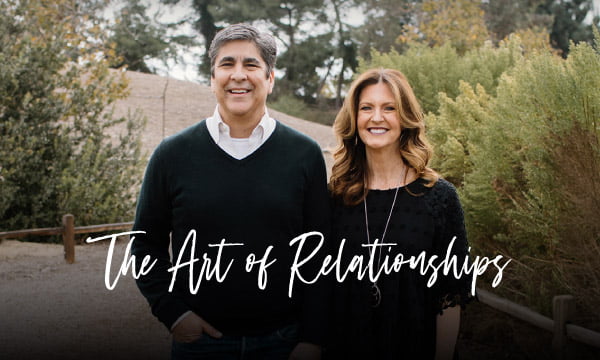
Chris Grace, Ph.D., and Alisa Grace are passionate about helping people build and sustain healthy relationships. As leaders of the Biola University Center for Marriage and Relationships, they combine the wisdom of Scripture with scholarly research to offer practical advice and insights. Learn more about their work at cmr.biola.edu.
—————
Chris: 00:00
In this episode, we've been talking about in this series, I should say, a love. What is love? What are the different components of love? How do we have love that is Christ-like for another person? And how does that result in the way I date, in the way I have friendships, and in my marriage? So on this episode, we're going to look at the various functions, the various ways we love each other, and what happens when our marriages lack passion. We end up just feeling like we're roommates. How do we take care of that? And how can we invest today to reverse a sexless, passionate marriage? Next on this episode.
Mandy: 00:46
Welcome to the Art of Relationships. This podcast is produced by the Biola University Center for Marriage and Relationships. Let's get right into it.
Chris: 00:56
So, at least one of the cool things that we get to do on this podcast is um talk about different ways in which we love each other, the ways that comes out in a in a dating relationship, how my love and our love was growing and fun and exciting while we were dating. And then something interesting happens after you, let's say, get married and you have this passion. Those first few years are real kind of, yeah, they're awesome and they're fun. And um, you you have a uh a relationship that is growing and strong, but one of the interesting things that it lacks oftentimes is the sense of companionship. Now, it doesn't lack it, it's just not as strong, right? And so there's these interesting theories in psychology, and it says this that we have high passion we tend to find in couples that are within the first maybe seven, eight years of marriage, and the idea of companion, not love, that deeper love, that friendship, yeah, that deeper companion almost type of intimacy plus right, this passion and everything else. And that that develops it takes a little bit of time. And I think, you know, it's not like you and I weren't great companions the first seven, eight years, but trust was developing.
Alisa: 02:24
Oh, yeah, yeah. Yeah, we of course you trust each other, you love each other when you get married, but there's a deeper, richer form of trust. The more time you spend together, the more uh your lives are intertwined, the more experiences you share, the more positivity and well-being and selflessness and sacrificial love that grows, that that that sense of trust and commitment grows that makes it so much richer than you were ever able to at the very beginning.
Chris: 03:02
No, that that's so true. So let's go back and review real quickly what we talked about with love. There's a great triangular theory of love from Robert Sternberg. It's about 40 years now, 30, but really uh just as a quick review, if this is you didn't hear our previous podcast on situationship, love is starts with this at the very top, just think of a triangle. At the very top, is that these triangle corners are labeled one is intimacy, right? That's a friendship, deep intimacy, love, a lot of emotional connection. I like you. We're good friends. At the bottom left, Lisa, we talk about passion, right? That romance, yeah, romance and passion and infatuation, right? And on the bottom right of the triangle, we would call that a commitment love, right? So we mentioned that if you have intimacy and passion on the left hand slant, right? You have intimacy on the top, passion on the but no commitment, you're in a situation ship. Right. Okay. Let's look at one in which you have intimacy, a friendship, and you have commitment. We've made a vow, uh, but we don't really have a lot of passion anymore. This is that idea of a loveless or a romance, a loveless marriage almost, right? A passionless marriage.
Alisa: 04:23
Passionless, because passionless is different from loveless, right? So where you're more like roommates. Yeah. That whole I love you, but I'm not in love with you, maybe.
Chris: 04:36
Yeah, I think that's it. So now the good news about okay, this type of love is that many couples experience high passion after they've made that vow and that commitment to each other. They like each other. Light to Messi is always there, the top part.
Alisa: 04:53
The first couple of years, it's really passionate.
Chris: 04:56
Yeah, and it's a growing sense of a commitment to another person. Well, they did this study and they found out they looked at the brains of those that had been are newly married, and they looked to see what part of the brain was firing when they thought of their other, they thought of their partner. And what they found was high levels of passion. So we're looking at this emotional part of the brain that responds when they thought about their spouse, right? We everyone had the like, the intimacy, but that passion was really high. And the companionment part of the brain, that part that says, I uh, you know, I'm committed to you, I trust you, I fully feel this with you. It was it was growing, it wasn't as strong. Now they also then found something that was commonly referred to as a problem for people that had been in marriages more than 10 years, is many of them expressed uh uh that the it was passionless, you know, passionate, right? But but what they did find instead was that there were still about 60 percent of couples that still had high passion, but their companion uh levels went up way beyond the new couples that would have only been married a couple of years, and so that's the good news. The bad news is that there are a subset of people that are married that have high commitment, right? They they still like each other, but they've just lost that passion in the romance. Let's talk about that real quickly, Lisa. In marriages that we would say are passionateless, right? What would we what do you recommend? We've seen these, you know, especially in couples that have been together for a while. It's like, okay, that's I've been there dumb mad. I I I I don't feel as I don't know, romantic toward them. It's like I've lost something. I remember a young couple came up to you one time, and the woman had basically said, Look, I I like him, my husband, you know. Yeah, I I mean I made a commitment to him, I'm not leaving, but I just don't feel that passion. I remember your answer. It was pretty cool.
Alisa: 07:22
Yeah, I had I had encouraged her to go back and think about what like when he comes home at the end of the day, what did you used to do when you first got married? And she's oh gosh, I would just drop whatever I was doing. I would run and meet him at the door and give him a hug and kiss. And I said, Well, what do you do now? And she's like, Well, you know, just whatever I'm doing, I keep doing. He comes in, I says hi, say hi. Then he goes off in his room and I just keep doing whatever I'm doing. So I encouraged her, I want you to go back and start doing what you used to do. Just do the behavior, do it over a period of time, let's say two weeks, for the next two weeks. I want you to start going and meeting him at the door. Yeah, I want you to put a smile on your face, give him a big hug, maybe give him a big kiss, and just say, I'm so glad you're home. Welcome home. And then see what happens.
Chris: 08:20
I'm sure she thought that was a little bit awkward.
Alisa: 08:23
Yeah, well, she said, that just feels disingenuous, like I'm like I'm putting on. So, well, regardless, you maybe the emotions aren't there. I still would like you to go through the motions and see what happens. And so she did. And I said, Really, and like put your put your heart into it. And so what she found was at first her husband was like, Whoa, what's going on? You're meeting me out the door. That's kind of weird, but okay. But what she found is that after a period of time, maybe after about a week of doing it, she found she began to look forward to it. She noticed the impact that it was having on him. And now when he came through the door, he was actually looking for her and had a smile on his face, which reinforced her behavior and her emotions, which stirred the emotions in her own heart.
Chris: 09:17
That's interesting.
Alisa: 09:18
And so the the whole principle, kind of the the fake it till you make it, yeah, or the you know, the the faith, you just the in faith you act before you factually see it coming back. Yeah. But uh just by following through on those behaviors, her emotions begin to follow them.
Chris: 09:38
It's uh Lisa, it's a perfect demonstration of something in psychology, the psychology of attitude, social psychology of attitudes, is what we think and what I feel, or you know, what my attitude or opinion towards something is, then I will behave accordingly, right? I like exercise or I feel it's important to eat well, then my behavior should be I should eat well. And so we can say that our attitudes predict our behavior, right? If I have high value towards you know, staying in shape, then you should be able to predict if that's high enough, then I should show activities like well and exercise. But the most interesting thing, now it's about 40 years ago now, but was the very strong connection of just the opposite occurring. When I behave in a certain way, my attitudes follow. And so what you basically, in other words, I'm out here exercising and running and eating well and behaving. And let's say I had very limited or didn't really care much whether I was healthy or not, I didn't feel it. But pretty soon I started to feel how important that was. So what you told this gal was hey, act as if you. What would you do and what did you do when you loved him and with passion? Then do that and your emotions will follow. So you're you're that's some so you have the behavior first, it just reverses it.
Alisa: 11:07
You know, isn't that the basis for these Hollywood romances where they fall in love? They're they're acting in a movie, but they end up falling in love with each other because in the movie they're pretending to be a love interest and have this kind of romantic relationship, and you see it time after time where it's either they've gone into a personal relationship, not just professional but personal, or it's wrecked a ri a marriage or a previous relationship because of they've become unfaithful. Yeah, because I'm in love with someone else.
Chris: 11:40
Great example. Now, uh so here's where we're at. We have uh high intimacy, right? That is as far as liking and friendship, intimacy, and we have what's called high commitment on the right-hand bottom side of this triangle, and those two together along that slant lead to this idea of strong companionship, right? I'm not leaving you, we're friends, um, and now we're talking about, but that passion can leave some marriages, right?
Alisa: 12:17
And so what are some of the reasons? Why, why does that that passionate side feel about it feeling really deeply in love?
Chris: 12:27
Well, yeah, one thing I think, yeah, this is a great question. I would say one thing, Lisa, that ends up happening is I'm everything uh I know about you I learned while we were dating or first married. And so oftentimes I think couples go, oh, this is I I know this person, I can tell you everything about them, I can tell you what they think, what they believe, what they love, and because I know them. And so now you have somebody 20 years say, Well, tell me about your spouse. Like, well, here they like this, this, and this. Well, in reality, we change. And one of the keys to keeping passion in marriage is to recognize that the other person has most likely changed in a lot of ways, and you need to figure out if you want to keep passion, is keep the excitement in there by asking them a simple question. What do you dream about? What do you think about? What's on your heart? Where are you? And learning that the other person has probably some new things on their heart, new ideas, new ways of looking at things that you're just assuming that you already know. Right?
Alisa: 13:39
Yeah, you you stop being a student of your spouse, you stopped being curious.
Chris: 13:44
You stopped being curious, and when you do that, it becomes, oh, they're just like this, oh, that's them, but this is what the hell they'll respond.
Alisa: 13:50
I don't have to ask them because I already know how they're gonna respond.
Chris: 13:53
Yeah, and we have to recognize right away, Lisa, that the person we've married has probably changed. You probably have been married to four, five, six versions of me.
Alisa: 14:04
Yeah, yeah. And thank goodness. Because uh after being married for 38 years, I I would hope that I've grown, I've changed, I've I've developed in new ways, new areas, new ideas, new interests, and and that I'm growing and developing as a person. And you have to. And I I don't want to take for granted that I know your everything about your deep inner world. Yeah, I know I know a lot of things about you, but I can't take for granted that perhaps some things have changed.
Chris: 14:39
And and that will lead to an increase in passion or a decrease if you just assume they're always the same. This is where it's gonna be, and it's been there, done that.
unknown: 14:49
Yeah.
Alisa: 15:01
Yeah, that you know, the Bible reminds us that we have a very real enemy who's been trying to divide couples since the Garden of Eden.
Chris: 15:09
At least I think it's why, and one of the things that led us to creating the Going Deeper Together, Spiritual Armor Required. It's a five-lesson course that equips couples to recognize the enemy's tactics and help you stand strong together.
Alisa: 15:24
And you'll discover the number one way the enemy gains an advantage and how to counter it with really practical biblical tools.
Speaker 2: 15:32
Isn't it true, Lisa? It's the your spouse isn't the enemy, is the enemy that's the enemy.
Alisa: 15:38
And if you want to protect and strengthen your marriage, this course is for you. So you'll find all the details in the show notes. So check it out.
Chris: 15:55
You know, a couple of weeks you'd say, I love to go on adventure. And we're in an airplane, and I just simply asked. So here's one quick practical takeaway. If you're in a maybe a passionless marriage, you would ask the other person, what do you dream about? What's on your heart? What's something big? And I remember you said, gosh, I just love adventure. And so what did I do? I just decided to, you know, take that. And I went, Well, if she loves adventure, then I'm gonna plan something fun, and this'll spark, this'll be fun. So I we had three kids at the time, and I uh here's what I did. I just said, uh you'll never forget this, obviously, because you were there. But what happened next was really kind of an awakening for me. All I said was, all right, kids, pack your bags. Alisa, pack your bags one day. I said that to you guys, and you're like, How do we pack? How do we pack? I said, Don't worry, man, just four days, go pack your bags. The kids ran in the room packed. They really didn't have anything in them, whatever. And you're like, Well, how Chris, how do I pack? I'm like, Lisa, this is an adventure. This is an adventure, just pack. Like, how cold, hot? What? I said, Jazz, pack your bags. We're going for four days, it's an adventure. And we drove after we packed the bags. We get to the five freeway in Southern California. They said, All right, guys, five of us, are we going north or south? And there were five, so there had to be an odd number, and north one. So we took north just at the very last second. North, okay, we're going less. Then we hit the east-west 91 freeway. And I alright, gosh, we go left or east. And everybody voted, and it ended up east. We took it, we just took that the very last second east. We ended up somewhere out, you know, way out in the deserts between Nevada, I think, and Arizona and California. 10 o'clock at night, no hotel, no nothing. Great grand adventure, and we finally found a hotel that night. Uh, and and we did the same thing the next day. And we got the next day, all right, east, west, north, south, and whatever majority is, we did that. And then we found a hotel later that night, you know, eight o'clock, somewhere near the Grand Canyon, I think. And then we ended up at near South in Arizona somewhere that later on. And we got home, and I remember you very clearly saying, Chris, I'm thinking, oh, that she just thought this that was a grand adventure. And I remember you'll always, Chris, don't ever do that to me again.
Speaker 1: 18:21
That was so stressful. And we didn't have a hotel room, we didn't allow her staying.
Alisa: 18:26
I totally remember that. But I remember you scored on another adventure whenever, and it was right not long after that conversation on the airplane when you surprised me with a weekend away, just the two of us. Yeah. And you didn't tell me where we were going. You told me to pack for cold. And I was like, oh, okay. And I did not know where we were going until we got to the airport and we checked in because we were going to Aspen, Colorado. And I love the mountains. And you had planned that we would go because we spent we dated when we were dating in our first year of marriage. We lived in Colorado. So you had planned going back to visit in Colorado all the different places that were meaningful to us when we were dating in our first year of marriage. And that and you did that for our anniversary. And that was so romantic. I loved it.
Chris: 19:22
That took place immediately after the misadventure of Chris and Lisa, or we went on a true adventure. And I think, Lisa, what they did is it reignited.
Alisa: 19:34
But yeah, so it'll just say that it reignited it, I think, because I felt very known by you. You knew that I loved adventures, and you took it seriously. You didn't just know it, but you actually took actionable steps to honor that, that what you had learned about me, and you went to all the trouble to actually make that happen. And I felt so known. I felt so valued and cared for and connected to you as a result of that. And if if I remember, it was a pretty passionate weekend. That was pretty fun.
Chris: 20:12
Well, okay, so yeah, there we go as far as why does passion leave it? Sometimes because we take the other person for granted. We think we know them and we need to understand them.
Alisa: 20:24
And I think another really big, very common reason is because we as as a culture and society are exhausted.
Speaker 1: 20:34
Oh, we're just too boozy.
Alisa: 20:36
We are so busy. We we're married, we are working, kids exactly. We have church responsibilities, we're volunteering at our kids' classrooms. We are you're coaching the little league and the uh basketball teams while we divide and conquer. I'm taking one to dance class while you're going to the ball field. Uh maybe you have elderly parents that you're taking care of. Yet you still have projects, you've got work to do, maybe you're trying. It's just like it's never ending. And if we do not put boundaries in place by saying no to uh to things that are good, but saving our yes for the best things. Maybe it's, you know, you limit the amount of extracurricular activities that your kids are involved in. Maybe you limit the number of volunteer things you take on at church or in your kids, you know, or maybe just in the world. Maybe you're into volunteering at soup kitchens, but you put boundaries in place. Maybe it's boundaries in place in in terms of how many classes am I gonna take this semester while we're both working and I'm still going to school. Maybe it's um saying no to how much overtime you're gonna work or travel you're gonna do for work, or how much you're gonna go uh be involved. With your extended families, whatever it is, you've just got to put some boundaries in place, say no to things that are good in order to say yes to the best things which are going on right here. Because if this is falling apart, if your marriage is falling apart, that's gonna be the number one impact on your kids. Not what travel ball team they're on, not how many dance classes, how how what do you know, how many tutoring classes were, you know, they are in high school and they're graduating class. But rather having a stable home environment with two parents who love each other and stay together. That's the number one determining factor in your children's thriving and becoming successful, productive adults.
Chris: 22:50
Yeah, that's great. And if you don't have children and you're exhausted and busy taking classes, you still say no. And you say no, but here's the little caveat that you and I live by. It's capture the hour and a half each week that you would nor maybe you know, three times a week that you would normally coach this team, or the four hours you would invest in this class. And you use that to reestablish this connection, this passion. And so one of the things that we did, and and here's a recommendation find out something fun that you can do together. Like maybe you could take up a new hobby and you use that time. Maybe it's going to a movie, maybe maybe it's golfing, and at least that leads to another way to get passion back into a passionless marriage, is to regularly schedule things like date nights. Put it on the calendar, put it on a calendar so each of you see it and look forward to it like, ooh, well, I can. I'm with my wife on Friday and we're gonna go do X, Y, and Z and schedule in it. Having date nights is a great way to get passion back into the marriage. Yeah.
Alisa: 24:03
I think that's I love that. And and another way to uh to do that, I think, is to uh make sure that you are doing regular check-ins with each other, not just functionally, like are okay. Well, even you can take functional and turn it into emotional connection. So, like when you leave in the morning, I can say, Chris, what's on your docket today? And I find out what meetings you're having, what appointments you have or whatever. And then I know how to pray for you. I pray for you for that appointment, for that important meeting, for that doctor's appointment. And then I follow up with you because that shows, that communicates to you that I'm interested, I care about you. And when I care enough to pray for you and follow up with you, then you walk away with the impression of, wow, she remembered, she really cares about me. And that you show genuine interest in in what's going on in their lives, their hobbies, the things that are important to your spouse need to be important to you because that's where you connect emotionally.
Chris: 25:10
Yeah, I I love that because it begins. I think Lisa it gives some new ideas and some practice, some practical ways of bringing it back in, the passion. Another one you should ask this question if you want to increase the passion in your marriage, is all right, ask each other this question. What brings you rest? And what brings you life? It's like saying what's your dream, but the the life question is what brings you life? What do you love to do? And again, that could have changed from 10 years ago, five years ago. And then you seek out to make that happen as often as you can for your spouse. What brings them life? Then you encourage that, you go participate with that, right? Uh, and you know, so that that that's a and then what brings them rest? Well, what are you doing when you need to be alone or to relax, to refresh, to refresh, yeah.
Alisa: 26:06
Renew. Find out what what is it about yourself that you need to relax? What about for your spouse? And then you work to make that happen for each other because it's hard to give from a well that has run dry. You can't give what you don't have. So there is some godly self-care that needs to take place there when you're too busy. You need to create time to refresh, renew, let you refresh, renew. And then we have uh we we have something to give to each other.
Chris: 26:38
Yeah, that's great. Uh Lisa, there's a couple of other things. Um there's things not to do, right? Um, you don't encourage ever your partner, your spouse to fall into sin, right? There, that is you protect that other person. Um, but when it comes to, so for example, some people said, Well, we don't have passion, we need to go try other people, right? We need to have friendships and or point or whatever. And and that is not a way to increase passion in your marriage. That's a way to increase uh enemy attacks onto your marriage and onto your great point, onto your soul. But but instead, it really is as simple as remembering, you know, what was and how you loved this person and recalling that on a regular basis. I think gratitude and gratitude lists can increase our passion for each other because it reminds us of what we like about the other person, right? And so keeping a gratitude list is one. Um, and then remembering the way in which your spouse does l experience love. Well, what is it? And sometimes I just have to remember that your love language, you know, for example, is let's say gift giving, or your love language, you know, in this case for you, what is it?
Alisa: 28:05
What would you say is your strong the really words of affirmation and uh quality touch, like just even holding hands, non-sexual touch when you put your arm around me, when we hold hands in the car, you reach over and tape my hand. Th things like that, those kind of bids for connection that are non-sexual, but they're actually touching. Physical touch, I think we just we've we've lost the art of non-physical touch and how important it is. So when you're sitting next to each other in the car on the couch or in church, hold hands. Make sure your legs are touching. When you go to bed at night, make sure your feet are touching or your hands or something. But that that touch.
Chris: 28:51
Yeah, and for those that don't like touch, right? I mean, maybe your love language is service. And so you can increase the passion by recognizing the you know what your spouse, what their love language is and making that happen. If it yeah, in this case, it could be serving or it could be, you know, gift giving, but it really shows an intentionality in knowing you and then making you feel that kind of way in the way they feel, in the way they feel it. That's right. And so I think Lisa, uh a final thing when it comes to increasing the passion, then is we've talked about a number of ways to do it. Well, what what brings your uh your spouse? What are their dreams, right? Be curious, be curious. Well, what what brings them life and rest, right? Make those things happen. What what what kind of love do they feel most connected with?
Alisa: 29:44
You know, that love language, and then setting strong boundaries so that you actually have time and you have energy to give to each other.
Chris: 29:54
Yeah, I believe if you start working on all of those and then remind the way in which God has brought us together, and in so doing, he desires us to have this consummate love, right? Love for God, uh love, you know, this idea of this commitment and then this passion, this intimacy. And I think at least at the end of the day, as we work, also a lot of couples will find finally they can get more passion when they start to recognize their spouse is doing things in their walk with God, right? I mean, you find that very like I love it when you're praying and reading the Bible or sharing your faith. It just that's also a way to kind of relight the flame.
Alisa: 30:41
Oh, it does because when I see you do those things and I know that your heart is passionately pursuing Jesus on a regular basis. I mean, my respect and admiring for you just go sky high. And that's part of what makes you so attractive.
Chris: 30:59
Yeah, that's awesome. So, you know, and then finally there's little things, right? Keeping yourself in shape or you know, staying active. Some of those things can help rekindle that and making an investment in that. I love one of the things you do, Lisa's you're always, you know, making sure that, you know, it on weekends and when we're off for a while, you still dress up. I mean, you're not dressed up, you know, as far as that, but you know, casual, nice. And it just reminds me again of you know that joy and that passion I have because you like to see, you know, or you like to have the house look nice or whatever it is, and you dress nice or at least make up or whatever. There you go. Keep yourself in a place where your spouse is going to say, I like being with this person. Yeah, it's one way to keep the passion in a marriage and avoid a passionless marriage.
Alisa: 31:55
We'll just close with a verse from Ephesians. It says, For no one ever hated his own body, yeah, but instead cherishes and nourishes it just like Christ does the church. Wow. So love the person like Christ loves you.
Chris: 32:11
Yep.
Alisa: 32:12
And that passion will flare, it will restore.
Chris: 32:15
It will just go look up the words nourish and cherish what we've been talking about both. It's an emotion and an action. There you go, man. That's great. Well, uh, it's an awesome thing to be able to sit here and talk about these kinds of things, Lisa, about how do we love each other well and love each other with passion and commitment and a friendship. Yeah. This kind of amazing kind of love develops. So it's been fun.
Alisa: 32:42
Yeah, I love it.
Chris: 32:43
Well, check us out, cmr.bio.edu. More coming on this love series. In fact, maybe next time we'll talk about an idea of love in which there's this romance, this whirlwind romance, right? It's just very much there. But the question is how long Clayna Hat lasts and what's this thing? All right, we'll talk to you guys next time.
Mandy: 33:05
Bye bye. We're very glad you joined us for today's podcast. For more resources on marriage and healthy relationships, please visit our website at cmr.biola.edu. We'll see you next time on the art of relationships.
Authors

Chris Grace
Chris Grace, Ph.D., is a professor of psychology at Rosemead School of Psychology and Director of the Biola University Center for Marriage and Relationships. With degrees in psychology from the University of Northern Colorado (B.A.) and Colorado State University (M.S. and Ph.D. in Experimental Social Psychology), he has taught and written extensively on relationships, marriage, and the integration of faith and psychology. Honored with awards for both teaching and scholarship, Chris is passionate about making research and biblical wisdom practical and accessible. Together with his wife, Alisa, he speaks nationally to couples, singles, and churches, and co-hosts The Art of Relationships podcast, equipping thousands with tools to build stronger, Christ-centered relationships.
Alisa Grace
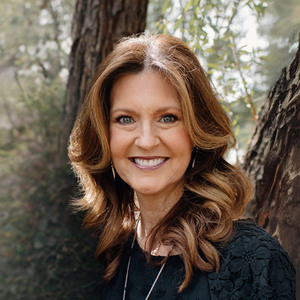
Alisa Grace ('92) serves as the co-director of the Biola University Center for Marriage and Relationships where she also co-teaches a class called "Christian Perspectives on Marriage and Relationships." While she speaks and blogs regularly on topics such as dating relationships, marriage, and love, she also loves mentoring younger women and newly married couples, speaking at retreats and providing premarital counseling. Alisa and her husband, Chris, have been married over 30 years and have three wonderful children: Drew and his wife Julia, Natalie and her husband Neil, and their youngest blessing, Caroline.