5 Signs of a Healthy Friendship (And Why They Matter)
In this episode, Chris and Alisa Grace explore what makes a healthy friendship and why friendship is the foundation of strong, lasting relationships. Drawing from biblical wisdom and relationship research, they discuss five key qualities of healthy friendships: laughing together, calmly navigating conflict, confiding in one another, accepting each other's influence, and demonstrating commitment. They also share practical insights on building emotional intimacy, recognizing unhealthy relationship patterns, and creating deeper connections by treating others with the same love and grace God extends to us. Whether you're navigating friendships, dating relationships, marriage, family dynamics, or roommate challenges, this episode offers valuable tools to help you strengthen your relationships and become a better friend.
Resources Mentioned:
- John 15:12–16 – Jesus calls His followers friends, offering a biblical model for friendship rooted in love, trust, and connection.
- The Four Loves by C.S. Lewis – Explores the significance of friendship and its role in creating meaningful, lasting relationships.
- The Gottman Institute – Relationship research and resources on friendship, emotional connection, and healthy communication in marriage. gottman.com
- Center for Marriage and Relationships – Explore additional podcasts, articles, and practical resources for building healthy, Christ-centered relationships. cmr.biola.edu
Connect with Us:
- Website: cmr.biola.edu
- Facebook: facebook.com/biolacmr
- Instagram: instagram.com/biolacmr
- YouTube: youtube.com/@biola-cmr
Join the Conversation:
- Subscribe to The Art of Relationships Podcast to never miss an episode.
- Leave a review on Apple Podcasts or Spotify to help others discover the show.
- Share this episode with a friend, spouse, or loved one who could benefit from these relationship insights.
- Sign up for weekly updates and resources from the Center for Marriage and Relationships! http://eepurl.com/bgsuQv
About the Hosts:
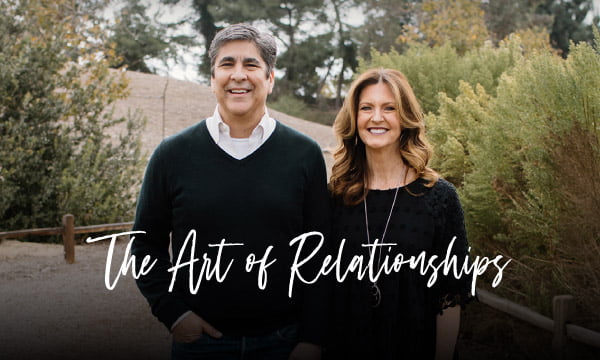
Chris Grace, Ph.D., and Alisa Grace are passionate about helping people build and sustain healthy relationships. As leaders of the Biola University Center for Marriage and Relationships, they combine the wisdom of Scripture with scholarly research to offer practical advice and insights. Learn more about their work at cmr.biola.edu.
—————
Mandy 0:01
Welcome to another Art of Relationships podcast. We are grateful for listeners like you. Let's get right into it.
Chris 0:10
Well, it's good to be back with another podcast episode. And thank you to Mandy Cato for that great introduction. And the fun thing that we get to do on a podcast like this is to be able to talk about things related to relationships. And one that always comes up is the area of intimacy, closeness, whether it's emotional intimacy, spiritual intimacy, or physical intimacy, all of these ways that we connect with other people are so important. And they start obviously from the day we're born. Obviously, even before we're born, there's an intimacy there between baby and mom. But at least when you come out, you start, you know, growing in this world, um, healthy adults uh are made with emotionally healthy, intimate, you know, social intimate childhoods, right? I mean, when you have the ability to um be close to somebody, there's a a lot there that is involved in that. And I think in all relationships, one of the things we have to be able to do is figure out okay, if I'm struggling in my relationships because I don't want to, I have a hard time being vulnerable or I don't ever feel safe. Or one of the things that we've uncovered and talked about a lot here, Lisa, is that idea of what does it mean to be intimate with somebody? What are the characteristics, for example, of an emotionally intimate relationship? Uh, what do you think? You want to talk about that today?
Alisa 1:41
Yeah, I love that. And I think one of the things that comes to mind when I think of that kind of emotional intimacy, the word that comes to mind for me is friendship. Friendship, a deep and abiding emotional connection that, you know, that starts with a friendship. Even if we're talking about marital emotional intimacy, that starts with a really deep, abiding friendship.
Chris 2:06
Yeah, that's that's so true. Almost every research you look at, whether it's John Gottman, who's, you know, who will say that, or you know, researchers or psychologists, David Myers, anybody in this field says that. But you know, it's funny too, is it starts earlier on, even in the Bible, right? I mean, Jesus of all things says, no longer do I call you servants, but I have called you friends. And that to me is that's amazing. Well, it is too and and it it's so amazing because it really does set the stage for all of psychology, all of communication, all of sociology, all of education, this notion that there's something deeper about our friendships that sometimes we don't recognize.
Alisa 2:54
Definitely. And I think especially when you get to that part about Jesus and that verse from John, when he says, I'm not calling you servants anymore, I'm calling you friends. That is really amazing. Because when you think back to the Old Testament, there were really only two people that God ever referred to as his friends. Do you remember that think as for our listeners? Do you remember who that is? Well, first of all, he referred to Abraham as his friend, and he also referred to Moses. Yes, he appeared to Moses and it said he talked with him face to face as you would with a friend. And so when Jesus says this in the New Testament in John, when he says, I don't call you servants, but I've called you friends, that's the first time we read in Scripture about friendship with God. And Jesus is offering, I mean, when you think about He He's the creator of the universe, the omnipotent creator of the universe is using such a stunningly familiar and intimate offering of friendship with him.
Chris 4:04
You and I both looked at this one time. The difference between a friendship and even a servant, what Jesus was doing radically altered the dynamics at that moment. I mean, not only was he ultimately, you know, found to be the savior, the king, the Lord. People at the time thought, well, who is this man? He's a great prophet. But that moment, I would imagine, freaked everybody out. Because I mean, a servant was always thought of all you're to be walking with God or to be anything. I mean, the servant term wasn't just about slavery and it wasn't a it was just about they use that towards servants. And so Lisa, there's a big difference when he said servant no longer, friend now. Yeah. What about that difference?
Alisa 4:57
Yeah, and by the way, that scriptural reference is John 15, 12 through 16. And um, so when you think about the difference between how God or how we would see a servant versus a friend, and think about how God sees us. He said, He just said, I no longer see you as a servant, I see you as a friend. So a servant would be unnoticed. Whereas a friend in John 14, 7, we would see is known. A servant is invisible versus a friend is enjoyed. And we think about Zephaniah 3.17, where it says, God exalts over us with singing. He enjoys us. And then a servant is tolerated versus a friend is really treasured. And then a servant is replaceable versus a friend is beloved. And we think of 1 John 3, 1 with that one. And a servant would be fearful, maybe, whereas a friend is favored, Ephesians 2.10. A servant is controlled versus a friend is appreciated. And then a servant is obligated, they have to do their job, right? Versus a friend that is really valued, really valued, and a servant is judged and evaluated, where a friend, we know in Romans 5.
Chris 6:25
Yeah, well, and gosh, just thinking through that list, the the profound transformative change that occurred when the king of the universe referred to us as his friends. That means we're known, like you said, enjoyed, treasured, beloved, favored, appreciated, valued, accepted. And and so let's tie this in to relationships. If that is the way uh the king views us, if that is the way we are now seen as believers, uh right? Known. Think about when you're let's say dating someone and you're getting to know them, you feel known. You feel enjoyed, you you feel treasured and beloved and favored. They're they're looking out for you. That's why you like them. Yeah, you feel appreciated, you feel laughed with, and you feel together. Well, that's how all relationships probably progress to the point of marriage, is right. I continue to feel these things from this other person, and and I and I guess right there we have the perfect recipe for what a friend is. It's all these things. So I guess the one question is at least as as people move into serious relationships and conflict happens, they begin to some of those begin to erode a little bit. Right. I mean, in in bad ma relationships, we begin to see people feeling, I, you know, I just feel unknown. I feel invisible now. I I feel like they they you know, they're controlling me, you know, or I feel judged all the time. Well, you can see those are just the opposite of what a friend is. So we really ought to explore this idea of friendship and emotional intimacy kind of together, because all of these things to feel favored and enjoy are tapping into that deep need of being known.
Alisa 8:25
That's right. And I and I think the risk that we run, Chris, is that the longer we're married, you know, at the beginning of our marriage, we're in that honeymoon phase, right? There's a lot of idealism, a lot of uh relational, relational capital that we bring that's uh that's good into the marriage as we're starting. But over time, life happens, right? You you get busy, you're working, maybe you're doing school, you start having kids, you're doing all your kids' activities, and really you you for you begin to neglect to pay attention to your marriage relationship, that friendship that you used to do so well. And so I think we've got to stop at our at some point and ask ourselves what keeps me from seeing my spouse as my friend?
Chris 9:17
Yeah, and I and I wonder, Lise, that you know, just the time I went out and you know, happened to buy a new car or whatever it was without telling you, that doesn't mean I should feel invisible or judged. Holy cow.
Alisa 9:32
I mean friends ask permission from their spouse. That's all I'm saying. No, you've never done that.
Chris 9:38
No, but but you know, all of a sudden, you know, there's these moments in marriage where you're like, I'm so mad, I don't want they they are so mean, you know, and you and you feel these things. And you know, I can remember, you know, uh the first time you and I, you know, had you know, conflict, you know, we we we didn't have a whole lot of time together, so marriage was this awesome, you know, togetherness. But to be honest, those first conflicts kind of made you question a little bit, like, you know, I see you crying and you're upset that I, you know, uh was working, and when I I think you came home and I and I didn't hug you as much as you were used to. Well, I you know, I remember thinking, gosh, I just didn't hug you. It's okay, but it made you, I mean, it you were kind of fearful at that point.
Alisa 10:30
Yeah, I kind of felt unnoticed and felt a little invisible, invisible.
Chris 10:34
Yeah, or like I wasn't like I didn't favor you like I used to, and that caused fear, huh? Yes. And and and you know, whether it's real or not, it still kind of starts that moment where conflict can become to or start to erode that intimacy, you know, and and again, then you do we do dumb things, right? There are times in which I'll say uh, you know, uh unkind word, you know, and you walk in and I'm watching the Broncos, and you say, I the Broncos stink this year. And I'm like, Lisa, that is so unkind of you.
Alisa 11:10
Tim's fighting words there.
Chris 11:12
Just because we can't win a game doesn't mean we're bad. It just means the other team is really, really good. Exactly. I know, and you have to stop being so critical of the sports teams that are okay. But let's think about there are things that we say and do. So I, you know, I remember that quote, not only did Jesus say, you know, love one another's, I have loved you, right? No longer do I call you servants, but I've called you go, you know, it says, if in fact it goes on, the servant doesn't know what the master does. But I have called, he says, I have called you friends, for uh all that I've heard from my father, I have made known to you. So this was not just Jesus saying this. He of course, Jesus is God and his father, but he is taking his authority saying, All that I've heard from my father was this next statement. In other words, wow, we are his friend. We can come to the father through Jesus now. You know, I remember C.S. Lewis talked about a really cool quote. You know, he says, friendship or companionship is responsible for nine-tenths of whatever solid and durable happiness there is in our lives. You remember that? And then he gave on, yeah. Then he talked about what does friendship mean? It doesn't expect too much, you know, it turns a blind eye to faults, it revives, you know, after very easily after quarrels. So he began to give a list, and and Lewis said, that's the response, that's what happiness is, right? All of our happiness is due to good intimacy and friendships. Guy, girl, girl, girl, you know, whatever that friendship is, whether it's you know, wife, husband, wife, any of that. So, Lisa, all research that we have found in the field of psychology also begins to show that there is a real importance to this idea of friendship, emotional intimacy. Let's dive into it. I know we're that's a big introduction, but we're going to introduce a couple of concepts. Uh, there was one that they studied. What makes for the happiest relationships, right? And they said, okay, there were seven overall factors when they did their research, when they looked at couples. This was what they said created the best friendships, the the happiest or the best relationships. Then they found out, gosh, we can even narrow this down to five and still predict on the basis of how you score on these five factors, we can predict a good friendship. What do you think? Should we go over those? Yeah, definitely. All right, Lisa, why don't you start as to the what we call the five signs of relational friendship that predict the happiest relationships? What are those keys?
Alisa 14:10
And remember, we're going back and using Jesus as our model and the friendship with God, friendship with Jesus as our model for our healthy relationships. And so um the very first one that they came up with that they discovered was good friends frequently laugh together. Good friends laugh together. What does that mean? Well, we look at at God's at God's ideal, God's model for us. And it says in Zephaniah 3.17, we talked about that God delights in us. Right. Right? And so good friends just really enjoy being together.
Chris 14:49
I love that that idea of laughing together because if I think about anything that people say they why they laugh, why do you like somebody? It's because they laugh at my jokes or we laugh together. Yeah, they think I'm funny. And if you ask anybody, you know, I I I would I I can imagine there's some friends that they never laugh, you know. They, you know, they have a different, but for the most part. And I remember us just we can laugh and still to this day. Oh yeah, yes, that we find something funny on YouTube, and you come running into the room showing me these reels and it's from Instagram, you know, you gotta see this.
Alisa 15:24
This is so funny.
Chris 15:26
You know, that does this amazing look, or you find these just incredibly funny things, and I hear you laughing in the room. You come back and you want to share it. Why? Well, because you want me to laugh with you, and you do. And I do.
Alisa 15:41
That's what makes it so fun to share it with you. Do you remember when our our youngest Caroline is 20 years old now? Do you remember when she was like about seven, I don't know, seven, eight years old? And one time she came to you, she said, Mommy, I know what you and Daddy do in the room at night when you go to bed.
Chris 16:01
Yeah, because our bedroom was in the middle.
Alisa 16:03
Imagine my eyes got like saucers. I, you know, it's like, what is about to come out of this kid's mouth? And I just said, Oh, really, honey? So, like, what do you hear? And she says, I just hear you and daddy laughing because he's tickling you. And it's like, oh, whoo, you know, I'm like wiping the sweat off my brow. Okay, dodged a bullet there. But I thought, how delightful that our our kids can hear us in the house, and what they hear is us laughing together and enjoying each other.
Chris 16:35
And and so I think if you look at your relationship, there's a lot of things to evaluate. So that if this is a sign, number one, that good friends frequently laugh together. Think about the inside jokes that you have or the way they make you feel comfortable, right? When you feel comfortable, you joking is uh uh, you know, about being vulnerable and and it's not teasing, it it could involve at some point teasing, but mostly it's about just finding situations funny. Maybe it's a movie you always laugh at, so you re-watch it. I I you know I could think of all of the videos and all the things that were just so funny to the both of us. You know, we had some friends over one time, and like, uh, that wasn't very funny. And we're like, that's the funniest show ever. And then we went to a movie one time, our friends found very funny. I think it was dumb and dumber. And I just kept thinking, I'm walking out.
Alisa 17:26
I'm like, this is horrible.
Chris 17:28
They loved that movie. I I think there's movies like that today, you know, where you two hopefully find it funny. And and I think, Lisa, that idea too is you uh this idea of every time we have a conversation with somebody, we transfer like or dislike, they say, right? So there's every conversation. I like you or I don't like you, or really it's neutral, I guess, if you're you know in a store doing a transaction. But even doing a transaction in the store, you could tell, oh, they're they're having a bad day. They don't either, but we can interpret that as they don't like me, they're just mean and angry.
Alisa 18:06
We take it personal, and we can take it personal, and that's called the transfer of affect.
Chris 18:11
Yeah, it's so quickly how we transfer affect. You see a kid and you smile at them when you take something away or cover their hands up, they're like they look at you to go, wait, you're smiling. That means you like me, that means this is a game, versus if you I don't know, cover up their hands or take a toy from them and look mean, they're going to be very well almost frightened because they're like, What are you doing?
Alisa 18:34
Yeah. And you know, can I say I think one of the the best ways that you uh do a positive transfer of affect of this friendship, and that one of the nonverbal ways you communicate to me regularly that you delight in me, that you enjoy me, and that we're friends is when I walk into a room. It's like I walk into the room and your face lights up when you see me. It's like you stop what you're doing, you pay attention, you smile, you wink at me, you you just give me the gift of your attention. And I love that. That makes me look forward to coming home to you. That makes me look forward to you coming home, uh, because it makes me feel like, you know what? He really does like me. You know, that that old Sally Fields and the Oscars, if you remember that when she won the Oscars, she's like, you like me, you really like me. And I think that's how it makes me feel. So imagine what you're like, what it's like to come home to you if you're married, if you have roommates, right, Ashley? Imagine what it's like to come home to you when when your roommates come in, when your spouse comes in, when your kids walk in the door. Do you make an effort to really pay attention, to smile, to give positive engagement, or do you, you know, start listing out the problems of the day, the things you're unhappy with, being negative? And so one of the ways that you can convey that friendship aspect of I delight in you is to be the kind of spouse, the kind of friend, the kind of roommate you would want to come home to, right?
Chris 20:14
Yeah, that's really good. I love that. Okay, and so Chris, you want to talk about it. Yeah, and I think the the just with that too, at least think about friendship. Uh like some people would say, My dog, my pet is my best friend. Okay, well, that's great, you know, it may or they're they're like a friend.
Alisa 20:33
Yes.
Chris 20:34
But imagine walking in when your dog hasn't seen you. What do they do? They get excited.
Alisa 20:38
Oh, all over you.
Chris 20:39
Yeah, or babies or kids, you know, you come in, ah, hey, you know, we walk in and kids are like, oh, good to see you. You get excited, right? That right there is that way in which we do that. Lisa, I I think we could spend a lot of time on how do you develop, you know, more deeper, you know, enjoyment and and laughing together. And and and so let's ask the opposite. Now, we have five different things that we're gonna go over, and we'll probably do this in two podcasts because I want to really ask, you know, dive in a little bit more to this one. What would be the opposite? Like, you know, the that is um, what if all of a sudden your friendship, are there any bad signs related to number one? So we we said sign number one in a lot of research finds that good friends frequently laugh together, that a good marriage is going to be about enjoying each other in that company. So when you start to not feel that way, you you had a friend one time I remember that uh asked you a very important question, and and you I loved your answer. She said, My husband comes home. You know, we've been married, I don't know, I think at this time it was four years, but I no longer if if he comes home first or if I come home, neither one of us. Anymore get happy or excited to see the other person. And I loved your advice. I think you I remember you saying, listen, what did you used to do? So what you were just talking about early, what did you used to do when you're first married, when they first came home? You said, Well, I would meet him at the door and hug him and say, Hi, I missed you. He said, Okay, we'll do that. And I I love that because there's a social psych principle that says, if you you we behave because we feel something. So it goes like this I feel love, right? I have an attitude, and then I act, I act lovingly towards you, right? So I go, oh, I feel love for this person. I'm going to go and act like I love them. But amazing social psych research finds the opposite is also just as true, if not more so, that we behave our behavior leads us to a feeling. So think about that. That's kind of backwards, but it's one of the most documented social psych findings out there. In other words, what you told this woman to do was okay, behave first. What did you used to do? Go to the door, hug and kiss and say hi. And then the love that you used to feel, the laughing, the seeing, the intimacy will follow. And she's like, but that doesn't feel right. That feels false inauthentic.
Alisa 23:25
Yeah.
Chris 23:26
Yeah. But I loved that that you did this because here's what it would do. And here's, I think, what she found. And is Lisa, she found that it was difficult the first day, right? He comes in or she comes in and they, you know, she goes up and hugs and greets and says hi. And she's like, but I didn't feel right.
Alisa 23:44
Yeah, and he's looking at her like, what are you doing? You don't ever do this. But she stuck with it. And I encouraged her, stick with it, do it every day for a month. Every day for a month. You go and you greet him out the door. Stop whatever you're doing. Be excited. You know, maybe I don't know, maybe it was even just do it for a week, try it, see what happens. And what what she found is that the longer she did this, the more often she did this, that he began to respond after a couple of days. And he began to get excited, and he began to she she felt it that it came back to her. He began to reciprocate it. So that that feeling for her was like, oh my gosh, I'm starting to enjoy getting excited and seeing him. He's getting excited seeing me. And suddenly their whole ritual of greeting each other at the end of the day began to change. Her heart changed, his heart changed, and the feelings came along after she put the behaviors in place. And it's even like the principle of gratitude, what research has shown is that it's not that happy people are more grateful, it's that grateful people are happier. You do the actions and then the feelings begin to follow.
Chris 25:13
Yep. No, I love that. That's exactly right. I remember, you know, as she was telling you this, you know, the first day was awkward, the second day was bad because she felt inauthentic, right? Third or fourth day, she's like, Well, you know, I just feel, I don't know. It's not as bad as I thought. By the fifth and sixth day, she said she heard the door, heard the car, her heard the door slam, and all of a sudden she felt her heart like, oh, he's home. And all of a sudden, she's like, Oh, I'm kind of excited that he's home. And I was like, wait a minute. That's and so she goes up to the door, hugs, and greets him. And I I think Lisa, you said with after a week, uh she found herself excited again when he got home, which demonstrates that whole notion that your behaviors start to influence your feelings. And no longer did it feel inauthentic. And then he, like you said, he changed, she changed, and it really did kind of allow them to recapture. And and then all of a sudden now their nights were going better. You know, they're having more fun together like they used to, laughing and having fun.
Alisa 26:16
Yeah, that very in fact, just even that that's a great point. That that initial reconnection at the end of the day, how you'd spend that first, let's say, one minute or two minutes together, greeting, saying hello, kissing, hugging, uh, it really does set the tone for the rest of the night, doesn't it?
Chris 26:37
It does. And and even going down to friendships, like you mentioned, roommates. Well, yeah, okay. Uh, you know, you may not be pleasant or you may not feel good or you may not, but if if they're coming over, suppose you're, you know, going out to coffee. I mean, you could that first night, hey, how's it going? How are you doing? What's happening? And you know, and you do something, it's natural. Right. Uh, but sometimes, even let's say in a dating relationship, we start to see that fading, or there's other things that come up, or someone's stressed out.
Alisa 27:04
It's taking each other for granted.
Chris 27:06
Yeah. I remember one time there was a girl that I stopped dating at right after this incident almost. We're in the dorm room, uh, having fun, messing around, and and I, you know, we're loud.
Alisa 27:18
What does that mean? You were having fun messing around in her. No, can you explain that a little bit?
Chris 27:24
We were studying. And but my messing around, I meant I would take a piece of paper, and she's studying at her desk. I'm studying over there at, you know, this other place. I think even her roommate was in the room. And all I did was throw a piece of paper at her, and you know, just for fun, you know, like have lightening things up because it was a stressful, I think it was finals week.
Alisa 27:46
Oh, that's asking for it.
Chris 27:47
I know. Well, she was just like, I mean, I thought she'd go, hey, stop it, you know, in teasing, and I probably would have stopped. But she was like, Chris, stop that. I don't, I'm, I'm stressed out, I'm studying. I'm like, oh, I didn't learn my lesson, you know, five minutes later, I throw another one. And that was the last time because she really kind of got I don't know about mad. Yeah, okay, mad. And and I and I remember thinking, okay, this is I get it. I, you know, well, uh okay, I I own myself that I probably shouldn't have teased.
Alisa 28:26
But told me something. You were having fun, you were being playful, and she didn't respond in a in a like manner.
Chris 28:33
I think that's right. And and so it was more than just that moment. There was a playfulness that wasn't there. And playfulness is part of laughing together. You have fun, you play together, right? You do playful things. And sometimes people aren't as playful, but that's what that's what this one's about. So should we move to the second one? Yeah, okay, and then we'll we'll probably, you know, cover the last three uh on the next podcast. Lisa, I think that idea of good uh friends frequently left together. You know what also good friends do? They found is they calmly, calmly talk about things. Yeah, they they have calm conversations, they have they there's a control there. There is, you know, a lack of that that anger that I saw in in this girl that instead she could have calmly said, Hey, Chris, I'm really busy and I'm stressed. Would you mind not teasing? And I would have went, Oh, yeah, no problem. I'm sorry. I was just teasing.
Alisa 29:30
You probably could have then come uh come around her and supported her and been empathetic, and she blew it.
Chris 29:37
Yep, she blew it. I I broke up and married uh someone uh about four years later that was most awesome and beautiful, and has never once been angry. You've all I mean at me, you've never said unkind words or or mean, I stop it. I mean that like whoa, never, never. Okay, what that means is the word calm. Good friends can calmly talk about things, whether it's discussing issues or whether it's you know talking about life or events of the day or disappointments or frustrations.
Alisa 30:10
Right, right.
Chris 30:10
You do it in a way that's calm, not angry. So let's talk about that. What does calm what's the opposite, right? It it means you're agitated. Yeah, okay, great. Everybody's agitated. I get agitated. Uh, you've been agitated at me, but what that means is people, good friends, when they calmly discuss issues, say, listen, something's really bothering me. Right. You know, the fact, Chris, that you always leave the cabinet doors open, or the fact that you always, you know, or whenever you do this, well, you do it in such a way that it says, Chris, hey, I really get stressed out when the house is looking a mess and people are coming over. And do you mind if you can help me with this? Well, that's calm. Yeah. Versus saying, why don't you ever do anything around here, you you know, lady, whatever, right? Right. And and let's talk about that. So the point two, good friends calmly have con have calm conversations or calmly discuss differences or conflicts, or you know, discuss issues.
Alisa 31:13
Right. And so when we look at the scriptural uh model of that, what the way God is with us. In Exodus, I believe it's 34-6, it says, the Lord, the Lord, a God, merciful and gracious, slow to anger and abounding in steadfast love and faithfulness, keeping steadfast love for thousands. And I love that. He is quick to be merciful and gracious. And so that's our role model of what he expects for us to live out in our own relationships. So, like what you were saying, Chris, those that idea of self-control in those emotions. Sure, we're gonna get angry, we're gonna get frustrated. Uh, we have times that you know that we get ticked or put out with each other. But the point is we don't lash out in anger, you don't yell, you don't scream. Uh, scripture also tells us that a soft answer turns away wrath, right? And so if you come in screaming a hundred miles an hour, hot and heavy in anger, that conversation is not gonna go well. And in fact, the other person's gonna put up their defenses and try to protect themselves, be defensive, or lash back out, right? So it's that idea of self-control.
Chris 32:35
I I love that. So, so so what's the the good part is the word calmly, or go, as you mentioned, God is patient and kind, forbears slow to get angry, soft. Okay, it's not always easy to do, no, but you can do it. Uh right, and and maybe we'll give them one or two ways that that we can talk about doing this. How how how you need to pause and walk away and take some time away and pray and get your heart ready before you go forward. Or let's also then uh talk about what are the signs when things don't aren't going calmly and and what should you do, right? I mean, if you if if you know that the person you're with in a friendship kind of gets feisty with you or gets kind of about of anger, does uh would that worry you? Are you looking that as so you know, I I heard you mention this idea, you look for patterns, right? Not potential. Well, if you're hanging out with somebody, you're dating them, and they frequently get angry, they get angry maybe with the waiter or the guy driving the car, or or all of a sudden they turn a little bit on you at times when they get impatient. What's the level at which you should start to be concerned? Well, I love how you said it's the patterns. Do do do they frequently, you know, daily or regularly criticize you or say something in anger or come back and ask, I'm really sorry, I shouldn't have said that. I was just angry. Like, oh, okay, yeah, that I can get that. But raising your voice, criticizing, you know, passive aggressive can be angry, where you just simply I'm not gonna talk to you, like, whoa.
Alisa 34:21
Yeah, calling names or ignoring uh your valid complaints. It's like, hey, you know, when you do this, this this really hurts my feelings, or it makes me feel bad, or it, you know, it really stresses me out. If if you're not willing to, you know, meet that need and just say, hey, you need to get over it. Yeah. Well, that's not gonna, you know, that's not very loving. That's not very sacrificial love that, you know, that God asks us to do in role models for us.
Chris 34:49
Yeah. And to be fair, the girl that, you know, it wasn't just me throwing, you know, a piece of paper, you know, crumbled up at her and you know, and then her getting really ticked. To be fair, there were other times where it it seemed like she would just um bits of anger would come out, you know, frustration, like, stop at. I'm like, okay, you know, and now that told me so much because I was fearful that wow, I can't be playful without risk, you know. And and, you know, and I'm thinking to myself, well, maybe that's normal. Maybe it's normal to be with somebody that's angry. You know, how do you know that? You're just dating.
Alisa 35:29
And that can even be in friendships. You know, if you're in the kind of if you're in friendships, there's some friendships that come so natural and are just easy, and you don't even feel like you have to try. You just enjoy each other and it and and it's just really easy. And then there are some friendships that you just have to work at. You know, they don't come natural, and you really have to put in effort if that friendship is important to you. And so one of the things you're talking about, even patterns in friendship, is uh, you know, when when there are issues, does this person, you know, do they just like jump all over you about it? Or can they come to you and say, hey, listen, you know, when you left your shoes in the middle of the floor, you know, your roommates, right? You you left your flo your shoes in the middle of the floor, and we just had like a a house meeting about this that we're all going to pick up after ourselves. You, you know, it really is stressful to come home. You want your home to be a refuge, but it's kind of stressful to come home and the house is a mess. Do you mind picking up your shoes and just put them in the closet when you take them off instead of leaving them? Versus, you know, somebody that that just jumps all over you, assumes the worst. And um anyway, so it's really applicable in our friendships as well.
Chris 36:51
I love that lease because they're in a friendship, if it's so much work because they're constantly uh on you're on edge. You're you're walking on eggshells. Pretty soon that effort is like, well, wait a minute. Why this isn't the basis of a good friendship, right? This is almost hard or almost toxic. And then the question is now, well, you have a choice. That's the good thing about friendships, right? Like, you know what, I'm gonna, you know, I have to live out the rest of the semester or year with this person, fine, but they're they don't feel safe. You know, we can't calmly talk about things, they're just too angry. And and I think that's uh, you know, the way you handle it. So we did um, yeah, go ahead, yeah.
Alisa 37:32
Yeah, and it and I think when I think of good friends calmly discussing issues, there's two things that come to mind for me, Chris. First of all, is uh the idea of can they express their anger, their hurt, their frustrations, and uh with kindness. You want to be able to be forthright, you want to be able to share a valid complaint, but you can do it watching the tone of your voice where you do it with kindness and you're gentle, kind, tenderhearted, right? And then the second thing is are they able to assume the best of you going into that? Am I assuming the best of them? You know, whether it's you or it's our kids or maybe a coworker that I might have an issue with. If I can come into it where I'm assuming the best, like, wow, you know, there's this issue, and I know you probably had a hard day, you probably just were busy and overwhelmed. You weren't thinking about it when you kicked your shoes off. You're just happy to be home and and relaxing. And I love that our house is that kind of house you can come home to. And it really helps everyone else if you go ahead and just pick up your shoes and keep them in your closet, right? So assuming the best, and then when you have something to say, something to complain, or issue to discuss, you come at it with kindness and being gentle and tenderhearted. Those two things, and you're set.
Chris 38:59
Yeah, and and so that there's a tip for friendships, right? There's a tip for d dating, signs and patterns. Listen, everybody gets frustrated, everybody gets angry. It's the way you calmly do it, and also you're a good forgiver, you know, right? You you extend you you go in and you say, you know what, I I I'm sorry, I I got frustrated, I shouldn't have done that. Please forgive me. Well, I think we're all allowed that opportunity to sometimes be frustrated and not happy, right? Uh think of all the times in our friendships with others, you know. Uh our co-host, you know, Tim Mulhoff, he ticks me off all the time. And I'm like, Tim, and and and then I have to say, Tim, I'm sorry, I shouldn't have been, you know, angry because you were so dumb.
Alisa 39:43
And he goes, And he's not even here to defend himself. Shame on you.
Chris 39:46
Oh, yeah, he's not here to defend him. We love you, Tim. Tim, we love you. But hey, you know, the that notion though is you don't always end a friendship just because someone's, you know, angry or critical. There's a pattern and it happens over time. So Lise, I think we talked about two very important emotional, intimate relationships that lead to happiness with that good friends have, and that is one, they frequently laugh together, and two, they they can calmly discuss issues. That's right. A third one, let's dive into that. The their third key finding is that good friends confide you know in each other, you know, uh a spouse to spouse confides, or good friend to good friend, and that just makes sense, right? I I tell you or I tell friends things that I don't tell anybody else. And and it's because I feel a number of things toward them. Emotionally, I feel safe towards them, right? Or I feel like they're there, they're available, and and uh that idea of somebody that is emotionally safe is somebody I could be vulnerable with. Yeah.
Alisa 40:56
And I I think a part of that factor is that they're trustworthy. Yeah, right. A good friend that you can confide in is trustworthy, meaning you know that they're going to keep it confidential, they're not gonna go blab all your, you know, deepest, darkest secrets and and things to someone else, right? They're trustworthy, they're not gonna judge you, they love you, they will accept you when you share, you know, those deep, raw parts of you. And so not only are they trustworthy, but then that that has to be reciprocated. That am I trustworthy as a friend that my friend can share with me and I will hold that close.
Chris 41:35
I love that. I love that word trust and trustworthy. At least if there's one way to to violate that trust or feel betrayal in a friendship, is when you heard that your friend shared something confidential or something that you thought, you know, was for you, you know, a vulnerable, safe person to share with, and they shared it with somebody else. Yeah. And all of a sudden, like, hey, I heard this. Like, wait, wait, wait, wait, hold on. What do you why would you do that? What happened here?
Alisa 42:03
We say it takes years to build trust and seconds to destroy it.
Chris 42:08
Oh, yeah.
Alisa 42:09
And then once it's destroyed, it takes even longer to rebuild that. So, uh, so that important point about friends being able to confide, that not only you're able to confide, but you have to be willing to confide.
Chris 42:24
What if that's hard? At least what if you know, you're in a friendship, maybe let's say a dating relationship. There there's uh uh some levels that you you just really don't go when you're dating, right? That for example Or not right away, right?
Alisa 42:39
Not right away, right.
Chris 42:40
In early dating, and there you have to have boundaries. I'm not gonna share my whole deepest soul with another person that I don't know yet as well. And even if they're my best friends, but in dating, some people mess up when they use this one the wrong way by going, Oh, I'll be safe and or I'll share everything about me and I'm an open book. Too much too soon. Yeah, I think you could live to regret that because so many people have a certain number of dating people before they get married that they probably live in regret. Yeah, you know. So what's another um this idea of confiding? You use important words like trust, right?
Alisa 43:19
Commitment.
Chris 43:19
Yeah, an idea of commitment and that vulnerable and safe, right? So you're emotionally safe. What what does that mean to you and what should you look out for when you don't feel that way? If I don't, you know, like are there signs that I sh that our confiding, you know, is no longer good or I shouldn't confide? I mean, we already said one if they break that trust. What if the other person that that never listens to you? There, you know what I mean? They they they that is they're always talking and their ideas, their their worries, their emotions, their pain, and you and you don't ever feel
Alisa 44:00
They don't ask you about you.
Chris 44:02
Yeah. That seems to me to be well, hold on. This con confiding goes only one way. You're telling me all your pains, all your depressions, all your sadness, all your things, all of this. And I just listen and listen and listen and listen. Oh, and the person, I love it because you listen so well. But there comes a point where it has to be mutual, doesn't it?
Alisa 44:20
I think that is the key word, is that it does have to be mutual. It's got to go both ways. Because for me to be able to uh be willing to be vulnerable and open and really real, um, I have to not only feel safe with you, but there's gonna be a a certain level of expectation that you are going to reciprocate that and share your stuff with me.
Chris 44:49
Yeah.
Alisa 44:50
Or else, because if you're not willing to be open and vulnerable and share what's going on in your life and I have to find it out through the grapevine, well then that makes me go, maybe we're not as close as I thought we were. So maybe I'm sh oversharing. And so it really does have to be mutual. It really needs to be mutual, that I'm willing to be open and vulnerable with you, and then I'm a safe person that you can be open and vulnerable with me.
Chris 45:17
Yeah, and I would say you have to be careful that uh the one thing I would watch out for here is sharing too much too quickly, right? And then um that it being one-sided, and and it's like, okay, hold on, I'm not a therapist, you know, I just want to be a friend. And I think you have to watch out for, you know, these inequalities in our relationship where I'm doing all the listening and I'm all, you know, and they're like, wait, I've got, I want to talk too. That to me doesn't feel like the sign of a good friendship. You're not confiding equally, you don't feel safe.
Alisa 45:55
And then pretty soon I would imagine you're gonna just get tired of it and say, Yeah, and there might even be a situation where what they're sharing is to a level that they're kind of expecting you to serve as their therapist. And most of us are not, you know, professionally trained therapists, and that can just become overwhelming. And so there has to, there has to be a balance in that, that you understand what's healthy, and then where it starts becoming overwhelming, what someone may be sharing with you that, wow, this is way above my pay grade. This is like taking way too much time. This is way more serious than what I'm able to, excuse me, what I'm able to handle or counsel you with. And so maybe there's a point where you need to say, I love you and I want to be here for you. And I really would encourage you to be to to check out a good therapist. And I'll go with you, I'll help you find one. But this is becoming honestly a little bit too much for me. And so for my own mental health, emotional health, I need to help you find somebody that can be that good professional person for you.
Chris 47:08
Yeah, so it's a it's a good one, and it has a you know, a process then where good friends, uh as we mentioned before, laugh together, calmly discuss issues, and then now the one confiding in each other. And I think there's, you know, you have to watch both sides of this. Uh the fourth one, Lise, is good friends accept influence from each other. It's funny that that is related to emotional intimacy and happiness and closeness is this idea of influence, right? Um, and and that's you know, really that idea is I want to hear what the other person has to say. I right, I value their insights and their perspective. If you know, if someone is not doing that, they're always like, well, okay, whatever you say, you you you don't know anything. I I'm the expert here, or I I know how to drive best or I know how to, you know, read a map. And even though we're going the wrong way and the GPS is yelling at me.
Alisa 48:07
Death by GPS.
Chris 48:08
Death by GPS. I remember one time we're in the car and we get on the the uh, I think it's the 10 freeway, you know, and uh eventually as we're going out, maybe it was the 40, but we're heading, supposedly we're heading east to go back to Colorado. And we get turned around at after a rest stop because it was so cloudy and almost snowy and we couldn't see anything.
Alisa 48:32
All the landscape looked the same no matter where you live.
Chris 48:35
Yeah, yeah. But GPS kept saying, or Siri kept saying, uh, at the next exit, please make a legal U-turn. Like, shut up. You know, we go Why does she keep saying that? It took us three exits, you know, before I accepted her influence and went, wait, why does she keep saying that? And we knew we were actually heading back west when we were trying to go.
Alisa 48:54
We were almost back to LA.
Chris 48:56
Yeah, at least three exits back. So, you know, it's that idea. Sometimes we don't want to. We and and and if I don't accept another person's influence, it can tell the other person a lot about themselves. Like, well, they don't trust me, they don't like me, they don't think I'm competent. They why would why would they and in and in fact they sometimes say that, like, well, you don't know anything about this, I know more, or that is a sign of trouble, I think, there, if because good friends do expect that idea or accept influence.
Alisa 49:28
Yeah, I think so. And I think what we've seen in research too is especially when it comes to marriage, the best marriages, the most satisfying and happy marriages, those couples, the husband is willing to seek and accept his wife's advice and opinions.
Chris 49:47
Yeah, and it goes both ways, right? I mean, both husband and wife.
Alisa 49:50
Right. Yeah, it should definitely be mutual. But in the most happy ones, the the man, the man is willing to accept her influence. That's very telling. And I know in our relationship, Chris, you are so good. Well, you're very competent at everything you do, first of all, which is madly extremely annoying.
Chris 50:09
Maybe you could list off the top 10 or 15 or 20 of the things.
Alisa 50:14
You're brilliant. Okay, listen, yeah.
Chris 50:16
Okay, whatever, whatever.
Alisa 50:17
But no, seriously, whenever you you pause when we're talking or thinking about making a decision about something, you always will come and seek my opinion. You'll say, Lise, what do you think? We need to do A, B, and C. I'm kind of leaning this way, but I'm not sure. What do you think? What's your perspective? Because you really see that we have different personalities, we have different perspectives of as men and women, we have different cultural backgrounds that we bring to our relationship, where you know, we have different um, just different ideas and perspectives and and experiences. And the fact that you ask me mine, what that does is that nonverbally that communicates to me that you approve of me, that you think I'm competent, you think I'm wise, you think I give good advice. Because oftentimes there may, and I'll admit there were there will be times that I can sense that you may not agree with me, but you're usually willing to try it my way. And I really appreciate that about you because it's like a living example of Philippians 2, 3, and 4, right? Do nothing out of selfishness or empty conceit, but in humility, count others as more significant than yourselves. Let each of you look not only to your own interest or your own opinions, your own perspectives, right? But to also to the interests of others. And it says, have this mind among yourselves, which is yours in Christ Jesus. And so the benefit of being willing to accept, to seek out your your friends' influence, their opinion, their perspectives, what that does is it validates their life experience, their wisdom, and that you look up to them in that way.
Chris 52:16
Yeah, that it's it's interesting, Lise, that that whole idea of of uh accepting influence, you know, it it happens with our friends that they they they they go, hey, what do you think I should do? I'm worrying about this, I'm thinking about this major. And and the other person, you know, they accept the input. And you know, and and I love that in marriages. I love, you know, that study that showed that those couples that navigated the best through having a new baby, those couples parented together. That is, the wife would accept the influence of the husband in how to do the baby, just like the husband would accept the influences of the wife on how to raise or participate. So both did it together. They didn't, they neither of them opted out, they they simply did it together. And hey, let's try this, or oh, how do we stop this baby from crying? Oh, let's do this. I know let's try that. No, no, this is the way you do it. I'm the dad, I know everything, you know. I I'm the mom, this is how I do it, I'm the expert. Instead, I I remember like I remember situations that we had that were so funny. Our kids would, you know, do something, and and I I knew a lot of theory about children from my PhD and how to discipline, but frankly, I I stunk at it, you know, like I was a pushover. And Elise, well, but uh, but I think what happened was I noticed right away, uh, I'm gonna listen to what Elisa does because she can discipline people very well, you know, including me. I mean, I find myself in timeout all the time. And you know, I'm like, hey, can I come out of time out yet?
Alisa 53:57
And I really not yet be quiet.
Chris 53:58
Okay, yeah. And then I realized, wow, she does, I didn't even realize this. But when you started disciplining the kids, that was very effective. And I have to go, wow, hold on here. I love the way this is working out. I'm not that good at it. And that's the idea of accepting influence, right? I uh meaning I'm no expert, obviously. Um you know, and and and that right there is an extremely important variable.
Alisa 54:24
Uh yeah, marriages. Each person has different strengths, right? Different life experiences that they bring to the table. They both have something of value to offer. And maybe your strength is in a really different area that mine is in. And for me not to seek out your opinion, uh, maybe because it has to do with different role models in the family, right? Uh, we when we first got married, I kept our chipbook, right? You were working, you were doing school, I was working, I kind of did took care of the the home fires because you were trying to finish your degree. And then after you finished, we switched. And you did that while I finished my degree. But when we first got married, I kept the checkbook, I managed our finances, and we realized I really stunk at it. I am dyslexic when it comes to numbers. I did I decided my degree, honestly, I chose my degree in college, I looked at all the options and what required the least amount of math. That was how I decided I am going for communications, I'm good at this, but but the but the thing is is we had different strengths and don't let those maybe preconceived notions of roles. If there, if one of you is has a strength in that area that is traditionally in another uh, you know, uh a role, don't be afraid to switch that out. Honor though, you know, gosh, I can respect it. You're much better with numbers and money than I am, but I might be better with certain kids and figuring out how to navigate with certain kids. We have one kid, it's really great for you to do that with.
Chris 56:06
Yeah. No, I love that, Lisa. And and I think if any listeners want, you know, uh tips or advice on how to deal with bill collectors or the energy, you know, the electricity being shut off because it hasn't been paid, or you know, overdrawing on bank accounts. I mean, I learned how to deal with these bill collectors hypothetically in the no, no, no. If you do, but yeah, we learned because those like Lee's word, where's the money? And you're like, I thought that was a oh there's not a zero there.
Alisa 56:38
So we only have fifty dollars, not five hundred in Africa.
Chris 56:42
But but the feel, you know, for you to say, Chris, I think you might be better at this than me. And can I take your influence? And the same with us. So so even in friendships, right? That's it, where you do that in a way that you accept that influence is a very important factor.
Alisa 56:58
Yeah, and I think what we see a lot uh in relationships is when that's not happening. It's like uh when when you're offering advice that's being asked for, I mean, legitimately solicited. What do I do about this? How do I handle this? And then you give the advice, you give, you know, you give direction, you give your perspective, and they never take it. Oh my gosh, that can make you crazy. It's like hitting a tennis ball over the net, over and over and over, and nobody ever hits it back. Well, what's gonna be the natural consequence is that you're gonna quit serving the ball. It's like, you know what, I'm not offering you any more advice because you never take it.
Chris 57:38
I you know, at least that that reminds me, this is these uh variables are also important in like, for example, parenting and dealing with parents or family members. That what you just said, I can think of a family member. My goodness, you give advice after advice, and they always have these issues and struggles, and they're like, Well, maybe you should just go ahead and whatever family member is identifying with this conversation right now, it's not you. Yeah, and you say to this family member, hey, maybe you should try this, because every time you open the door, that happens. Why don't you keep it?
Alisa 58:18
Oh man, we are gonna get a phone call about that.
Chris 58:21
Well, you know, whatever the issue is, or why don't you consider maybe going to the doctor? And then they never listen. I think what happens is any family member, and for all of the listeners, we all have someone like that, and they just don't accept your influence. But they, oh, this is so bad. Like, well, maybe if you stop using the hammer and hitting your hand, you'll be better off. And they're like, Yeah, but I gotta just do it again. Like, well, stop.
Alisa 58:50
And so we have to be sure and be mindful of that if we're asking for somebody's opinion, and you know, if it's I mean, it's not a if it's not a safety issue, a life or death issue, you know, take it sometimes and just apply it. You may think, uh, this is not gonna work, but just try it because it might work. Yeah, okay. And so let's go ahead and go to number five, Chris, that fifth uh quality of a real solid friendship. And it's this one is that good friends expect longevity. And when we look at God's example of this, we think of Jeremiah 31, 3. This is such a beautiful passage where God is saying, I have loved you with an everlasting love. It's like this relationship is we are in it to win it for the long ha.
Chris 59:38
Oh, yeah, yeah. So what does that mean? Uh uh longevity. You know, it's a it's a great word. It I think what they were getting at is good friends expect that, hey, I'm not just going to be a good friend for you this weekend, you know, and this week. Uh I'm going to be around. I I want to be a friend. And you know, I think the only counter to this is sometimes college students think, oh no, I made a best friend or I made a friend, and they're gonna be my friend forever. Well, uh, you know, unfortunately, most college students find out, you know, they make five friends and they think these three are gonna be my best friends forever, and they're not, you know, you life goes a different direction. You go a different way, sure, but you had a commitment to them while you were in the same place, same community, maybe the same church, and you were committed to them, and they knew that. And it so it doesn't mean, you know, longevity that, oh, I make a friend in high school, I made a, you know, and we're gonna be best friends the rest of our lives. Well, guess what? It usually doesn't happen. College friends come and go, and that's okay. You make new ones, but what it does imply, longevity, is that you know that I'm committed to you as long as you know this, we're in the same area and we're in the same place and we can do this. Um, especially when this starts making into more serious relationships. Commitment is the key, right? This idea of commitment. Now, when you move up to, oh, wait a minute, hold on. We're not just, you know, best friends dating, but now we're talking about engagement, now we're talking about marriage. Then longevity comes into play with a different set of understandings.
Alisa 1:01:19
Yeah, dating, uh, marriage, that's going to be different from it would with like your friendships, just regular friendships, because there are friendships that are there for a season, and then there are some that will last you the lifetime. There are friends that we have since college, 30 years, right? 35 years now, 20 years, some of them. And then there are some that we were close, but you know, life just took us in different directions, and that's okay, you know. Uh uh, and so it's different from what you would have in a marital relationship where that in that kind of marital friendship, that intimacy, there is that expectation of longevity and commitment. And Chris, you have a really cool study, uh, this hand-holding study that you talk about. Why don't you share that one?
Chris 1:02:09
Uh yeah, what they found in yeah, thanks, Lisa. I think that's exactly right when it when it comes to longevity and commitment, is that people in a committed relationship, um, that is, uh, in which they've vowed uh publicly, you know, to each other, you know, they find that that commitment and vow has an impact on us, even physiologically in our and on our emotions. That is, um they took people who were about to get shocked and they were watching their brain scans and they realized they were stressed out and they they knew that. And and so they had, you know, a hand-holding expert, you know, I've talked about him before, James Cohen. They had a, you know, uh they they measured stress levels, about to get shocked, and they were, let's say, on a scale of one to a hundred, let's say they were at 90, you know, they were very stressed. Well, they had just a simple stranger hold their hands and their shock level or stress level, sorry, decreased to like 60, right? It it was still bad, 65, whatever, but holding the hand of a stranger, but they brought their spouses in of a person you know was experiencing stress, about to get shocked, and spouses lowered the stress level of the person down into let's say the 30s, right? Um, still stressful, but it was a lot lower. And and you know, fascinatingly enough, they brought in, you know, people that never made a commitment to each other in a in a formal way, a vow, a marriage. They were just cohabitating, you know, that they were just living together. And when they reached in to hold the hands of a person they'd been with committed to for 20 years, third sometimes with kids, but they never did a marriage vow. They were just cohabitating. They could see no difference between holding the hand of a stranger and holding the hand of a cohabitating partner. So these researchers went, wait a minute, marriage just a piece of paper, somebody that's been, you know, that that have children together, they live together, even though they're just living together, they should show the same degree of stress relief or low arousal. Why, what that why why did they not look any different than a stranger? And the researcher, James Cohen, C O A N at uh Virginia in Virginia, uh basically theorized that that there is not a commitment is a proxy for trust. That means commitment in people's minds equals trust. Well, if I've never made a commitment to you or a vow, I I if things go bad, I'm not sure you you can walk out the back because right, if if we're just cohabitating together, then if things go bad, I can walk out because I've not made a vow to you. Well, commitment as a proxy for trust means that people that did make that vow go, that person is there for me. They vowed, they will be there. And those that didn't make that, and we're just living together, they're you, you know, you can fool the heart, but you're not gonna fool that brain who knows, wait a minute, hold on here. This yahoo, when it gets bad, is gonna skip out on me. But when I say I love you, uh, and I do that vow for better, for worse in sickness and in health, in good times are bad. That's a vow I make, and then we find so, so commitment, a proxy for trust found out in this handholding study. And that's that idea of good friends expect, you know, to have longevity in a marriage in particular, and a commitment to that. I will do what I can because this marriage is not ending because I made a vow before God and others. Well, I love that one. It's a huge one.
Alisa 1:06:01
It's a big one. And just this whole topic and in looking at how we do friendships based on God's role model, Jesus' role model, looking and comparing how does God see us? How does he love us? Does it he no longer sees us as servants that are can be invisible, replaceable, judged, uh, you know, like that versus a friend who is loved, honored, favored, accepted, and valued, right? And so as we summarize this where we've been, Chris, I think we've really got to ask ourselves, do I see myself like God sees me? Do I see myself as known and treasured and loved by Him? Because the way I see myself, or if if I don't see myself the way God sees me, if I can't receive that and then in turn reach out to my friends in that same grace that God gives me, if I can't do that, then my relationships are not gonna thrive. And then also I think the second question is is do my friends, does my spouse feel known, treasured, and loved by me? The way God loves me, am I loving them and seeing them treating them the way he does me?
Chris 1:07:24
Man, I love that because we gave you what what you know, some researchers' views on how you can identify those five signs. Do you frequently laugh together, right? That enjoyment of each other, calmly talk about issues without anger and uh and with self-control of emotion, you know, uh confiding in each other, uh, accepting influence, and then the expectation of longevity with via commitment.
Alisa 1:07:53
It's beautiful because really, how would our marriage change today? How would our relationship change today if I chose to love my friends, love my spouse the way God loves me? That would be incredible. And I think we'll just wrap up with this this beautiful quote by Tim Keller. It sums it up like this it says, he says, to be loved, but but not known is comforting, but it's superficial. And to be known but not loved, that's our greatest fear. Ah, but to be fully known and truly loved, well, it's a lot like being loved by God.
Chris 1:08:34
I love Tim Keller's work. That was a great quote, Lisa. So good, so good.
Alisa 1:08:39
So we're so glad that you uh hopped on with us today for our podcast, The Art of Relationships. We just want to encourage you. Hey, if you want some more resources for healthy relationships, no matter what kind of relationship it is, we want you to uh check out our website at the Center for Marriage and Relationships here at Biola University. And our website is cmr.biola.edu. So check it out. We've got tons of blogs, video clips, more podcasts, some free resources for marriage mentoring, just a ton of things. But we'd also love for you to give us five stars on those ratings. Uh, you know, click that in, subscribe on whatever platform you're listening to. We really, really appreciate you listening and share this with a friend. If you have a really good friend that you think, oh my gosh, when I hear these five signs of a great friend, this is the one, you're the one I think of. And just send it to it and share it with them and say, thanks for being my friend. So have a great day, and we'll see you next time on the Art of Relationships.
Mandy 1:09:44
Thanks for listening to the Art of Relationships. This podcast is only made possible through generous donations from listeners just like you. If you like it and want to help keep the podcast going, visit our website at cmr.biola.edu and make a donation today.
Authors

Chris Grace
Chris Grace, Ph.D., is a professor of psychology at Rosemead School of Psychology and Director of the Biola University Center for Marriage and Relationships. With degrees in psychology from the University of Northern Colorado (B.A.) and Colorado State University (M.S. and Ph.D. in Experimental Social Psychology), he has taught and written extensively on relationships, marriage, and the integration of faith and psychology. Honored with awards for both teaching and scholarship, Chris is passionate about making research and biblical wisdom practical and accessible. Together with his wife, Alisa, he speaks nationally to couples, singles, and churches, and co-hosts The Art of Relationships podcast, equipping thousands with tools to build stronger, Christ-centered relationships.

Alisa Grace
Alisa Grace ('92) serves as the co-director of the Biola University Center for Marriage and Relationships where she also co-teaches a class called "Christian Perspectives on Marriage and Relationships." While she speaks and blogs regularly on topics such as dating relationships, marriage, and love, she also loves mentoring younger women and newly married couples, speaking at retreats and providing premarital counseling. Alisa and her husband, Chris, have been married over 30 years and have three wonderful children: Drew and his wife Julia, Natalie and her husband Neil, and their youngest blessing, Caroline.