Answering Your Burning Questions about Dating
In this episode, Chris and Alisa Grace answer some of the most common (and most honest) dating questions submitted by attendees at the Biola Couples Conference. From navigating physical, emotional, and spiritual boundaries to figuring out compatibility, alone time, conflict, and preparing for marriage, they offer biblical wisdom and practical guidance for every stage of dating.
They discuss how to distinguish healthy attraction from lust, why intentional boundaries matter, how to recover after crossing those boundaries, the role of prayer and spiritual intimacy in dating, finding shared hobbies, addressing relationship concerns, and overcoming fear surrounding physical intimacy before marriage. Along the way, they share personal stories from their own relationship and practical advice for building healthy patterns that last.
Whether you're single, dating, engaged, or mentoring someone in a relationship, this episode offers thoughtful insights to help you pursue relationships that honor God and foster lasting intimacy.
Resources Mentioned:
- Sheet Music by Dr. Kevin Leman – A practical Christian guide to sexual intimacy designed for engaged and newly married couples. Chris and Alisa recommend reading the first few chapters before marriage and the remaining chapters afterward.
- Free Relationship Advice – Biola Center for Marriage & Relationships – Receive confidential, biblical, and practical relationship guidance from the CMR team: https://cmr.biola.edu/resources/relationship-advice
- CMR Relationship Resources – Explore articles, podcasts, and practical tools on dating, marriage, and healthy relationships: https://cmr.biola.edu/
Connect with Us:
- Website: cmr.biola.edu
- Facebook: facebook.com/biolacmr
- Instagram: instagram.com/biolacmr
- YouTube: www.youtube.com/@biola-cmr
Join the Conversation:
- Subscribe to The Art of Relationships Podcast so you never miss an episode.
- Leave a review on Apple Podcasts, Spotify, or your favorite podcast platform to help others discover the show.
- Share this episode with someone who is navigating dating or engagement and could benefit from these relationship insights.
- Sign up for weekly updates and relationship resources from the Center for Marriage & Relationships: http://eepurl.com/bgsuQv
About the Hosts:
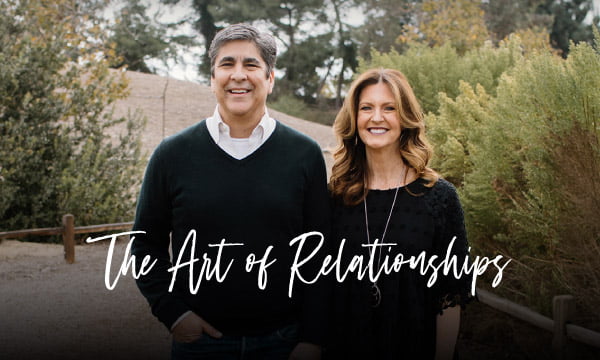
Chris Grace, Ph.D., and Alisa Grace are passionate about helping people build and sustain healthy relationships. As leaders of the Biola University Center for Marriage & Relationships, they combine the wisdom of Scripture with scholarly research to offer practical advice and insights. Learn more about their work at cmr.biola.edu.
—————
Mandy: 00:01
Welcome to the Art of Relationships. This podcast is produced by the Viola University Center for Marriage and Relationships. Let's get right into it.
Chris: 00:11
So one of the cool things we get to do at the Center for Marriage and Relationships here at Viola University is um we host our own marriage conference and we've been doing it, Lise, for at least 20 years.
Alisa: 00:23
Yeah, just about 20 years. So the Viola Couples Conference.
Chris: 00:26
Yeah, and it's sold out almost every year. We probably have, I would say, upwards of 40 to 50 couples that show up, and uh sometimes more, sometimes less. But one of the cool things, Lee, is we ask them uh for some feedback and then some questions.
Alisa: 00:43
Yeah, we sure do. And so we have brought together a set of questions from that conference, as well as some of the marriage conferences that we've been to, and compiled those into a QA format that we're gonna do today.
Chris: 00:58
I was gonna say, well, actually, you and I didn't compile.
Alisa: 01:01
No, it was the proverbial we uh who actually compiled those were our very handsome, beautiful partner here, our co-host Tatum. That's Univaz.
Chris: 01:14
Yep, Tatum Univaz. Rachel Pistan, Rachel Pistol behind a camera. Yep, Rachel and Tatum really do uh all the hard work here to make this possible and our conferences and they make us look good. Yeah, welcome. Yeah, and you guys are really on that front line because students come up to you, ask questions, they they you know, they stop at Rachel's desk or yours, and during conferences they write out questions, and some of those have struck you. Uh, what what's a common trend that you have seen in these questions? I mean, it it seems like, well, yeah, what's a common theme that you find young, maybe dating, some engaged, some married, some questions that you tend to get real fairly often.
Speaker 2: 01:56
Yeah, so all these questions that we compiled are, like you said, from the Biola Couples conference, and we do a panel QA with you two and Willa Williams, and these are all anonymous. So some of them can be quite bold or quite specific, and that's what's so great about these questions. And a lot of them that I've seen the pattern is a lot of people don't know how to navigate boundaries, but not just physical ones, although that is important. Also the spiritual and emotional boundaries, those aren't kind of hot topics.
Chris: 02:26
It's because we talk about boundaries, right? And we we try and give some practical things, but with the wide range of couples at different stages, it's hard to be definitive and say, okay, no kissing and no date when they've been, you know, engaged for a year or whatever.
Speaker 2: 02:44
So yeah, it makes it tough.
Chris: 02:45
Makes it tough. All right, bring the tough ones.
Speaker 2: 02:48
All right. Okay. First question As a dating couple, how can we resist lust and avoid crossing boundaries?
Chris: 02:56
Yeah, well, probably the most common issue we find, Alisa, when it comes to dating relationships, whether they're Christian, uh, especially if one maybe is a Christian, one is not, they have maybe different moral standards. Right. And then uh this idea of how can we avoid falling into the trap? And let's preface it. Okay. Most of these couples, and Tatum, I think this is inherent in the question, believe that premarital sex is not correct. It is not biblical. Would you agree that? I mean, that's kind of what the intent is behind that.
Speaker 4: 03:35
Yeah, for sure.
Chris: 03:36
And uh, Lisa, what's your first thing that you would tell a dating couple who are struggling with lust uh that they need to do as far as boundaries?
Alisa: 03:46
Yeah, well, I think the first thing is that we need to differentiate between normal, healthy sexual attraction and lust. And so I think too often um Christian couples can fall into, hey, you know, he's good looking, he's uh he's attractive, I'm sexually attracted to him, which is normal, which is healthy, and uh, and worry that that's being conflated with lust. So let's define the difference between just normal, healthy sexual attraction and lust. Chris, what comes to mind for you?
Chris: 04:27
Um well, my attraction to you when we were dating is what comes to mind. Um, because it it was as normal, you know, I thought a healthy level. What what what it was and what that kind of attraction is, is it okay. Scientists will say, psychologists will say that two people uh oftentimes have this attraction, and it's hard to define or to figure out what it is. Now, we try to do our best in going, well, let's look at and see if we can find the components of what makes two people, you know, sexually attracted to each other. What uh okay, here's a weird one. Smell actually plays a role in the world. I believe it naturally that there's a little fragrance industry. Yes, exactly. There's something, and and it plays a role both in attracting a person and keeping them from being attracted. It's something as if, like, I don't know, I just feel something around them, they'll say, or I'm uh I it's it's not a giddiness per se. It's just this something is there in this person. All right, we know smell. Now, you really can't, like, unless you, you know, douse yourself in a whole bunch of cologne, you really probably can't change much about another person's natural smell we're talking about. Isn't that weird? Now, the other thing that really happens is it feels as if so eye contact we know comes into play, and the face, and there's something about the eyes, something about that connection. Okay, let's just say now, Tatum, your question is it started and we need boundaries because I feel this. We've now started dating, we both feel this, and you said it's natural, which it is.
Alisa: 06:22
When does it cross the line to become lust?
Chris: 06:26
I believe lust begins when I do something that one is not just attraction but arousal. So um if we're sitting there talking and I feel a deep attraction to you, but suddenly, let's say a hand touch for some, or uh maybe a massage for somebody else, you know, let me just rub your bag for you, something maybe common, or maybe it's kissing. I I believe we each react as we normally do with things like sexual arousal. It's at that point that most couples and most people begin the vulnerability part. Because what causes this arousal in the first place, um, let's say it's holding hands, right? We reached out and held hands the first time. Well, if you remember, it was pretty arousing.
Alisa: 07:25
It was very, very sexy to hold hands when that's all you're doing.
Chris: 07:30
That sounds weird. I know. We we yeah, we did we You touched my hands. Yeah, I know. And so uh we hadn't kissed Jed, but we've been together for a while. So here's for me the problem, and then the boundary. Here's the problem. Hand holding leads to for some people, arousal at that point, uh a sexual arousal. But the next time, it doesn't seem to quite lead to that. It's like there's decreasing arousal the more and sensitivity the more we hold hands. So the next thing we're going to need is to hug. Well, I I don't know the sequences of dates, but let's just go with hand holding, then a long hug, or you know, hugging, then maybe uh a kiss on the cheek or a you know, a kiss on the lips. And that new thing causes and leads to wow, this is awesome, and it's arousal. Well, pretty soon those things no longer create the same amount when they're done over time. It's needing something more. We know what the end of that's going to be. Yeah, it's going to be sexual intercourse at the fullest extent, the way God designed it, within marriage, appropriate, outside of marriage, that which gets you closer and closer to a fulfilling of sexual arousal through another person. And the the end we know, premarital, having physical intercourse, not good. But what about the steps that get you there? It's the slippery slope, and it becomes you need more and more to continue that feeling, and so eventually a person needs to know I have to set this before I get to this point. And so I think that's really it, knowing that it's very it varies. So Tatum, the short answer is Elisa and I, because of our history, we we knew um we weren't going to kiss because kissing for us until we got engaged, and we know a couple that we just spoke with recently, they weren't going to kiss until the they kissed at the altar.
Speaker 4: 09:45
They're wedding.
Chris: 09:46
And it was so hard for them to not kiss, but that would have violated that standard. So, where should your standard be? We know it shouldn't be at physical intimacy in the full sexual experience. It may be hand holding, it may be kissing, and it but I promise you anything beyond kissing, such as petting or light petting or outside of the clothing touching, is probably taking you to a point where you no longer have what you feel is appropriate control to make a good decision while in that state.
unknown: 10:17
Yeah.
Speaker 2: 10:18
So, do you have any practical advice for maybe a dating couple who has gone too far? For example, when I was dating Noah, someone gave us the advice to talk about what do we feel our boundaries should be, what's our conviction, write them down and then share them with a trusted couple for that accountability. Do you have any advice like that for the couple who maybe is struggling with this?
Chris: 10:42
Well, you wreck you identify, Tatum, through that question and with your experience with Noah, a proactive intentional approach that's so it important because couples will at some point end up in this place where this is natural, this feels good, I want a little bit more of that.
Speaker 2: 11:01
And Sin loves the darkness of that's where it hides.
Chris: 11:06
So, what you guys have done is you've brought it to the light, and now I know it. Noah now knew that if I take this any further, I will violate that which Tatum believed was an important boundary not to cross. Right. But Lisa, now you have a couple, they maybe weren't as intentional and they crossed that boundary. Suppose it now led from kissing to X and Y. They want to go back. They realize they've gone too far. We now know that going back to kissing isn't going to provide that arousal, that dopamine rush that they used to get. So what do you tell them?
Alisa: 11:50
Yeah. Um, well, I think we tell them, first of all, it's gonna be very hard to turn the clock back. It's very hard to go back, but it's not impossible. But it's hard to go back, and so you want to pace yourself in that relationship, right? You don't want to be doing all that right out the gate because how do you reel that back in? And so, in um in approaching it also with an attitude of this person is important to me. I really care deeply for them. This relationship is important to me, and I want to do whatever it takes to protect it. I don't want to mess this up, which is why we put in place the boundaries that we did. Uh we were so important to each other, we did not want to do anything to mess it up. And so I think what uh to Tatum's point, it's not too late to go back and re reassess. Okay, let's establish those boundaries. What where do we feel comfortable? And it and before you even have that conversation, I would say to be spending extended time in prayer and in counsel with godly uh advisors, a mentor, someone that can ask you those hard questions, because really it it comes down to a heart issue. Uh it it plays out in a physical issue, but it starts in the heart. And so to have your heart right before the Lord, and maybe that's going through a time of repentance and confession to the Lord and experiencing his forgiveness.
Chris: 13:27
And sometimes that means taking a break in the relationship from being together as you process that.
Alisa: 13:34
And it's gonna be meaning uh you're gonna have to set new rhythms of how do we date? Um, because what we've been doing has not been working in terms of helping us maintain these standards that we feel called to. So, what do we need to change? What boundaries? Maybe for us, it was we just we set an 11 o'clock curfew because we said, you know what, no good thing happens after 11 p.m. because we get tired. When you're tired, your defenses go down.
Chris: 14:02
And then we got engaged, and our marriage, the guy who did our premarital and that was one of my mentors said, Okay, you have an 11 o'clock uh bounce uh time curfew. When you get engaged, you move it to 10 hour early. Or to 10 p.m. Like, wait, I thought you were gonna give us till midnight, man. Come along, we're engaged.
Alisa: 14:23
Because it's so hard once you get engaged and that commitment has innovated, and so it's not impossible, but it's not easy. And so I think you need those accountability people in your lives, you need to set some good boundaries and create, be creative, set some new rhythms in terms of how you're going to date now.
Chris: 14:44
And to be specific, listen, if this has gone all the way to sexual intercourse, it is even going to be more difficult to stop. Do not let it get to that point because I we have seen very few couples who have gone through that level and then said we want to dial it back, who are able to successfully do this without an extended break in time. Now, if it's just heavy kissing and a lot of sexual arousal and there's more and more that's needed, it it that's one thing to kind of come back from let's say level five, right? But if you're at level seven, eight, nine, and even ten, to dial that back is going to take what you called a radical reconstruction.
Alisa: 15:29
And and here's why it's so important. Because when you're dating, you are in a an information gathering um experience, right? You're trying to ascertain, hey, is this my person? It are we compatible, do we share the same values? And you're ascertaining that person's character. So you're it is conditional at the point that you're dating. It's meant to be conditional. That's not the time for unconditional love until you actually make the commitment, you're engaged, and then you get married. So this is conditional. And so I think it's also important to ask yourself does this person, do I have the maturity to exercise self-control? And if not, what does that tell me about this person? What does it tell me about myself? But in talking about this other person, ascertaining their character, are they going to be a good, healthy partner? Uh, we both know in 39 years of marriage ghosts, there have been periods of time that we have not been able to be sexually intimate because of ongoing cancer treatment, right? Uh pregnancy, or I was sick the whole nine months. Last thing you want to think about is being uh sexually intimate in that way. It's like, no, excuse me, I gotta go for a plus. This seriously, but there there could be times where you're uh you're apart. If, like, say you're in the military, you're apart for prolonged periods of time, you travel to work. And so you need to be able to be able to trust in the character of the person that you're with to know, okay, they were able to exercise self-control when we were dating. So that's a pattern, not potential. We date for patterns, that's a pattern that I think we can trust. That if anything were to happen when we get married, and for some reason that's not able to be part of our relationship, that that he or she is not gonna go looking someplace else because they just have needs, they can't control themselves. That's gonna be a big question.
Speaker 2: 17:40
Yeah, that's so good. Okay. Um, earlier you mentioned prayer. Yeah. And in the discerning process of boundaries, is that something that you would recommend to do separately or together? Because a lot of people have asked about the role of prayer in spiritual intimacy and asking if that is a relationship accelerator.
Chris: 18:00
Well, yeah, uh what you said at the very end, it it is. It's a relationship accelerator, right? Listen, if I pray for somebody, uh there's something that uh to be, it comes out of your heart a deep place, right? And it's that deep place that God has created us to connect with Him. Well, all of a sudden now I'm taking a deep connection that I have with God and allowing another person in there, and that begins to build an intimacy, not just spiritually, but it builds an intimacy of emotionally, relationally, and that we know that all these intimacy levers are connected. When you have emotional intimacy, when you have relational intimacy, when you have physical intimacy, and you have spiritual intimacy, they are like levers that move together. As one goes up, the others will follow because it for whatever reason that's how God made us to be intimate beings with our whole bodies. Now, to pray for my date, to pray for us at a level is great. I can do that individually, but I can also say, hey, at least let's go out for a date, and we're now just dating. I could pray for her in that time. And for us. But the limit for me, the boundary, is asking a question that gets at the heart at your deepest heart. That place that you share with God, your innermost sanctified place of connection with God. If I say, Lisa, what's the what's on your heart at a deep level? What are your biggest fears, your biggest needs, your your your greatest happiness and joys? That right there is reserved for two people that have made a lifelong commitment that should not be shared with anybody on a date, barely even engaged. Am I going at the heart of your of who you are? And so spiritual intimacy has a boundary, uh, Tatum. I believe I could pray. We could pray together. We can pray over the food, we can pray over the safety of the car, life decision. We can pray that you, you know, your her dad doesn't have a shotgun when we get home. We can pray a lot of good things. But to go to that deep level, you have to be very careful.
Alisa: 20:24
I mean, you don't want to put it off indefinitely because you want to get to know each other's spiritual life. You do that is a fine line that that you walk when when you're spending, if you're spending extended time in deep prayer together, that that would be a yellow flag for me.
Chris: 20:41
It'd be a yellow flag.
Alisa: 20:42
You want it separately for sure, but then to come together, yeah.
Chris: 20:48
Yeah, because the levers of intimacy is multi-factored. Yeah, we have to recognize that they are connected, right? Physical, emotional, this idea of relational, we're one, right? And spiritual all combine to make intimacy and they move in tandem.
Alisa: 21:09
Great. Well, thank you so much for joining us on this question. We so we we did we spent our whole time on that one question because it was so good. Let's just keep going. Oh, yeah. We haven't seen it.
Speaker 4: 21:25
She would mean my husband should freak me out, too.
Speaker 2: 21:32
Another couple asked, We're great together, but we don't share any hobbies. How do you think we should try to find one we both like? Ooh, I like that question.
Chris: 21:42
Yeah, I do too, because um it is it's a good question. I I think uh Tatum, would you you agree that when you were dating Noel, one of the things that attracted to you to him was a, of course, there was you know, physical, and you just liked him as a person. Person and he was kind and friendly, but you also shared a lot of things together, probably a sense of humor. I mean, that's a kind of something, right? Yeah, you shared a love for similar kinds of things for a couple. Yeah. So the question is, Lisa, in this couple, if I'm reading it, hearing it right, it is we don't really share much things. So so here's my first question. So what attracted you then to them in the beginning? Well, what was the initial attraction over? Looks you know that you could do math problems very well and help me with my homework. What's the what was the attraction? Because it would seem to me to be a lopsided, incomplete attraction if during dating there are no common hobbies, values, or we both love sports, or we both love Texas, or we both love being at the ocean.
Alisa: 22:59
Yeah. Yeah, I think one of the things you could do is to begin to explore each other's hobbies and see if you like them. Because just because you've never done it before doesn't mean that you will never get into that hobby. So let's say that uh you were into pickleball and I've never played, I didn't really hang out with people who played pickleball, but hey, let's go play and let's see if I pick it up. Let's see if I can enjoy it. And so explore that, or maybe brainstorm what are some other hobbies that we could look at. Like uh one of the things I love to do is dance. Chris does not like to dance, but you know what we did? We took a dance class, we took a salsa dance class and it was really fun. I mean, it's never gonna be his cup of tea, but I love the fact that he was willing to do it with me and try. And another thing that we did, he was uh he really used to play golf a lot, especially in our earlier years um of marriage. I am not into golf, I don't like to watch it on TV. Uh I mean, I just never played. So one of the things I did is I went and took golf lessons just so that I could learn to play with him and engage with him in something that he does. I love to, I don't really love baseball, right? I I'm not into baseball. But if you know anything about Chris, you know that he bleeds blue and white, the the Dodgers. And so that's not my my heartfelt hobby. But what I can tell you is that Freddie Freeman plays first base, Miguel Rojas plays second base, Mookie Betts is on third, Max Muncy uh no, I'm sorry, Mookie Betts is shortstop, Max Muncy is on third. You've got Kike Hernandez is left field sometimes there. Right now, sometimes, who is it?
Chris: 24:46
Well, right now we have a variety of different people out there.
Alisa: 24:50
Okay, so Tommy Edmonds in center, you got Teoscar Hernandez on right field, you got uh, oh yeah, Andy Pahez in left field. Then you've got Willie Smith behind the base, Yoshi Yamamoto is a great pitcher, and the designated hitter of all hitters, Shohei Otani.
Chris: 25:10
At least that's why you're so hot.
Alisa: 25:11
Actually, I don't love baseball, but I love him. And the principle is because it's important to him, it's important to me.
Speaker 2: 25:19
And I think that's the beautiful thing about curiosity, too, is it makes the other person feel so loved. Like Noah's super into auto sports. I think cars are silly. Well, I did think cars are silly, but then I started. I got into indie car, I got into F1, I started watching with him, and now I personally love it. Wait, it's a new shared hobby together. And like same thing with me and traveling. He was like, I never want to travel. I love Southern California, but I love traveling. So I asked him to come with me, and now he loves it. Yeah, you just never know. You never know.
Chris: 25:55
So to clarify, if they don't have hobbies, that is not a sign that they shouldn't be together if they don't have a lot of shared hobbies. It's actually a sign to start to figure out and expand and try. Now, if you expand, if you try and you still find nothing, maybe God's using the net to tell you, maybe this isn't the right one for me for the next 70 years. But I th I love that uh that what both of you have done in trying to connect with your spouse. And the the same thing is incumbent upon me, right? To figure out what does she like? You know, like she loves Lisa loves the beach, and so I got I need to take her there, even though I detest the beach. It's just dirt. And like, what?
Alisa: 26:39
And here's the thing, too, is that you don't have to do share every hobby together as a couple. It's okay to have separate interests. In fact, that's oftentimes very healthy, but you do want to have some areas of overlap, right? You can do this alone, this alone, but you want to have some shared space right here. And sometimes you just have to think outside the box and be willing to explore some new things together.
Chris: 27:03
One thing that would happen in our office would be we know Rachel, for example, is a wonderful used to be figure skater. Well, the number of men that could be great figure skaters is probably not great, but the number but the number of but the number of hockey players who can skate. So Rachel needs to go, oh I'll try hockey skates, even though I've never been on a hockey skate. And he could try figure skating, and now it opens up this world of toothless hockey players that are single. But that's that's it. That's how you do without something that's outside.
Alisa: 27:48
Hey, let's be real, Chris, right? We've all had moments where we've thought, I wish somebody would just help me figure out this whole relationship thing.
Chris: 27:57
Yeah, and sometimes it's not even marriage, right? It just might be a roommate or a dating relationship, family, or even friendships.
Alisa: 28:04
Yeah, and that's exactly why we offer free relationship advice through the Center for Marriage and Relationships.
Chris: 28:10
Yeah, it's not only free, but it's confidential, it's biblical, it's practical, and those who seek guidance early enough can often avoid huge problems later.
Alisa: 28:20
Yeah, so if you're wrestling with something big or maybe it's just something small and you don't have to do it alone.
Chris: 28:26
Yeah, I just know that you can connect with our team today, so just check the show notes for all the details.
Speaker 2: 28:36
Okay. Two more questions for you guys. How can I have alone time when I feel like my partner needs to be with me in everything we do?
Chris: 28:45
Oh boy, we've never faced that. Um, actually, for the first 15, 20, 30 years of our marriage, uh, there's just a difference in our personalities. And this person, I think, would you say they're married, or did you get a sense if they were dating?
Speaker 2: 29:03
This is a dating couple.
Chris: 29:04
This is a dating couple, yeah. Um, well, at the dating level, I think it's extremely a good boundary to put into play. So the one that's being, let's say, clingy probably needs to be told, listen, um, one of the best things that makes this person attractive is not the desire to always be there and clingy, but it's the knowledge that they are growing and walking and have their own separate life. And they're because clinginess is a sign of something insecurity. Yeah, maybe something being filled in this insecure person by the presence of another. Um, unless that other person is the kind that's like, I don't ever want to be with them, or um, you know, they're always running a separate life. Well, that's a separate issue. But I think the question implies, Lisa, a little bit of insecurity.
Alisa: 29:59
Yeah, yeah, that it would be great to explore that if you're dating, uh, to find out from the from the person why do you love to really be together all the time? What is it like for you when we're not together?
Chris: 30:16
You need to have a conversation. If your boundary and your motive is pure and you want to honor this relationship, and you feel like not spending as much time together is a good thing, well that's great, then it communicate that.
Alisa: 30:29
Yeah. And it could also be uh a situation, I was gonna say situationship um situation where one is much more invested and committed to the relationship than the other one. And they just haven't had that conversation. So that's why talking about having this conversation, where do we stand? Where's our relationship going? What do you think about the amount of time that we're spending together? Do you need more? Do you need less? Is it the same, you know, are we the same? And just have a conversation about that.
Chris: 31:03
Uh let's ask behind the camera and Tatum, how often should a couple have that conversation? How often should you have the situationship, where are we conversation? I mean, you like a DTR? Uh yeah, maybe a DTR y'all cart. Or a check-in yell carton motives. Would you say every month or so?
Speaker 2: 31:23
Or is that I feel like that's appropriate on a like nice dinner date night. I always feel like asking intentional questions during set-aside times is really healthy.
Chris: 31:32
Especially after you've said, okay, we're dating. Now it's a month into it. Where are you? How are you feeling about it? Rachel, what do you think? Same thing?
Speaker 1: 31:41
I agree, like maybe once a month.
Chris: 31:42
She agrees maybe once a month.
Speaker 1: 31:44
One question that comes I've heard people ask before is when is it too early to have that conversation?
Chris: 31:51
So now not on the first date. Yeah, yeah. So is that question of when is too early is it is not the first date, right? Uh or after you've declared your heart.
Alisa: 32:02
But do you think it it matters like if you've had an established friendship first for a while? I think that makes a big difference in timing versus if it's somebody that you're just getting to know. Like there was no connection before you just kind of met on an airplane flying to Spain and met somebody. And you know, at that point, that might be a different timing. What do you think?
Chris: 32:27
I I think that's exactly right. And and it's too early on those on the airplane. Uh it's it's okay maybe when you're walking around Madrid, but it is probably better to wait until you've been together for about a month, I would say. Yeah, then you have those conversations, maybe every couple of weeks a check-in. Where's your heart?
Speaker 2: 32:47
Are things going?
Alisa: 32:48
Yeah, anything you want to bring up?
Speaker 2: 32:50
Well, the next question is basically about that. How do you know when to address something and when to just let it go?
Speaker 1: 32:58
Let it go.
Chris: 32:59
Oh boy, yeah. Which hill, which is important, and let's define some of those things to address. Uh, Tatum, I could think of one. I could think of, I need to address that we have very little interests in common other than this attraction. That seems to me to be something you want to address right away.
Speaker 2: 33:18
Yeah.
Chris: 33:18
Let's try another one. It seems like the person who was writing in was talking about maybe some annoyances that she or he had when Yeah, so you find out that they routinely, let's pick annoyance, interrupt the other person. What do you think?
Alisa: 33:37
You were waiting for me to talk so you can interrupt me. I knew those came. I know my husband or what? Oh, wait.
Chris: 33:46
Okay, so you interrupt, or you let's say the other person does, or maybe they never can get to talk about their feelings much. You just never know where they're at. You're like, are you emotionally intelligent or are you just what?
Alisa: 34:01
Yeah.
Chris: 34:02
Ugh, neat's disgusting.
Alisa: 34:03
Yeah, I think you have to ascertain is this a preference or is this a need? You know, if it's just a preference, then it's probably something that you can choose to overlook. And, you know, just kind of, you know, you're different, you're you're more tidy, uh, I'm a little bit more messy, and you know, we can choose to overlook the shoes in the middle of the floor. I think you but you have to ascertain, is this a real need? And the way you ascertain that is you just you ask yourself, okay, is this going to matter in six months? If the answer is no, probably not, then you let it go. And then is this a repetitive pattern that's really starting to bug me? Maybe. And maybe that's a conversation that you want to have. Uh, and then third, uh, do I find that I'm building up resentment or bitterness as a result of this? If the answer is yes, then you probably want to address it. Um, but then that that begs the question, Chris, you kind of touched on this, is this a hill you want to die on? Because if if if every single little annoyance of the other person is a hill you want to die on, and you just have to have a conversation and hash it out, then you probably need to take a couple steps back and say, oh, okay, wait a second. I'd be too demanding. Yeah. Um, but uh if if not, if it's something that, yeah, this is really starting to bug me, we probably need to have a conversation about it, then yeah. But if it's not gonna matter in six months, if in the the whole scheme of life it really doesn't matter, then just let it go and realize, you know what, you have some annoying things too. I have things that bug Chris, and I wouldn't want him to pick apart every little thing that I do, but I would want him to let me know if something that I'm doing is really hurting his feelings or really starting to bug him because I would want to change that.
Chris: 36:05
And and and Tatum, let's just ask you real quickly. Suppose um this was something that it could be easily fixed. Okay, you're dating somebody and they don't dress up, they don't do their hair. Let's think about a guy here. Maybe he even doesn't use a whole lot of deodorant when he should. Um is that of the level? Now he could fix that, but does it mean anything else? Like so you might be thinking, well, I don't know if he's taking this as seriously as I am. I'd dress up, put on, you know, makeup or you know, perfume, or at least when we go on a date, and he doesn't seem to care.
Speaker 2: 36:50
And that might indicate like the level of care for which he has in other areas of the city.
Chris: 36:55
That's right. So if it indicates like, and his house is kind of his apartment is really messy whenever I'm over there, his dress is kind of messy. His cars are red. His cars are right. I wonder that would seem to somehow have a very gentle conversation at some point. Like, can you change? Or you is this you and God love you? That's fine. But maybe God love you with somebody else.
Speaker 2: 37:19
Maybe and I think you can tell a lot by how someone responds to that request.
Chris: 37:24
So maybe the answer that they provide back, if they're defensive, like well, you're not always clean. Trying to change. What are you trying to be my mom? All right, then you're like, Well, okay, hold on here.
Alisa: 37:36
You have issues. It's Christmas season. You got it. That's messed up.
Chris: 37:43
That's really messed up, man. But if they respond graciously, like, oh gosh, I never really thought about this. Me and my guys, this is how we dress, but uh, yeah, let me all right, I'll put some thought into that. That's a very different answer.
Speaker 2: 37:55
Yeah, well good. All right. Um, last question for you guys in this dating section. Well, I guess this is from an engaged couple, actually. How should we navigate fear of physical intimacy in preparing for marriage?
Chris: 38:08
Yeah.
Alisa: 38:09
We're hearing more and more of that question.
Chris: 38:12
Yeah, but okay, first of all, let's start with the basics and what we know. When two people that are dating get engaged, they are making a preliminary commitment to the other person, right? Um, but they have not made a commitment that is like, and I believe a lot of engaged couples allow the emotional intimacy and physical intimacy to go way, you know, the the bars that are holding them, the boundaries are like, hey, we don't have any boundaries anymore. And they're more prone to falling into habits like say even having sex together before marriage, when in reality, the percent of engagements that know that do not result in marriage is close to 45% of people who get engaged and never get married. Wow. Well, that number right there should give you pause because it's a good place to be, right? I I mean it's better to break up an engagement than to spend 60 years unhappy together or get a divorce.
Speaker 4: 39:25
Yeah.
Chris: 39:26
But still, that emotional boundary and intimacy boundary probably needs to stay and be very careful with it because I believe a lot of these marriages do not, or a lot of these engagements do not end up in marriage, and then you have hurt people who have now gone way too far, given too much of themselves to another person that it was not their right.
Alisa: 39:52
So, what about the opposite though? What about for those couples that have worked really hard to maintain sexual purity, spiritual, you know, keep it, keep those emotional boundaries and physical boundaries in place. They've worked really hard and now they're get they're getting ready to get married and they're worried about it, or they're actually married, and they find that anytime that they are physically, sexually intimate, they feel guilty.
Chris: 40:22
Oh a shame, homie.
Alisa: 40:23
Yeah. So what do you what do you do? What do you tell?
Chris: 40:26
Well, let's look at the numbers. Uh the numbers are low, um, from what you know has kind of been gathered. There are about 10% of couples. Um, now I'll have to go look up the perfect number or you know, the actual number, but that do experience that. They've held off, they've waited, and they now are in a place where this is not sex, is kind of still in that corner of I feel guilty.
Alisa: 40:50
Yeah, I feel guilty.
Chris: 40:51
Like you were doing something wrong. I can't release myself fully to you because that's not appropriate. I don't understand this. The vast majority get over that pretty quickly. It's like, all right, this is it works and everything's great. However, there are a percent that struggle with this, and I I think what they need to do is you can you really probably can't predict this, you know. You don't always anticipate this. So it's probably after the fact. I would say if shame and guilt are part of your marriage in the physical or any vulnerable area, right? I just can't I know that trust it take it builds up over time, and there might be other deeper issues that have gone into play that lead to shame and guilt. Maybe they need to go, all right, this is where I need to get somebody who knows what they're doing. I need to talk to them and figure out is this shame coming from our lack of key or our keeping of these boundaries, or is this something that's deeper in my family or in my history?
Alisa: 41:53
Maybe it's some misconstrued uh ideas about what sex is. And you were if you were always taught that sex is bad, it's dirty, it's nasty, you don't do that, you guard against that, then that's easy to bring that into marriage, versus the idea of being raised with with the concept that sex is designed by God, it's his gift to us, and so we shouldn't be ashamed to talk about what God wasn't ashamed to create. And uh He created it to be mutually pleasurable for uh it as a means of procreation and as a a um physical or external sign of an internal commitment and sacred place that he's created where two become one. And uh not just physically, but you're becoming one spiritually, um, socially, uh, materially, financially, you know, in all areas of your life. You're you're melding your life as one. And so um, and so examine, maybe you want to talk about how you were raised in regard to sex? What were the attitudes that your your parents or caregivers uh you know fed into you? And I think another place that we don't really talk a lot about um is uh if we've been in previous relationships uh where those boundaries were repeat repeatedly crossed. And let's say that you were in a situation where you didn't necessarily like that, you didn't want to do it, but you felt pressured into doing it and you just participated. And eventually that builds up bitterness and resentment, that that relationship broke up. Well, imagine now you've worked really hard to keep those boundaries in place and you're going into marriage assuming this is all gonna work beautifully, we've been saving ourselves, so it's gonna come naturally. And let's imagine that it doesn't necessarily come naturally, and so it's something you have to work at, it's a skill you have to develop that you get. To do it together. But let's imagine that that person that was pressured in those previous relationships. Now they're bringing with them, unless they've really done a lot of good processing with the Lord, maybe even with a good counselor, those feelings of shame. Maybe that's what comes back into play. Maybe that's what's triggered where you're finally, you're in a relationship where it's appropriate and it's beautiful, and you're allowed to explore each other's bodies and enjoy one another mutually. But it just in the back of your mind, there's like a hesitation or a resentment, like that's all you want from me. You just, you know, you just want that physical. Why does it always have to lead to that? Because it's not this relationship, it's what happened in the past. And so maybe you want to go see a therapist that that can help you identify that that pain and trauma and uh that that situation that occurred before your relationship, because you might not even realize that that's what's happening. And then to help you process that in a healthy I think that's great, Lisa.
Chris: 45:10
I think too that the role therefore you can see that forgiveness is going to play both forgiveness of another person and then self-forgiveness. And I think the other thing that happens in some of this to really, I mean, I get specific here. What happens in a marital relationship sexually? I mean, we understand the dynamics, and you know the human race is, you know, continues to go ahead and populate itself through these acts. However, there is something within physical intimacy that some people just don't find comfortable. And I think one of those things, it could bring shame and maybe let's say sexual intercourse does it, but maybe the way you do it, or the foreplay, or the some other acts. And I think it's during that time that shame and guilt could come in, or just a dislike, or I'm not comfortable. And this is where one of the best pieces of advice is this if one of you feels uncomfortable in a particular type of sexual act, then you don't do it. You don't pressure the other person. If one of you feels um uncomfortable being fully naked in front of the person with the lights on, it just makes them feel then the other person needs to recog uh uh accept that, receive that, and go, all right, then we'll keep the lights off until there's a comfortability or some other thing that makes you uncomfortable. Yeah, you give them time. If both of you feel comfortable, there's probably fairly few limits on that.
Alisa: 46:50
Other than if it's something that God has specifically said don't do, or if it involves anyone outside of the two of you.
Chris: 46:59
Uh or it involves uh on the outside of you a physical person, or even let's say pornography, you know, that like, oh, I want to play pornography because that's the only way I get excited anymore. Well, that's not part of God's design, and you need to go get some help and fix that. So that's that's one in which no doubt, but what if you both feel comfortable in that? And then the answer is all right, yeah, both need to start working on something and re-look at where did this come from? Why are we doing something that is definitely causing me to feel attraction or arousal outside of my marriage? And why can I not do that?
Alisa: 47:35
Well, you we always put it this way that the oftentimes we have deep emotional needs that we try to meet that are legitimate, that we try to meet in illegitimate ways. And we've got to be careful that we're following God's prescription because it was his idea. You know, it's like when you build a piece of furniture, if you don't follow the designer's instructions, you're gonna mess it up and it's not gonna work right, right? That drawer's not gonna just slide in there, and so it's gonna work much, much better when you follow the designer's directions. That's great.
Speaker 2: 48:09
That's good. So we've talked a lot about shame and guilt and uncomfortability. What would you say to a couple, maybe in engagement season, who's really fearful or scared of physical intimacy, like some practical tips maybe on how to overcome that fear?
Chris: 48:25
Well, that's great. There are a percentage of people who physically the sex act can also be uncomfortable, right? And especially for the woman. Especially for the woman and even sometimes for the man, but or maybe it just doesn't work very well, or maybe there's other things going on. I yeah, uh Lisa, um I think what we've seen with couples like that is the fear um can start to dominate and and cause you know of worry and make it worse.
Alisa: 49:00
Yeah. Um, I would say that's such a great question, Tim. I would say start with with your doctor. Make sure that you know, well before several months ahead of your wedding, that you've gone to your uh uh gynecologist. I would say for a woman, gynecologist, that you let them know your wedding's coming up. That's those are gonna be the times that you're you're you've already discussed with your uh your fiance what form of birth control you want to use. And that'll be the time to bring it up with your gynecologist. And then also, you know, that during that physical exam, just to be really frank, uh your doctor can uh when they do a physical exam, can tell if it's if like you've never been sexually active and nothing much has been in those those parts of your body before, it can be really tight and really thin and be very painful when it comes to the sex act. And so they can give you uh steps to take in order to be able to address that issue. And so that's a really frank conversation you want to be able to have with your doctor. And then I think it's also something you would bring up in your premarital counseling. That's why premarital counseling is so important.
Chris: 50:14
Yeah, it's so important, uh Tatum, and it's such a great question that one of the best forms of premarital counseling will always involve the place to ask that question and the resources. We use a book, for example, called Sheet Music by Lehman.
Alisa: 50:33
Uh-uh. Dr. Yeah.
Chris: 50:35
Lehman. Lehman. And it um it gives you four chapters to read before the marriage, and then eight or ten after the marriage.
Alisa: 50:46
Take it on your honeymoon.
Chris: 50:48
And because, listen, um, those are our questions. You you could ask that question on a podcast, you can ask that question, you know, to a to a therapist, you can ask that, but who else are you gonna ask that question to? And yet it's going to sit there as like this worry, this fear, and it's like, whoop! And we have found that while we address it sometimes in our premarital work, that we also want to leave them with something in their hands a book, uh, some more information by which to kind of help ease their fears.
Speaker 2: 51:20
Yeah, yeah. Well, thank you for answering all of these burning questions in regards to dating. And then we'll have to do this again. I'm gonna do a marriage version next.
Chris: 51:29
Well, let's do a marriage version next. Thanks to Rachel Pistana for helping you in this area doing the camera. Thanks. Data Munives for awesome work, marketing communications is in answering these great questions, asking these great questions.
Speaker 2: 51:43
And we have lots of resources on our website, cmr.biola.edu, that address most of these questions in blog form too, and get a little bit more specific. So feel free to check that out and we'll see you next time.
Mandy: 51:56
We're very glad you joined us for today's podcast. For more resources on marriage and healthy relationships, please visit our website at cmr.biola.edu. We'll see you next time on the art of relationships.
Authors

Chris Grace
Chris Grace, Ph.D., is a professor of psychology at Rosemead School of Psychology and Director of the Biola University Center for Marriage and Relationships. With degrees in psychology from the University of Northern Colorado (B.A.) and Colorado State University (M.S. and Ph.D. in Experimental Social Psychology), he has taught and written extensively on relationships, marriage, and the integration of faith and psychology. Honored with awards for both teaching and scholarship, Chris is passionate about making research and biblical wisdom practical and accessible. Together with his wife, Alisa, he speaks nationally to couples, singles, and churches, and co-hosts The Art of Relationships podcast, equipping thousands with tools to build stronger, Christ-centered relationships.

Alisa Grace
Alisa Grace ('92) serves as the co-director of the Biola University Center for Marriage and Relationships where she also co-teaches a class called "Christian Perspectives on Marriage and Relationships." While she speaks and blogs regularly on topics such as dating relationships, marriage, and love, she also loves mentoring younger women and newly married couples, speaking at retreats and providing premarital counseling. Alisa and her husband, Chris, have been married over 30 years and have three wonderful children: Drew and his wife Julia, Natalie and her husband Neil, and their youngest blessing, Caroline.

Tatum Munivez
Tatum graduated from Biola University with a B.S. in Business Administration with a concentration in Marketing Management and a minor in Biblical Studies. After graduating, she joined the CMR team as the Communications and Marketing Manager. Tatum enjoys spending time outdoors, coffee dates with her husband and pursuing her entrepreneurial dreams with her freelance marketing business. Her favorite thing about marketing is being able to use her gifts as an outlet to serve others!