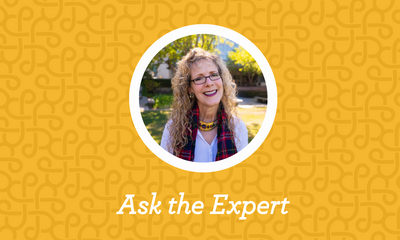
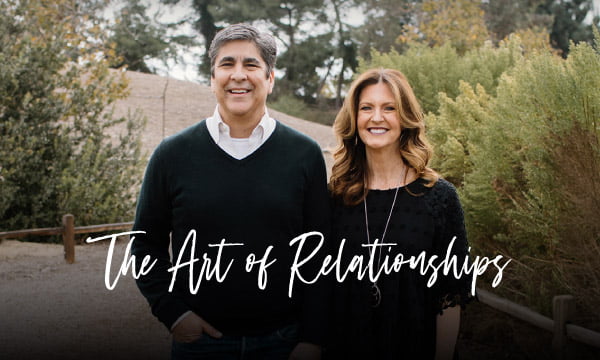
Your Relationships Are Only as Strong as Your Skills with Debra Fileta
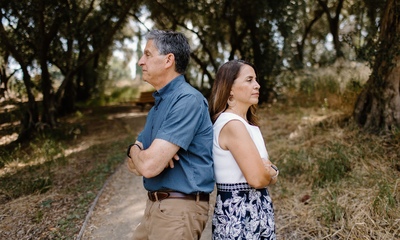
In this episode, Chris Grace welcomes licensed counselor and author Debra Fileta to explore why healthy relationships depend on strong people skills. They discuss the common assumption that we’re good with people, the impact of technology and distraction on connection, and how self-awareness, ownership, and intentional conversation can transform our relationships. Debra shares practical insights on going deeper in conversations, recognizing emotional filters, repairing relational ruptures, and focusing on changing your own “ingredients” rather than trying to change others. Whether you're dealing with roommates, spouses, friends, coworkers, or family members, this episode offers valuable advice to improve your relationships and communicate with greater depth and intentionality.
Resources Mentioned:
- People Skills by Debra Fileta — Learn practical relational skills to improve communication, ownership, and connection in every relationship.
https://amzn.to/48j4wm8 - Debra Fileta — Articles, counseling resources, podcast, and relationship tools.
https://debrafileta.com - Talk To Me Podcast — Debra Fileta’s podcast focused on meaningful conversations and healthy relationships.
https://debrafileta.com/talktome/
Connect with Us:
- Website: cmr.biola.edu
- Facebook: facebook.com/biolacmr
- Instagram: instagram.com/biolacmr
- YouTube: www.youtube.com/@biola-cmr
Join the Conversation:
- Subscribe to The Art of Relationships Podcast to never miss an episode.
- Leave a review on Apple Podcasts, Spotify, or your favorite platform to help others discover the show.
- Share this episode with someone who could benefit from these relationship insights.
Sign up for weekly updates and resources from the Center for Marriage and Relationships:
👉 http://eepurl.com/bgsuQv
About the Hosts:
Chris Grace, Ph.D., and Alisa Grace are passionate about helping people build and sustain healthy relationships. As leaders of the Biola University Center for Marriage and Relationships, they combine the wisdom of Scripture with scholarly research to offer practical advice and insights. Learn more about their work at cmr.biola.edu.
—————
Mandy [00:00:01] Welcome to The Art of Relationships. This podcast is produced by the Biola University Center for Marriage and Relationships, let's get right into it.
Chris [00:00:11] Well, let me just welcome all of our listeners to the Art of Relationships podcast. Today, we have a very special guest, someone that I've known. I don't know, Debra, how long we go back, maybe, I don't know, 15 years.
Debra [00:00:24] It's been a long time, hasn't it?
Chris [00:00:26] And I think it started maybe we were on a board together with a dating group who was that?
Debra [00:00:34] Yes, let's we were we were re we filmed a dating curriculum together I want to say I don't want to see the wrong name, but I kind of think it was Christian mingle
Chris [00:00:43] Oh, yeah, it was. It was. It was me. Yeah, it was. It was Christian Mingo. Good job. Yeah. Good memory. I forgot about that.
Debra [00:00:51] And I remember thinking, he's my kind of a guy. I like this guy. I loved what you did and your heart and the content and your Heart for Marriage.
Chris [00:01:00] Yeah, I think that is too, Debra. We really connect. So our guest is Debra Filetta today. Debra, I know you're a licensed professional counselor and you have, I don't know, 50 books that you have published or at least eight. Is that right? Is eight about close? Nine books. Nine books! Yeah, wow. And is People Skills, then, your latest?
Debra [00:01:27] People's skills is.
Chris [00:01:28] Nine tell us what that is as we introduce you at people skills I know it you talk about relationships are really only as good as really where your people skills are is that yeah about it
Debra [00:01:40] Yeah, your relationships are as strong as your skills. And I think people skills is something that most people lack, but they are convinced that they have them. And that's the scary part.
Chris [00:01:53] Okay, see, I'm a social psychologist, and that belief that we have, or we hold, you know, certain traits, and we're better than most people, or better than average, right? Almost everybody says they're better than average drivers. Well, it can't be true, right, or we're more than average with people. What hints are you giving in your book that that's not necessarily the case?
Debra [00:02:19] Well, first of all, it's not about being an extrovert, right? Some people think that, oh, I have good people skills because I'm an extover, or because I can have a good conversation. But really, I know extroverts that come in a room and they're like an attention vortex. They hog all the attention. That is not good people's skills. I think people's skill is a little bit deeper than that. It's about our awareness, our insight. It's taking ownership of how we show up in relationships. And really making the most of our role. So it's actually less about people when you think about it and more about how you choose to show up in your interactions. And I think this matters, especially for the culture we live in today because we live such a tech saturated world where we're not showing up the way that we should because we're distracted or addicted. We've got screens in our faces, like we're not even having the normal typical interactions that we used to have 20 years ago because of this tech saturated culture. And then I also think as Christians, unfortunately, we've all this love in our heart for people but it doesn't always get conveyed. It often gets convoluted because of our lack of skills. And so my hope for this message is that we as the church... As husbands and wives, as students, can learn to love in an effective way and actually learn the skills to take what's in our heart and share it and convey it to the people that God has put in place.
Chris [00:03:58] In our lives. Man, what a great premise for a book. I think what we are finding, Debra, is the reason your book hits such a need is because young children, and like you said, growing up, are really being more and more withdrawn from people-to-people, person-to person interactions, and you find that deficit. I mean, many of them, you ask a college student today. Do they prefer face-to-face conversations if they had to have an or by text? And many said, unless it's with an intimate friend, I prefer texting, I get information out there. But what they're losing is so much nonverbal, the skills that take place when two people interact.
Debra [00:04:49] Yeah, exactly. And add to that, 2020, I mean, we used to, you know, half joke that our youngest son, who was born in 2020 with all the masks and the social distancing and almost a fear of closeness, you know. That was part of the norm for how he was raised. And I do believe it had an impact on him. And social skills and shyness and anxiety that he had to really work through because of the way the world was. And so we've got all these factors being thrown at us. And when we're not good at relationships, I think sometimes, especially husbands and wives, I see this all the time where the wife will think, well, he just doesn't love me. And I have to pull back and say, Listen, this is not a lack of love, it's a deficit. In skill. It's a lack of skill. But the good news is skills can be learned. These are things we can learn and grow in.
Chris [00:05:56] And Debra, I love that because, well, first of all, I mean, you have the background and the skills, right? I mean you have this license that you've been using as a professional counselor, but you've writing. I know you speak everywhere. You have a popular podcast, right, it's called Talk to Me. Which clearly shows your interest in what it means to be talked to and listened to and heard and understood. And that's oftentimes what gets lost. But on top of that, you and John have four children of that age and it's that, so how are you doing that in your personal life with your family? I mean, you must have tech timeouts or you must strong limits or boundaries.
Debra [00:06:46] It's interesting because you never want to go the extreme where your kids have no relationship and no engagement with technology because then they get out into the world and they have no idea how to manage it in a healthy way. But then you also don't want to the other extreme where you give all access with no limits, right? And that's where people get in trouble on both sides of the ditch. And so I think it's important for our family to start teaching these skills at a young age. And it's interesting because not every child in our family has earned trust with devices in the same way, in the time frame. It all kind of depends on their level of engagement. But we definitely have times in the day where screens are off limits. We set app limits, we monitor, we have good conversations about it. Even with my 10-year-old, I just helped him start an Instagram channel specifically for engineering and art and STEM projects that is through my phone, through my account, so that I'm the primary person that accesses it. But I'm also wanting him to learn how to engage with these platforms in a productive way. So it's such a fine balance, but you probably would agree with me. That the number one way that we teach our kids is by modeling a healthy relationship with our device selves, by looking them in the eye when they talk. One thing I've been doing lately, Chris, and just being really deliberate, because I just told you, at home school, kids are around a lot. And I'm a multi-tasker. So my tendency would be, just to finish this email real quick, or this text message, but I'm being really elaborate when they walk in a room and start to talk to me. That I flip my phone on its face so I don't even see it, don't touch it, it's on the desk, I'm not looking at it, thinking about it, and I look them in the eye and say, hey, yeah, what's up? Rather than looking at my phone like, hey, one second, what do you want? Because it can be so easy to do that. And I think that conveys a message to the people around us. So just little things like that that I think we need to be aware of.
Chris [00:08:57] As parents. Man, you mentioned some important words there, right, modeling. Our kids really probably pay more attention at the end of the day to what we do rather than what we say, right? I mean, they're watching you and John talk. They're watching me and Elisa as we interact and go over a conflict. But more importantly, they see maybe our presence and they notice our attention. And presence is so powerful in modeling. The What you said to me, Deb, it just goes to this place where I think of all of the most critical moments where I've really heard my kid was when I wasn't distracted by other things. And by the way, those moments in this busy world are rare, right? You're right. And so you've done something that is wonderful. Teaching a person skills is. Teach them the skill of putting away the phone. That's not that difficult. Turn it off the notifications or whatever it is that you do. What's been most surprising as you've been doing this research and studying and talking to people about this kind of idea, people skills.
Debra [00:10:08] Honestly, I think the most surprising has been the lack of awareness, the fact that people think they're good at this when they're clearly not. I mean, I have people that come in and their marriages are in shambles, their relationship with their kids are inshambles and somehow they still think they have good people skills because they have such a superficial definition. There's been other books I've written where, like for example, Soul Care. The rhythms that Jesus practiced to care for his soul, to avoid burnout, to stay filled. And when I talk to people about soul care, majority will say, oh, I need that book. That's for me, I work too much, I'm too busy. As if busyness is a badge of honor, and so it's like, oh I could use this book. But when you talk about people skills, most people say, I know somebody that could use that book, I know someone in this generation could use that book there's always somebody. And sometimes a list of people, but it's rare that they think of themselves. I think we've got a level of lack of awareness of how we actually come across, and it's much easier to blame relationship fracture on the other person, you know? But that doesn't do us any good at the end of the day. That doesn't change anything at the of the end the day, the only ingredients we can change. Is the ingredients we bring to the table. And so that's where we really have to put our focus.
Chris [00:11:39] Yeah, Debra, much of what you're saying is like a drop-mic moment. There's so much there to cover, and I think we do only bring us, and we have responsibility over that. And what you said is something validated by research in my field, social psychology, that people are not very accurate judges of themselves. And we talked about that, right? They think they're better drivers than the average person. They believe they have better people skills. They believe that they. You know, and in a lot of these, it really does shock them when they're confronted. Now, how do you do that? How do you take a couple or a person and wake them up? I mean, you talk about it in your book, but how do, what's the one thing that helps waken them? Is it just pointing to their behavior or having them track their time? Or what works best.
Debra [00:12:34] I like to think of this book, People's Skills, as a mirror. And I realize that a lot of people don't hold up a mirror to their social skills very often. And not only do they not hold up the mirror, they don't invite anyone else to hold up in the mirror. I mean, when's the last time somebody approached someone and just said, hey? Could you tell me what you think of how I come across in relationships? How do I come in this relationship? We barely do that in our marriage. How do come across? What can I work on? What can do differently? That really takes a heart of humility and awareness. And so my hope for people skills is as people are reading through the 31 different skills, the very first chapter starts with why you need this book, not just the person you're thinking of, because it's easy for us to go there. But I want you to stay here. And I want each of these 31 principles to be something that you take inventory of in your life as a mirror, not to shame you or to make you feel bad or to makes you feel lacking, but to empower you in realizing, wow, I have so much power, authority and control in how I do relationships if I would only unlearn certain things. Learn new habits, behaviors. Even something as simple as shyness, Chris, you know? Are we actually born shy, or is it just a series of events and experiences where we've learned to show up in relationships in a certain way because that's what was expected or that's we believed? I think of the child who grew up in an alcoholic family where dad was belligerent and nasty and mean. A child like that isn't going... To want to be noticed. They're gonna wanna be shy and quiet because that's what keeps them from getting in trouble. And if you think about these coping skills that served us in one season of life, end up being the very same coping skills that sabotage us in another season of live. So I do believe that there's a component to it that is our wiring, but I believe that the majority of it is our experience and our learned behaviors.
Chris [00:14:51] Yeah, I love that. It resonates, you know, as a researcher here in that, kind of in that field, at least at times. But yeah, what we're born with, what you're saying, is, I mean, there are boundaries, right? And some of us are born on, let's say, this boundary between extroversion and introversion. And that shy person, however, within that, experiences rewards, punishments. Can move the needle from being shy and introverted. It can move it to where you're just kind of right in the middle. And that is from, what do I find pleasure in? What have people punished me for or rewarded me for? And that's a tool, like you said, you can learn how to kind of step out of that. But it takes a mirror and a lot of people's, yeah, I kept thinking of a time where I got feedback and it wasn't that long ago. You know, like you, we get to travel and speak, and we don't have books, however, in 250, I don't know, 1,000 million places. I think you have 200 million books overall that have been sold in a million and 75 different languages. We have one that's in English, and it's doing great. It's not in that market. But here's the thing. You are taking people and showing them in this book that even if you're born with this, even if your family was this way, even if this is something, you can unlearn it and you can, and it takes a mirror. I asked somebody when we speak, what can I do better? But that was hard because I'd been speaking for so long. And this person, you know, that was kind of their job. They said, well, here are some things that you do great and here's some things to work on. And I remember going, I didn't like hearing that, like to work with them. But it was really insightful and very helpful to begin to ask and have a second person, a third person objectively call out and say, I think you could do this better. Deb, do you think, Deborah, do think people, that Jesus had some models like that, a mirror we can look into what He did when it comes to people skills and talking.
Debra [00:17:19] The amazing thing was reading the Gospels through the lens of people skills, because I didn't really think I would find that much. When you think of people's skills, you think of leadership skills, you think social science, you think of research and psychology and counseling and all of those important things, but man, Jesus was so balanced, so healthy, so intentional with going deep with people. He asked over 300 questions and only answered a handful directly. He was an open-ended question kind of guy. We learn in counseling school the power of open- ended questions, not just questions that someone can answer, yep, nope, good, bad, but just real good questions. Tell me something from this week that you really enjoyed. That's an open-ended question, because it... Ignites more conversation. And Jesus was so intentional with asking good questions. He was so intention with listening and receiving. He just practiced so many things that we can learn from in the way that we interact with people, the way we're present. You talked about how presence is one of the most important gifts we have to give people. And Jesus was so good at being right here, right now, looking people in the eye, grabbing their face, right here. I'm listening. And we can learn so much from that type of intentional presence with people. I think if we could practice even a fraction of that, it would change the world.
Chris [00:19:06] Oh, yeah. I agree with that so strongly. The models that we've seen from him, the notion, Deborah, that his mode of teaching is so unlike what we call teaching today. I just got out a lecture. I have 200 students in there. I bet I spent... 90% of that time telling them, like today the topic was memory. How good your memory, why is your memory? But I think what students most remember is when I started incorporating this idea of asking them questions. Tell me how do you relate to this? If I tell you that you can misremember the past, give me some examples where you've seen that happen. That is really what sticks with people. It's not. I mean, Jesus obviously had content and like you said, you know, there were very few commandments, maybe even just two, right? Love the Lord your God with all your hearts, all your neighbors, yourself, when directly pressed. But the number of times he simply let people talk. And that's, Deborah, if I was to ask you, you know one of those questions, it'd be, Deb, where's your heart today? Well, tell me about your spiritual journey in life. What are you most worried about, you know? All of a sudden, that conversation takes on a deep, almost spiritual quality, would you say? I mean, yeah.
Debra [00:20:42] You go fast when you have the opportunity to and I think part of the problem is so many people assume that all conversation is is equivalent in value but it's not there's different levels of depth from level one the facts right you know here's what's going on in the world and the weather and sports teams and level two are opinions and level three are feelings. Level four, our belief systems, our values, our faith. And many of us love to stay in level one and two. And we think just because we have a lot of words per day, that doesn't mean we're good conversationalists. That doesn't me we're going deep with people. And you feel that, you would agree with me in how many couples you probably see as well as I, who they may have conversation in their marriage, but they don't feel connected. Because they stay in level one and two, and they don't really venture into level three. Let's talk about our feelings. I'm feeling disappointed. I'm filling hurt. I'm embarrassed. I'm insecure, inadequate, because maybe they never learned how to have that level of depth in conversation, how to talk about their feelings, emotional awareness, emotional maturity and intelligence. These are the things that make or break our relationships at the end of the day.
Chris [00:22:09] And it's so sad because here you have a couple, let's say, let's stick with marriage, you have couple just starting out. I mean, they spend all day talking and they hear each other and they listen and they validate, they understand. That's why they're together. They're like, I like how I can feel vulnerable and safe and trusted with this person and I could just talk about anything. And I think that attraction, what ends up happening is life begins to get in the way, right? All of a sudden they come home. How was your day? Oh, it was fine. And they leave it at level one and two, they might venture into three at times, but it may not go as well. And all of a sudden, that's their day. And then the next day, the same thing. And then, the next and pretty soon, they have forgotten the heart and seeking kind of those deeper things that are going on in the other person. And that's a sad point in a marriage when that happens, isn't it?
Debra [00:23:01] It is, but the beauty is... Even there, things can shift and change. New habits can be learned. You know, people always say, well, can we learn new habits at this stage of our life and relationships? Absolutely, you can. It will take time and practice and intentionality, but you can, and sometimes the smallest changes make the biggest difference. I've talked to you about this before, but one thing my husband and I do is on Sunday nights, we set an alarm. And we make it a point to sit down and have deeper conversation, level three conversation. So last night was Sunday night and guess what we were doing? Like clockwork, you know? Even though we've been doing this for years and we've married for years and sometimes not too, too much changes from one week to the next, but it's still such a rich, important time to really go deep and connect and talk about things and share our hearts and ask good questions. I just think it can truly be transformational in a relationship, and it's just a small, easy practice.
Chris [00:24:09] It really isn't, you know, researchers like Gottman will say, gosh, it's that idea of being your spouse's dream detector, right? It's almost like being their soul detector. It's like, where are you? And a good detective is the one that's going to ask the questions and sit there and listen to all the details and then remember those details. I mean, it is one thing to have your Sunday night talk. But if all of a sudden, Monday and Tuesday, you're not recalling those, or you're not kind of using them, you're not praying about them, well, that kind of shows me a little bit of a lack of attention or care. And so I think that's why it's so fun that what you guys do, you know, every Sunday night that couples could really put in, become your spouses, you know the one person that they feel safe, secure, but you can share your dreams, your hearts, your pains.
Alisa [00:25:06] Hey, let's be real, Chris, right? We've all had moments where we thought, I wish somebody would just help me figure out this whole relationship thing.
Chris [00:25:15] Yeah, and sometimes it's not even marriage, right? It just might be a roommate, or a dating relationship, family, or even friendships.
Alisa [00:25:22] And that's exactly why we offer free relationship advice through the Center for Marriage and Relationships.
Chris [00:25:28] Yeah, it's not only free, but it's confidential, it biblical, it practical, and those who seek guidance early enough can often avoid huge problems later.
Alisa [00:25:37] Yeah. So if you're wrestling with something big or maybe there's just something small and you don't have to do it alone.
Chris [00:25:44] Yeah, I just know that you can connect with our team today, so just check the show notes for all the details.
Alisa [00:25:50] You
Chris [00:25:54] You mentioned something, there's a formula for connecting with people. Could you walk us through that formula real quickly?
Debra [00:26:02] Yeah, the thing I like to think about is that relationships are kind of like a recipe. And you bring a certain set of ingredients to the table. And so does the person in front of you. You have to think of it like an equation. I have a set of ingredient, you have a sort of ingredient. It's kind of like math. And I have the tendency to look at your ingredient. And say, well, I think you should switch this out and do this differently, and I need you to do that, and then stop doing that, and if you could please do that. But the problem is we don't get much accomplished when that's our focus. When the focus of our equation is what the other person changes and does differently, we get stuck quickly. But when I can look at the ingredients and say I'm gonna swap this out, I'm going to refine this ingredient, I'm to take this ingredient out and change it for this ingredient. The entire recipe begins to change when I change my portion of the recipe. And not that we never confront or ask for our needs to be met or talk about what we need to change, but we have to do our portion first. We have to focus on our ingredients first. And I think biblically speaking, this is where Jesus tells us, first remove the plank from your own eye, and then. You will be able to see clearly to remove the speck from your brother's eye. And to me, that doesn't mean don't remove the spec from your brothers eye. My brother might have a speck in his eye, but I cannot do that clearly and intentionally. I cannot have unbiased critique and feedback if I'm still dealing with my junk, if I haven't assessed the plank in my eye. So we got to start with our portion of the formula And then... We can go to the person and say, hey, this is where I was hurt. This is what's bothering me. This is where I'm gonna choose to set boundaries. But oftentimes we run to that before we've done any of the work in our own portion of the.
Chris [00:28:08] Equation. Oh, Deborah, that's such great insight, what a great formula, right? I mean, we, especially that verse, we start with ourselves because what it does is it creates a filter through which I can see now my partner and my spouse, and I'm looking through a tree, right, and, I think that's a such a power, I don't know if you remember this research back when you were studying him. In your master's program and your clinical training, but there was this old study and they had a makeup artist and they brought in people and they created a scar on their face. It was very revealing, very ugly, very noticeable. And they told all the people, now once they put the scar on, they showed a mirror and they're like, they said, now we want you to go out into public. Walk around this mall, whatever, and see now how people relate to you because you have this disfigurement, right, this disability, this scar. And come back and tell us what that was like, you know, and what people might experience that have that. And every one of them, Deborah, came back and said people seemed more cold, more aloof, They seemed unfriendly. They seemed distracted by this scar I just, I can now feel all that coldness, distance. Well, the twist is they never had a scar on their face. You see, because right before they walked out the room, the makeup artist said, hey, just a second, let me take this scar. It's got some, I need to put some more glue on it. It's building a little bit. And they removed the scar right before they walked of the room. Now, here's 100% of the people that go out believing they have a scar, are now interpreting people. As if that scar was there. They saw what they expected to see. And these researchers are like, well, you're seeing what you expect to see, and they're like, well, people are cold, aloof, and distant, and they were like, they weren't wearing a scar. So the question is, where was the scar? Well, the scar is this filter that we have, a belief that way, and Jesus called it a tree, a plank in our eye. I believe that's what he was in a sense referring to. So. Now I see things and I see what I expect to see. They expected to see cold, aloof, distant, unfriendly, but it was their normal face they're walking around with.
Debra [00:30:37] All right.
Chris [00:30:37] It's amazing, isn't it? That belief of what we see has a lot to do and how I interact with and see, oh, you are the one that's not cooperating. You are the that is being critical. You are one. And I can point to all your behaviors without really looking at mine.
Debra [00:30:58] It's so powerful, I actually hadn't heard that study or I forgot it, it's been years, but that's so powerful and then when you take it even further and you think about the scars that we carry from our childhood wounding. And family of origin. The things that we experience, the insecurities and inadequacies and not feeling good enough and then we come into relationships with that filter. And we interpret what people say and do in those ways, and we get hurt, and we have an exaggerated response to something someone says because of our own filter. The filter's foggy. The filter needs to be healed. The original wound needs to healed. And so I spent some time and people skills actually talking about owning our triggers and understanding what type of people tend to trigger us and why. Because when we can find a pattern, that usually means there's work to be done, there's healing to be had. And it's a beautiful thing when the Lord reveals something in our life that he wants us to heal.
Chris [00:32:09] Yeah, beautiful, but painful, and... Painful!
Debra [00:32:12] And usually through the context of interactions with people. If we didn't have interactions with people, there'd be nobody pressing up against our sore spots and our scars.
Chris [00:32:20] No, that's it. I mean, this is why I think Gary Thomas wrote that little subtitle, right? Sacred marriage. Marriage isn't designed to make me happy. It's designed to makes me holy because that interaction with another person is what's going to sharpen and make me. I remember, you know, for a while there, I'd see my wife, we'd be talking, and she would say something. And I'll tell you now, in retrospect, what she was saying to me was positive to neutral. Right? It wasn't negative. But for years, I was hearing criticism. You know, so she would say, Hey, Chris, did you get to pick up the groceries? And what I heard was, you forgot again, I'm just gonna clarify that you forgot, and then I'll have to go get them. And I would, so I would react. I'd say, well, Elise, no, I didn't. I have a lot of other things going on. But I just assumed she's being critical. And Deb, one of the most amazing things when I started realizing my filter was seeing that and expecting to see that criticism, and I had to work. Where's that coming from? But in reality, what she was doing, And now in retrospect, and seeing her a lot differently now without that filter, is she was just saying, oh, if you didn't, then maybe we can go together later tomorrow, or hey, you wanna go get dinner if you don't get groceries, it was, right? And I was missing so much because I was seeing through this lens, like you said, that's so foggy based upon what I, my hurts, my traumas, and communication gets busted. When we make those assumptions, right? If I'm assuming the worst of my partner rather than assuming the best.
Debra [00:34:12] You know what else, Chris, and you're probably seeing this in our culture today, there's a high level of what we're calling cutoff culture, where people get offended by something benign or medium-sized, but because of the filter, because of past trauma, because maybe even some overcompensating for years and years and years where. We probably tolerated way too much unhealthy behavior and said nothing. And now our culture has kind of swung to the other side where the moment something offends us, the moment there's a rupture in the relationship, we want to cut it off. And I'm seeing it in marriages, I'm seen it in families with parents, with their children, with grandchildren, with friends, you know, like overnight. It's like, well, you're not my friend anymore. I'm gonna cut you off. I'm going to ghost you. I'm not going to pick up the phone. I'm Not going to answer your texts. We're not even going to talk through it in the name of quote, protecting my peace. But really what it is, is avoidance of hard conversations and hard experiences and really learning the art of repair after a rupture in relationships. We have to be careful because as much as I'm all about therapy and therapy terms and I'm so grateful that it's becoming popular and mainstream, we're also starting to misuse them, to think that boundaries mean just cutting people off left and right without seeking out repair, and without realizing that in the context of even a healthy relationship, there's gonna be discomfort, there's going to be conflict. There's going be that feeling of, oh, I didn't like how that felt, but let's talk through it, let's work through it. And that's where I think we need to get better as a church, as people, as couples to be able to stay in it and work towards repair instead of just run.
Chris [00:36:09] I love that because imagine how many churches have split, how many churches have lost people simply because the inability to do that, to repair, to have the conversation. You know someone makes a statement up front and they disagree with it and but it's so bad now or in their mind that now they see everything in light of that and everything this person now says is going to be interpreted negatively. And at the very end, they're like, I gotta get out of here, which is, I mean, it hurts businesses and organizations and at churches, it hurt small groups, right? It hurts marriages when they don't have that skill or that ability to just go, can we have a conversation about what just happened? Can we go to my feelings and then I wanna hear you and your feelings? I mean that's a skill, that's so critical. If I, you know, Deborah, if you and I. We probably agree on, I would imagine, a lot of things. And so that's why I enjoy talking with you and reading your books. And if there's something that was to come up that we disagreed about, one of the cool things is knowing you're talking to somebody who holds that relationship as more important than simply. Taking and going, well, forget it. They said this, I'm leaving. I'm never going to talk to them again. But somebody who has the skill or the ability to say, no, I need to learn from this, right? And I just think of Psalm 139 as 23 and 24 is probably what you and I would do in a disagreement. I know what I do. It says, search her, oh God, and know her heart. Try her, know her anxious thoughts. See all the hurtful ways in her and lead her in the everlasting way. And I was so messed up because that's my first reaction is she messed up, she did this, search her, oh God. And it's that moment of realizing that's not what the passage says. It's me, oh, God, right? And no, my heart, try me. But I think what ends up happening is when you have two people who kind of grasp that and do it, that's the beginning of modeling health, health and conflict, health and talking. Right, this ability to just share hard things with another person, still love them, but you have to start with doing a lot of that searching yourself of your heart and what's going on there, right?
Debra [00:38:46] Right. Probably the secret ingredient to healthy relationships would be ownership, learning to take ownership of what's mine to own. And I think the other piece of ownership is learning not to take the ownership of, what's not mine to, own because sometimes we flip extremes where we own everything and we have nothing to ask for. We have no needs, we have no feelings and that's not healthy. And then the flip side is we own nothing and it's all on the person in front of us. And so healthy ownership back to that verse that says remove the plank from your own eye. I think it really looks 80 20. I deal with my stuff first and I'm the majority of this and what can I learn and what I do differently and how can I listen better and what was my tone and can I see it from your perspective and have empathy all many chapters throughout people's skills to help people really unpack this stuff in practical ways. And then there is an aspect of it of offering feedback to the person in front of me. Hey, this is how I was hurt. This is what I need. This was my experience. This was how I interpreted it. Help me. Help me understand. What did you really mean by that? And so this is an important thing for us to learn. And I really do believe it starts with the people skill of ownership.
Chris [00:40:11] Hmm.
Debra [00:40:12] We could get that right.
Chris [00:40:14] Boy, if we can get that right, we can, I love the idea of the even 80-20. If I can just own, if I can take Psalm 139, 23-24 and put it into practice and own what God and others revealed to me, it feels as if not only will my filter's clear, you know, that log, it's starting to get plucked out a little bit, I'll start to see more clearly. But I think that's really where you find, at that moment, grace, not just for the other person, but also for yourself.
Debra [00:40:50] And sometimes ownership isn't what we think of. Ownership isn't just taking the blame. Ownerships is what could I have done better? What could I've done differently? I could have communicated my needs more effectively. I could've shared what I was feeling underneath the surface before I blew up. I could of owned my tone because it was coming across short and on edge is that's what I feeling and I hadn't really communicated it. I could've owned the fact that I should've set a boundary and said, listen, I don't have the capacity for it rather than doing it anyway because I was worried you were gonna be upset with me. Ownership means what can I do differently in my portion of the equation here? It doesn't mean I'm just a terrible person and I do things wrong and I have blame. I mean, that to me is shame, not ownership. And sometimes we heap shame on ourselves. That's not going to actually make the relationship better. What will make it better is saying, okay, owning. That means I am taking responsibility for what I can do better, what I could do more effectively to make this relationship better and healthier.
Chris [00:42:03] Me and Debbie have given us a lot to think about. I mean, for listeners, you're like, I like what she said. It's not as good as what the host Chris has said, but it's close.
Alisa [00:42:16] We're getting there.
Chris [00:42:18] I'm working on you, Deborah. Don't worry, I'll still be teaching you later. No, I mean, if you listeners love what you just heard as I did, man, honestly, Deborah has nine books out. So many of them we use around here. We still hand out to all our dating couples, true love dates, and one of your earlier works. But you just really start picking areas where you're seeing the biggest problems. In couples, in marriages, in culture, and attacking them with scripturally-based guidance but insights professionally. Thank you for doing that. If you listeners wanna hear a little bit more or read a little more, first of all, you can listen to her on her podcast. I mean, it's an amazing podcast. It's a radio show, syndicated. Talk to me. And then that book, One more time Debra is people skills, right?
Debra [00:43:18] Yeah, people skills. Your relationships are only as strong as your skills. And the easiest way to connect with me in the book, the book's on Amazon, anywhere books are sold, I hang out on Instagram and enjoy connecting with people as well as the website, DebraFaleta.com. We've got all kinds of resources and books and podcasts and courses and seminars and even a team of Holy Spirit-filled clinically trained counselors to help people go deeper on their healing journey. So maybe God's taking us all a little bit deeper this year.
Chris [00:43:54] Wouldn't that be wonderful and in so doing I think we experience that deepness, you know that roots that go deep and grow that you know life and of that, you have the disciples that finally figured it out that Jesus really does show us how to do this and do it well and we just need to figure out how to listen and and use people skills that we may not have had. So Debra, thank you for joining us on the Outer Relations podcast. It's been fun to have you.
Debra [00:44:25] Anytime. It's a pleasure to chat with you. I appreciate you and your wife and your ministry. You guys are amazing.
Chris [00:44:33] Thanks, Deborah. We feel the same. So it's wonderful to see you again. We'll talk soon. Okay.
Debra [00:44:38] Sounds good, take care.
Mandy [00:44:42] We're very glad you joined us for today's podcast. For more resources on marriage and healthy relationships, please visit our website at cmr.biola.edu. We'll see you next time on The Art of Relationships.
Authors
Chris Grace
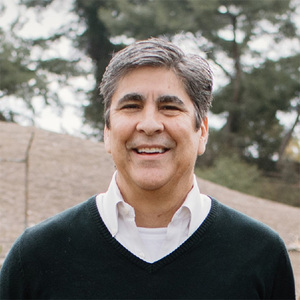
Chris Grace, Ph.D., is a professor of psychology at Rosemead School of Psychology and Director of the Biola University Center for Marriage and Relationships. With degrees in psychology from the University of Northern Colorado (B.A.) and Colorado State University (M.S. and Ph.D. in Experimental Social Psychology), he has taught and written extensively on relationships, marriage, and the integration of faith and psychology. Honored with awards for both teaching and scholarship, Chris is passionate about making research and biblical wisdom practical and accessible. Together with his wife, Alisa, he speaks nationally to couples, singles, and churches, and co-hosts The Art of Relationships podcast, equipping thousands with tools to build stronger, Christ-centered relationships.
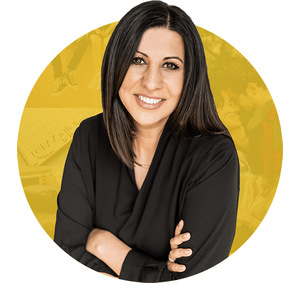
Debra Fileta
Debra Fileta is a Licensed Professional Counselor, national speaker, relationship expert, and author of Choosing Marriage and True Love Dates, and Love In Every Season, and Are You Really OK? She’s also the host of the hotline style Love + Relationships Podcast. Her popular relationship advice blog, TrueLoveDates.com, reaches millions of people with the message of healthy relationships. Connect with her on Facebook, Instagram, or Twitter or book a session with her today!